LHD Used Toyota Export to West Africa: A Complete Guide for Car Dealers in Nigeria, Ghana and Côte d'Ivoire
Reliable China Supplier for Sourcing, Inspection, Documentation and Sea Freight of Left-Hand Drive Toyota Used Cars
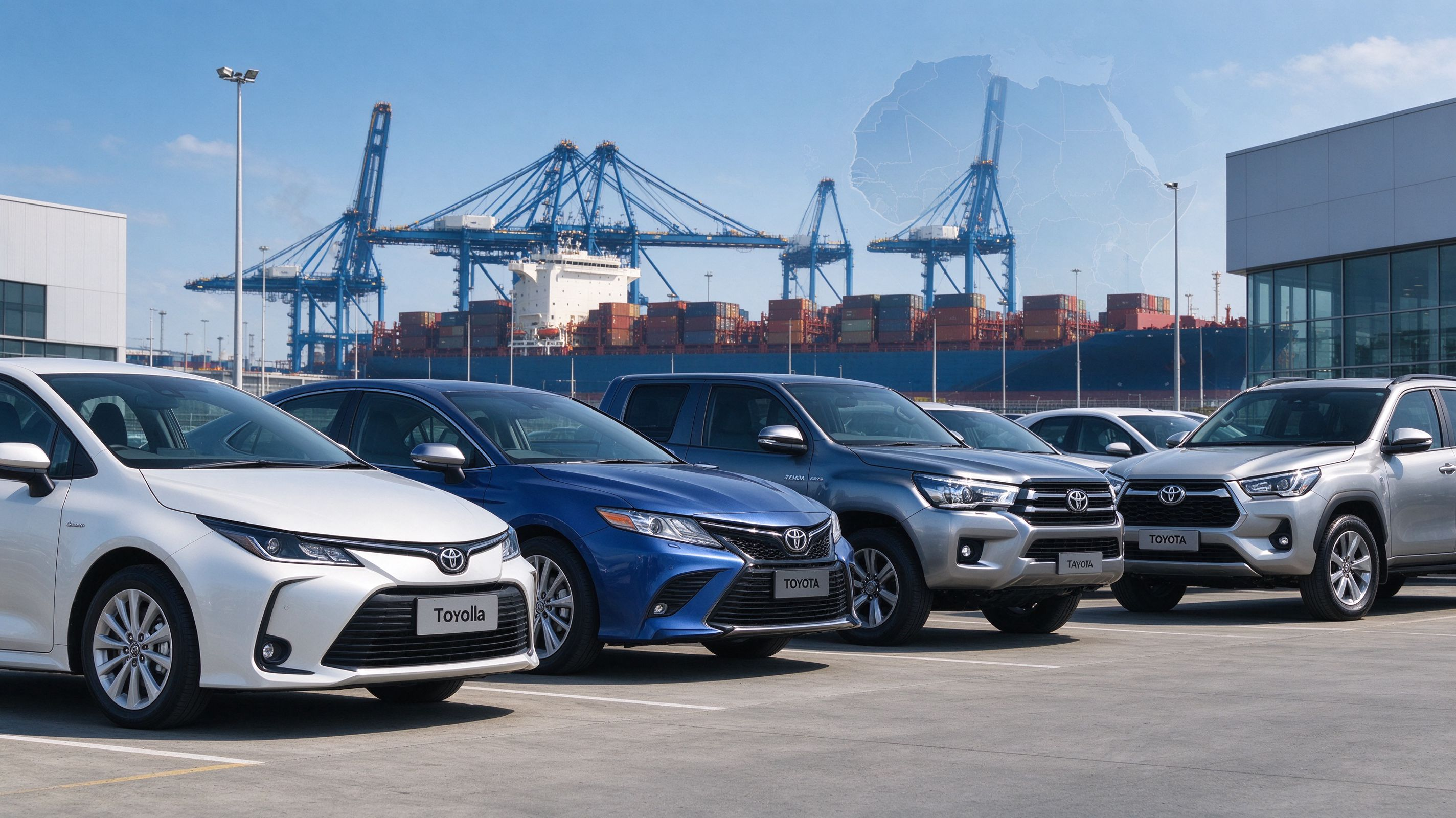
Looking for trusted LHD used Toyota supply from China for West Africa? We supply high-demand Toyota sedans, SUVs and pickups for dealers in Nigeria, Ghana and Côte d’Ivoire. Our one-stop service covers sourcing, inspection, paperwork and sea shipping, with quality checks to prevent risky vehicles and clear pricing for bulk or mixed container orders.
This guide is written for West African car dealers and importers operating in Nigeria, Ghana and Côte d'Ivoire. It profiles the durable left-hand drive Toyota models that actually sell in the region — Corolla, Levin, Camry, RAV4, Hilux, Prado, Highlander and Vios — and explains the complete one-stop export workflow behind them: targeted vehicle sourcing, independent pre-export inspection, reconditioning, export documentation, container loading and sea freight to West African ports. It also covers the risks that quietly destroy importer margins, including rolled-back mileage, undisclosed accident damage, inconsistent paperwork and clearance delays, and shows how transparent pricing and stable stock support both bulk wholesale and mixed container orders.
Introduction
West Africa is one of the busiest used-vehicle import markets in the world. Ports such as Lagos in Nigeria, Tema in Ghana and Abidjan in Côte d'Ivoire receive thousands of containers of second-hand cars every month, and demand keeps climbing as the urban middle class expands, ride-hailing fleets multiply and public transport remains thin in most cities.
For dealers in these markets, the problem is rarely demand. It is supply. Finding vehicles in the right condition, at a workable price, with clean paperwork, and getting them on a vessel before the market moves is where most importers lose their margin. A single container of misdescribed cars, or a shipment detained at the port because one document is missing, can wipe out the profit of an entire quarter.
Jiayi Used Car Export was built around that specific problem. We are a China-based used car exporter serving African dealers and importers with a single, end-to-end service: sourcing, inspection, reconditioning, documentation, container loading, sea freight and delivery to your destination port. Everything from car sourcing to sea delivery is handled by one team, so you are not chasing four different suppliers who each blame the other when something goes wrong.
Why LHD Toyotas Dominate West African Roads
West Africa drives on the right-hand side of the road using left-hand drive (LHD) vehicles. This is the first technical fact any importer must confirm, because it separates West Africa from East African markets such as Kenya, Tanzania and Uganda, which require right-hand drive. Sending the wrong steering configuration to the wrong country is an expensive mistake that cannot be fixed after the container sails.
Within the LHD segment, Toyota is not simply popular — it is the default choice. Four reasons explain it. First, durability: the Corolla, Hilux and Prado handle poor road surfaces, high temperatures, dust and inconsistent fuel quality far better than most competitors. Second, parts: Toyota consumables — filters, brake pads, belts, shock absorbers — are stocked in almost every regional town, so a repair takes hours rather than weeks. Third, mechanic familiarity: any workshop from Lagos to Ouagadougou can service a Toyota without special tools. Fourth, resale: a well-maintained Toyota holds value in local currency, which matters enormously in markets where inflation erodes savings.
Availability is the quieter fifth advantage. Because Toyota sells in huge volumes in the Chinese domestic market, left-hand drive Toyota sedans, SUVs and pickups are constantly available in the used channel — Corolla, Levin, Camry, RAV4, Wildlander, Vios, Highlander and Prado. That means a dealer can restock the same model repeatedly instead of taking whatever happens to be on offer, which is how you build a showroom that customers come back to.
The Models That Actually Sell in West Africa
Generic "Toyota for sale" listings do not help you. Below is what moves in West African markets, who buys it, and what to look for when you order.
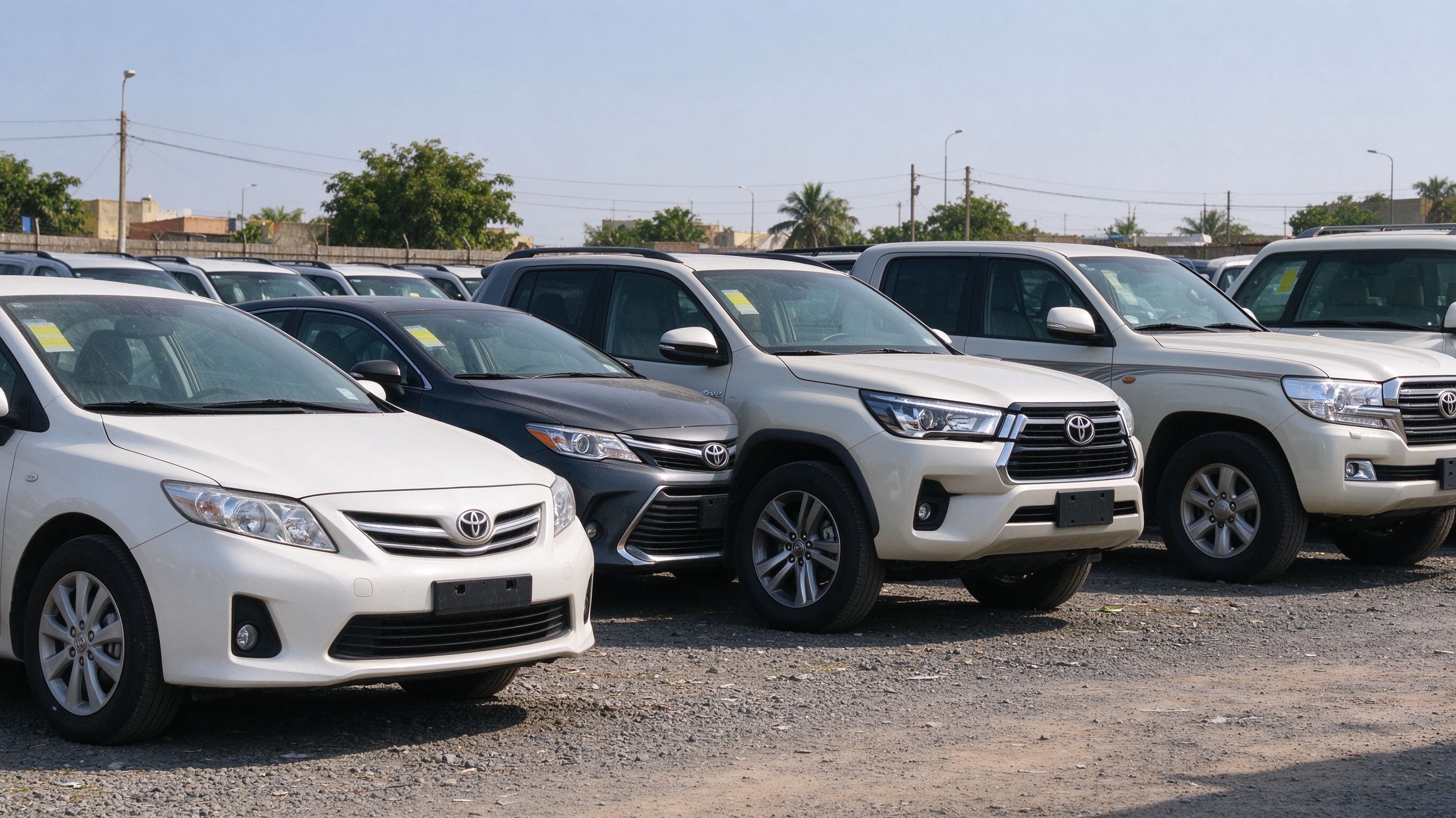
Toyota Corolla (2014–2020, 1.6 / 1.8 petrol, automatic). The volume leader. Buyers are taxi and ride-hailing operators, small business owners, civil servants and first-time car owners. Why it sells: the lowest running cost in its class, parts available everywhere, and easy resale. When ordering, prioritise automatic transmission, a complete service history and a clean interior — local buyers judge a car by its cabin.
Toyota Levin. Same platform as the Corolla with a slightly lower entry price, produced in China as LHD. It is the strongest option for wholesale buyers who need volume at a competitive cost, and it sells well in markets where customers compare it directly against a Corolla.
Toyota Camry (2.0 / 2.5, plus hybrid). The step-up sedan for middle-class families, executives, hotels and government fleets. In Ghana, hybrid versions attract buyers because the fuel savings are immediate and visible. Order the higher trim levels — leather, sunroof, full electrics — because buyers in this segment pay for comfort.
Toyota RAV4 / Wildlander. The practical SUV. Higher ground clearance than a sedan, still economical, and comfortable on both paved city roads and unpaved routes. Popular with young professionals, NGO fleets and families upgrading from a Corolla.
Toyota Hilux (2.4 / 2.8 diesel, 4x4, double cab). The commercial workhorse: farms, construction sites, mining operations, logistics companies, and increasingly private buyers who want one vehicle for both work and family. Diesel 4x4 double cabs are the highest-value units in the whole mix and the most requested by bulk buyers. Condition here matters more than cosmetics — check the frame, the rear leaf springs, the differential and the turbo.
Toyota Land Cruiser Prado. The premium off-roader, bought by mining executives, contractors, senior officials and wealthy families. It holds value better than almost anything else on a West African forecourt, which makes it a low-risk item for a dealer with capital to place.
Toyota Highlander. The seven-seat family and fleet SUV. Rental companies, churches, NGOs and large families are the core buyers. Third-row space and air conditioning performance decide the sale on the forecourt.
Toyota Vios / Yaris. Entry-level cars for budget buyers, first-time owners and ride-hailing fleets that need the lowest possible cost per kilometre.
We also supply other LHD models on request for dealers who want to diversify a container: Nissan Sylphy, Haval H6 and Great Wall Poer pickups are the most common additions, and mixed loading is standard practice for our repeat customers.
Where Importers Actually Lose Money
Before explaining our workflow, it is worth naming the problems it exists to solve. In practice, importers lose money in six predictable places: vehicles described as clean that turn out to have structural accident damage; flood-damaged cars sold as dry; odometers rolled back by hundreds of thousands of kilometres; documentation that is incomplete or inconsistent with the vehicle; vessel schedules that slip by weeks while port storage charges accumulate; and suppliers who disappear once the balance payment clears. Every step below is designed to close one of those gaps.
Our One-Stop Export Process
Step 1 — Requirements and targeted sourcing. You send us the model, year range, mileage ceiling, transmission, fuel type, quantity and destination country. We confirm the LHD requirement and the age limit for that market first, then shortlist matching units from our stock and partner yards. You receive photos, walkaround videos, engine and interior shots, and a written condition summary before you commit to anything. No stock is reserved and no payment is requested until you have seen the actual vehicles.
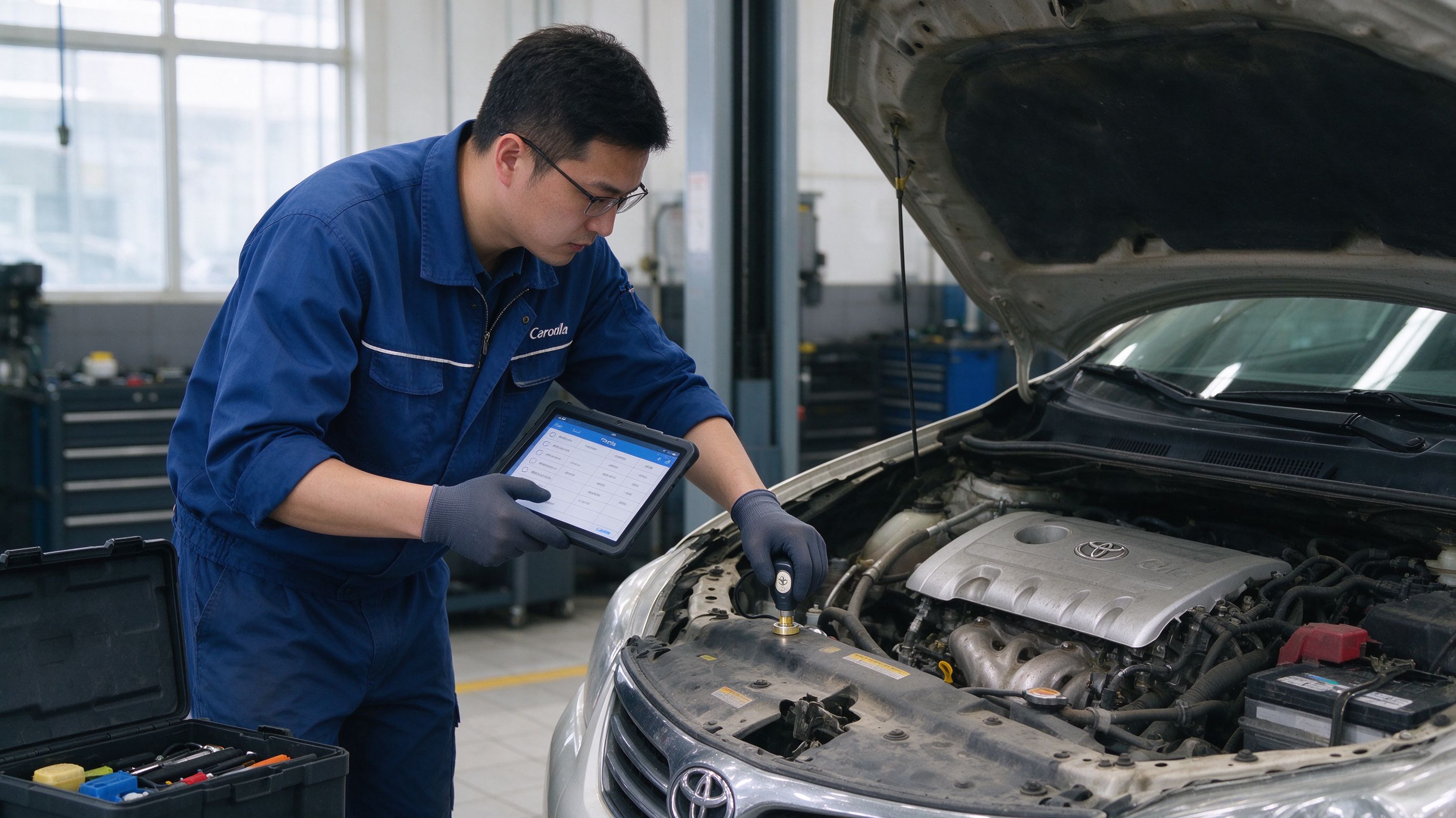
Step 2 — Independent pre-export inspection. Every unit is inspected against a fixed checklist: engine compression and oil condition, gearbox shift quality, chassis and frame integrity, suspension and steering, brake system, electrical and air conditioning, paint thickness readings to detect repainting, panel-gap checks for accident traces, mileage cross-verification through ECU data and available service records, an OBD fault scan and a road test. The output is a written report with dated photographs. Flood-damaged, fire-damaged and structural-accident vehicles are rejected outright, however attractive the price.
[Image 2: pre-export-inspection-used-toyota.jpg]
Step 3 — Reconditioning and export preparation. Before loading, cars are deep-cleaned inside and out, minor faults are repaired, tyres and brakes are checked, and fluids are topped up. We photograph the final state so that what you see before departure is what arrives at your port. This stage matters commercially: a clean, well-presented car sells faster on your forecourt and at a better price.
Step 4 — Documentation, compliance and destination rules. We prepare the export licence paperwork, commercial invoice, packing list, certificate of origin and bill of lading, and coordinate any pre-shipment inspection your destination requires. Critically, we check destination rules before the cars are bought, not after: maximum vehicle age, left-hand drive confirmation, duty and levy structure based on engine size and age, and port-specific clearance requirements. Fixing a compliance problem before shipment costs almost nothing. Fixing it at the destination port costs a fortune.
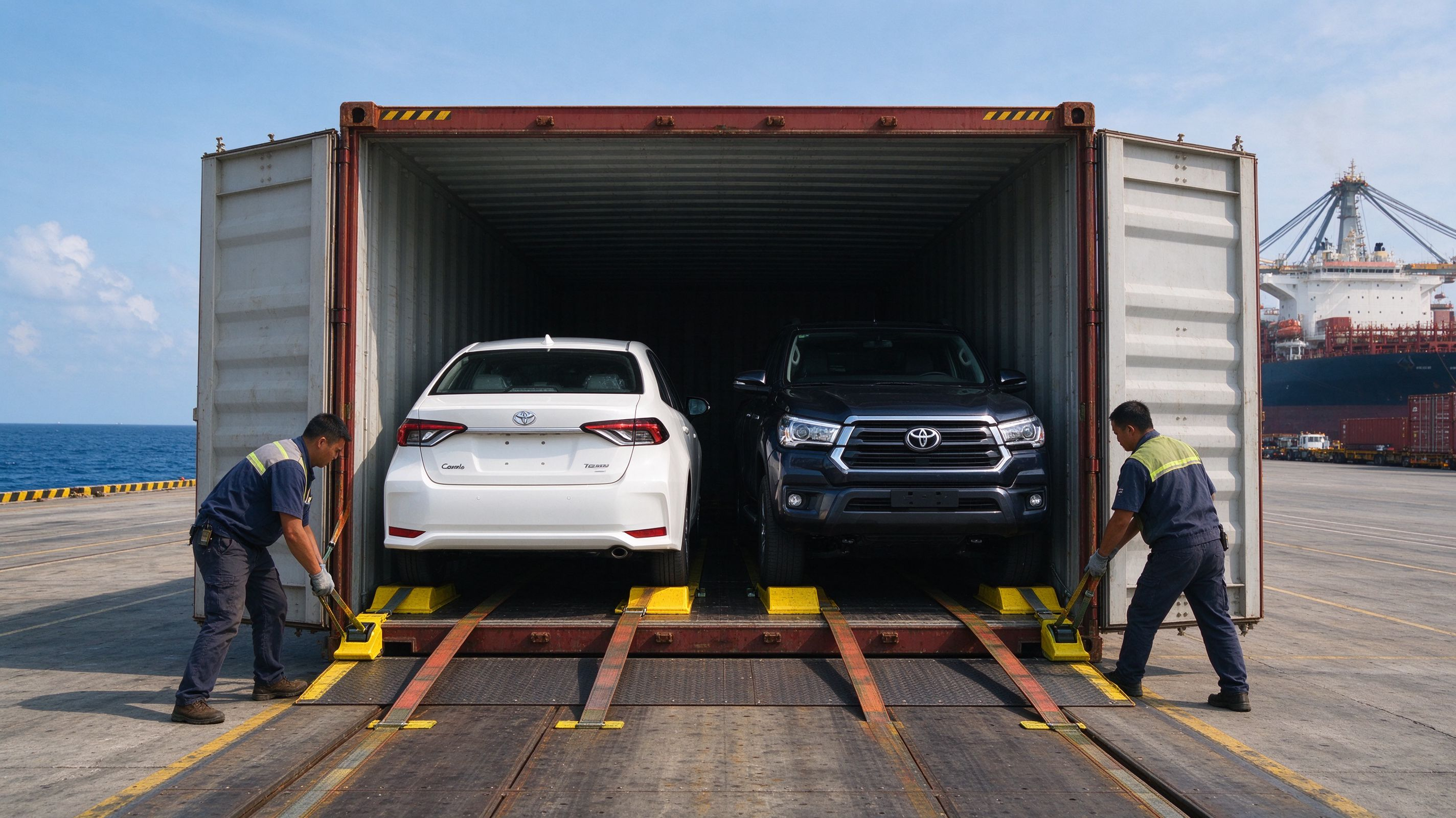
Step 5 — Container loading and sea freight. Loading is planned, not improvised. Depending on size, a 40HQ typically carries two to four vehicles, with larger units loaded one per container or racked for safety. Cars are secured with wheel chocks and straps, wrapped where needed, and photographed inside the container. We offer FCL, LCL consolidation for smaller orders and RoRo where the route suits it, sailing to Lagos, Tema, Abidjan, Cotonou and Libreville. Transit to Lagos or Tema is normally 30 to 45 days depending on the carrier and schedule, and tracking is shared with you after departure.
Step 6 — Arrival and handover. Original documents are couriered ahead of the vessel so they are in your hands before the ship berths. We stay reachable through customs clearance, answer queries from your clearing agent, and remain in contact until you have physically taken delivery of the cars. For repeat dealers we also keep a record of each unit's specification so that future orders match what already sells in your showroom.
Quality and Compliance Standards
Three standards are non-negotiable. First, honesty about condition: if a car has been repaired, you are told what was repaired and shown the photographs. Second, traceability: every unit carries an inspection report, a photo set and a video record that you can compare against the car on arrival. Third, compliance: we do not load a vehicle that fails the destination market's age or configuration rules, even if the buyer insists, because the cost of a rejected container falls on the buyer, not the seller.
A Practical Buying Guide for First-Time Importers
If this is your first container, plan around four numbers. Capacity: a 40HQ holds roughly two to four sedans depending on size, so a mixed order needs to be designed around the container, not around a wish list. Cost: your landed cost is the vehicle price plus inspection, inland trucking, ocean freight, insurance, destination duty and clearance — quote all six before you compare suppliers, because the cheapest car price often hides the most expensive freight. Payment: standard terms are a deposit to reserve and lock the unit, with the balance settled before loading, supported by the inspection report and loading photographs. Timing: order six to eight weeks before you need stock on the floor, since sourcing, inspection and the next available sailing add up quickly.
Why Dealers Work With Jiayi
- 100% left-hand drive inventory, compliant with Nigeria, Ghana, Côte d'Ivoire, Benin, Togo and Gabon
- One team from sourcing to sea delivery, with a single point of contact throughout
- Transparent quotations with vehicle cost, inspection, documentation and freight listed separately
- Inspection report, photo set and video record for every unit
- Stable supply of high-turnover Toyota models, not one-off lots
- Dealer-oriented support: mixed containers, repeat orders and long-term pricing
- Note: East African markets including Kenya, Tanzania and Uganda require right-hand drive vehicles. Confirm steering configuration and age limits before ordering.
FAQ
Can I import a left-hand drive used Toyota from China into Nigeria or Ghana?
Yes. Nigeria, Ghana, Côte d'Ivoire, Benin, Togo and Gabon accept left-hand drive imports, but each market sets its own maximum vehicle age and duty structure. Send us your destination country and we will confirm the current rule before sourcing.
Which Toyota model sells fastest in West Africa?
The Corolla leads on volume across almost every West African market. The Hilux diesel double cab is the highest-value commercial vehicle and the most requested in bulk dealer orders.
How many cars fit in one container?
A 40HQ normally carries two to four vehicles depending on size; a 20GP carries one to two. Mixed loading of different models is standard for our dealer customers.
How long does shipping take?
Transit to Lagos or Tema is typically 30 to 45 days, and to Abidjan or Cotonou similar, depending on carrier and schedule. We share the confirmed sailing and tracking details after departure.
Do you handle customs clearance at destination?
We prepare and courier the full original document set and support your clearing agent with any clarification required. Clearance itself is handled locally, and we stay reachable until you take delivery.
Can I inspect the car before paying the balance?
Yes. The inspection report, photo set and video are sent before the balance is due, and loading photographs are provided once the container is closed.
Get a Quotation
Whether you need one used Toyota for personal use or a steady monthly supply of left-hand drive Toyota stock for your showroom in Lagos, Accra, Abidjan or Cotonou, Jiayi Used Car Export covers sourcing, inspection, documentation and sea freight in one service, with an emphasis on safe and reliable delivery.
Send us your target model, year range, quantity and destination port. You will receive a detailed quotation with unit-level specifications, a transparent cost breakdown and the next available sailing schedule.