Used Toyota Air Conditioning Troubles in West Africa: Inspection Checklist Before Shipment
Avoid AC Failures, Disputes and Lost Revenue for Used Car Exporters & West Africa Dealers
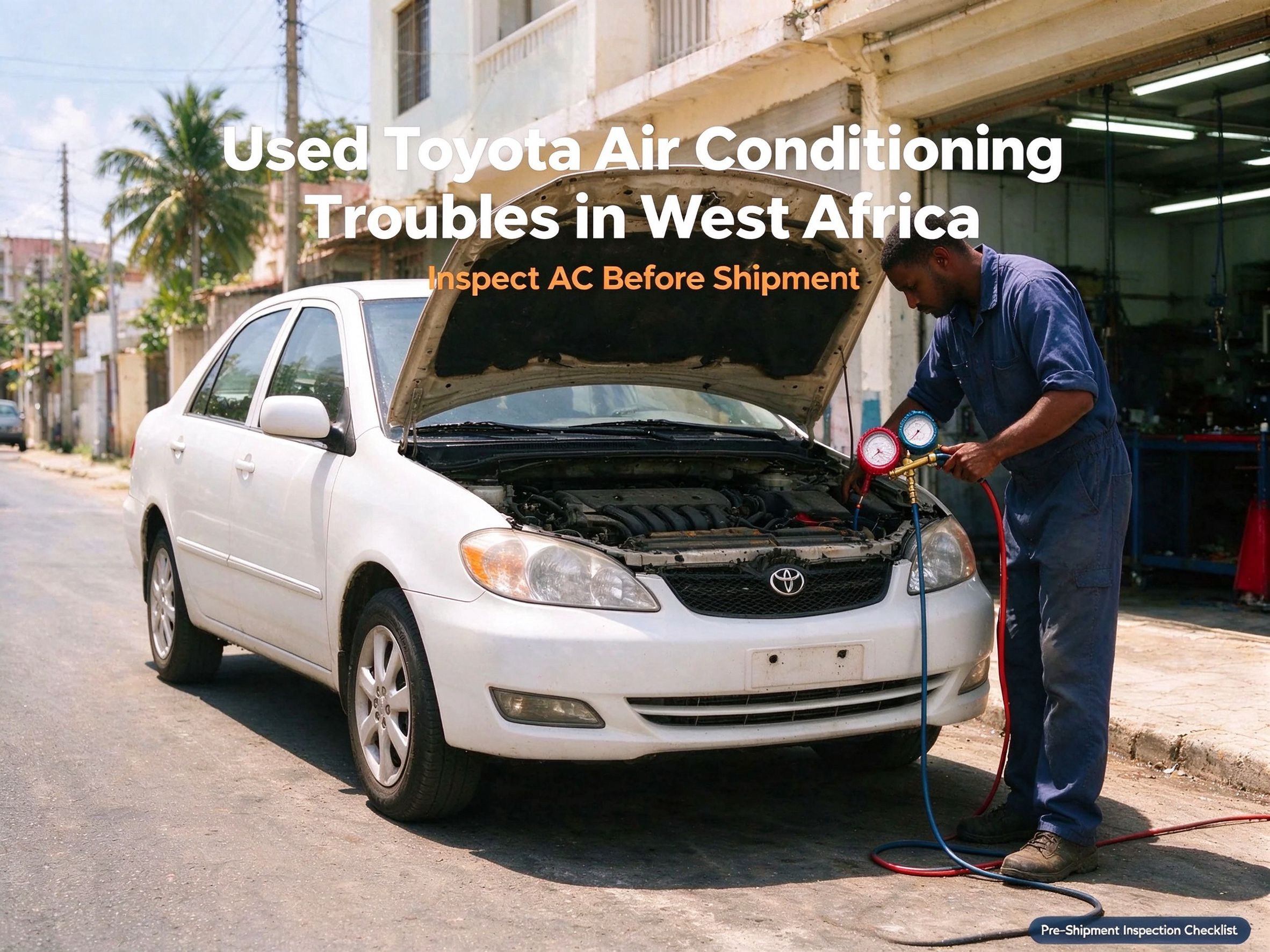
Air conditioning is critical for used Toyota vehicles operating in West Africa. High local temperatures, dusty conditions and congested traffic place a continuous heavy load on the air conditioning system. Many vehicles may appear to function normally during short-distance tests in China, yet refrigerant leaks, compressor failures, evaporator clogging, pipe damage or electrical faults can emerge after weeks of continuous operation and ocean shipping. This article outlines common air conditioning issues encountered by used Toyota cars after they arrive in Nigeria, Ghana, Côte d'Ivoire and Benin, explains why hidden defects often only surface upon arrival, and provides a practical pre-shipment air conditioning inspection checklist for used car exporters and West African vehicle dealers.
When West African dealers and fleet operators buy used Toyota cars from China, they usually focus first on engine health, mileage and accident history. Many buyers underestimate the importance of the air conditioning system, yet AC defects are one of the top causes of post-delivery claims. Even if the AC blows cold air briefly during a quick test drive in China, hidden damage can surface after weeks of continuous operation under the hot, dusty climate of West Africa. Once the container arrives at the port, repairing the AC locally is expensive, spare parts can be hard to source, and the dealer may lose profit or face negotiation pressure from the end buyer.
The harsh operating environment in West Africa is the root cause of most recurring AC issues. Ambient temperatures often stay above 32°C for most of the year, and drivers run the AC nonstop for hours every day. Roads are dusty, and fine dust easily clogs the condenser, cabin air filter and evaporator. Unlike in China, many local drivers rarely service the AC regularly after purchase. Weak components that can survive short test runs in China will fail quickly under this heavy continuous load.
Let’s look at the most frequent Toyota AC problems we encounter in our West Africa shipments.
First, condenser leaks and blockages. The condenser sits in front of the radiator, exposed to dust, sand and small road debris. Tiny pinhole leaks develop slowly, causing refrigerant to escape gradually. At first, the AC still feels cool, but cooling performance drops sharply after the car works in hot weather for a few weeks. This is the most common hidden fault.
Second, faulty AC compressors. The compressor is the heart of the cooling system. Worn internal bearings, low lubrication oil or old clutch coils often lead to intermittent failure. Sometimes the compressor works fine during short testing, but it overheats and cuts out after long continuous running. Compressor replacement is one of the most expensive AC repairs for Toyota vehicles in West Africa.
Third, clogged evaporator and dirty cabin filters. Dust builds up inside the evaporator core, restricting airflow. The air from the vents turns weak, smells mouldy and cannot cool the cabin properly. Many used cars come with old, blocked filters that are not replaced before export.
Fourth, refrigerant pressure problems and leaky hoses. Aging rubber hoses become brittle over time. Vibration during sea transport can crack weak hoses, leading to slow refrigerant loss. Incorrect refrigerant filling before shipment also causes unstable cooling performance.
Fifth, electrical faults: temperature sensors, blower motors and control switches. Loose wiring or ageing sensors can make the AC switch between cold and warm randomly. These electrical issues are difficult to diagnose for local mechanics without proper tools.
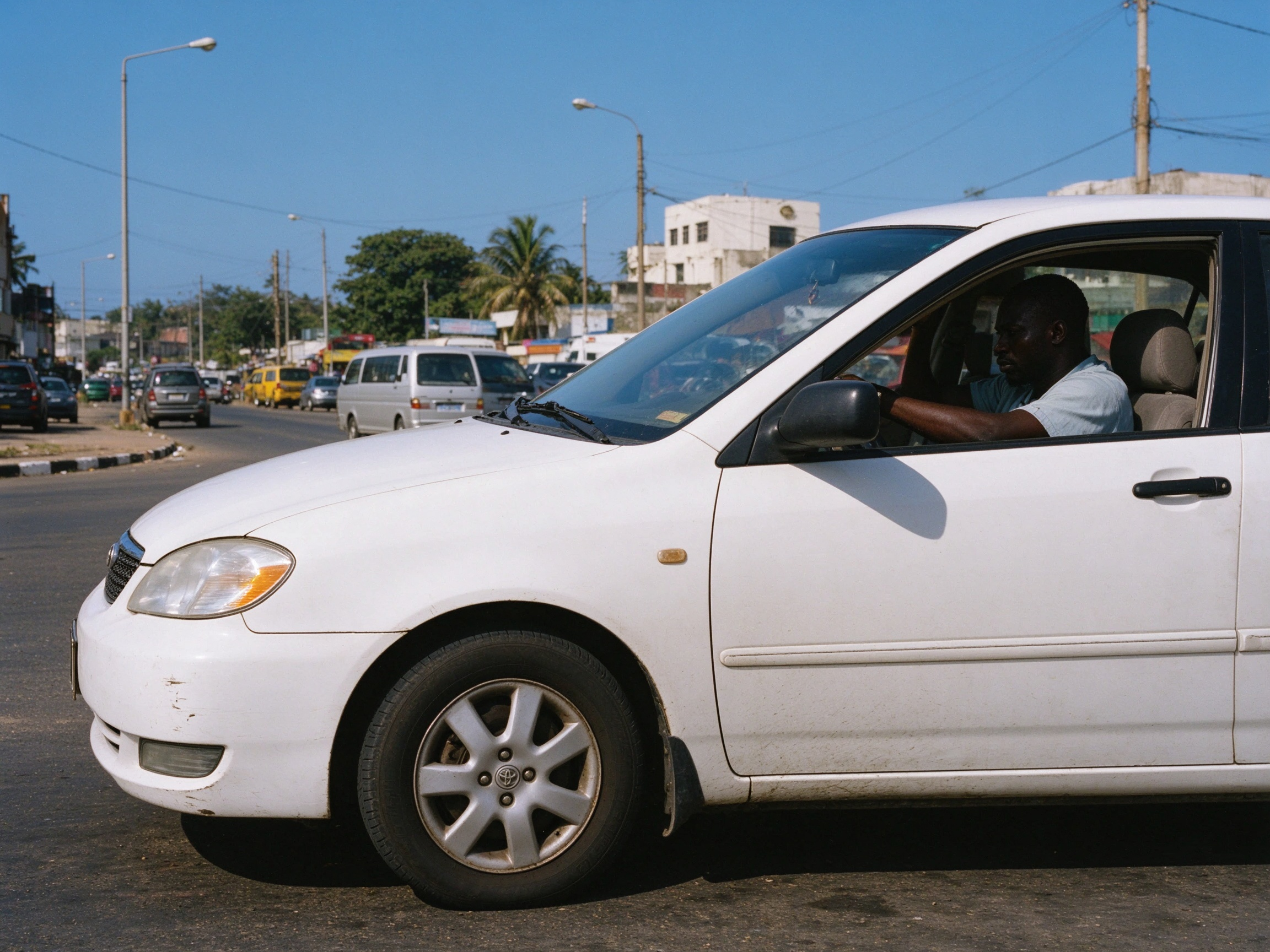
A key point every dealer needs to understand: sea transit can worsen hidden AC faults. During shipping, vehicles are stacked inside containers, exposed to vibration and humidity for weeks. Loose connections, already fragile hoses and weak seals are more likely to fail after the long ocean journey. That is why some cars pass a simple AC test before loading, but fail soon after arrival in Africa.
Below is our standard pre-shipment AC inspection checklist for all used Toyota models, including Hilux, Corolla, Vios, Yaris, RAV4 and Prado that we export to West Africa.
- Static and running pressure test: Use professional gauges to check high-side and low-side refrigerant pressure, with the engine running and AC set to maximum cooling. Pressure must stay within the Toyota factory range for that model.
- Visual inspection of condenser: Check for dents, stone damage, oil stains (oil stains are a clear sign of refrigerant leaks) and heavy dirt buildup. Clean the condenser thoroughly before shipment if needed.
- Compressor and clutch check: Turn on the AC and observe the clutch engagement. Listen for abnormal rattling, squealing or grinding noise. Check compressor oil level.
- Airflow and temperature test: Measure vent temperature with a thermometer. Run the AC on full power for at least 15–20 minutes continuously, not just 2–3 minutes. Stable cold airflow is required, no sudden warm air spikes.
- Inspect all hoses, seals and pipe joints: Check rubber hoses for cracking, swelling and ageing. Spray leak detector fluid on all connections to find slow leaks.
- Evaporator and cabin filter: Replace old cabin filters. Check for mouldy odour and weak airflow, which indicates a dirty evaporator.
- Electrical function test: Test blower speeds, temperature control switches, thermistor sensors and AC relay. Confirm there are no intermittent cutouts.
- Road test under load: Drive the vehicle for an extended period, with AC on max, to simulate the heavy daily use it will face in West Africa.
At Jiayi Used Car Export, we follow this checklist for every Toyota we prepare for West African markets. We do not rely only on a quick cold-air check. Our inspection team records pressure readings and test results for each car. If we find weak AC components, we either repair them properly before shipment or mark the issue clearly for the buyer before the deal is confirmed. Transparent inspection helps us build long-term trust with our partners in Ghana, Nigeria and Côte d’Ivoire.
For dealers, skipping this deep AC inspection may seem like a way to save time, but it creates bigger risks. An AC breakdown can delay vehicle sales, reduce your bargaining power and damage your reputation with local taxi drivers and fleet owners. For fleet businesses, a car with unreliable AC cannot work full shifts in hot weather, directly reducing daily revenue for drivers.
FAQ
Q1: If the AC blows cold in China, can it still break after arriving in West Africa?
A: Yes. Many hidden leaks and weak compressor parts only fail under long hours of high-temperature continuous use and the vibration of sea shipping. A short test drive is not enough.
Q2: Is it better to recharge refrigerant before export?
A: Recharging is only safe after we confirm there are no leaks. Filling refrigerant into a leaking system will only delay the failure, not fix it.
Q3: What is the most expensive AC repair on used Toyota cars in West Africa?
A: Replacing the AC compressor, because genuine parts are costly and aftermarket quality varies widely across West African auto markets.
Q4: Can Jiayi do this full AC inspection for all orders?
A: Yes, our standard pre-shipment inspection package includes this AC checklist for all Toyota vehicles exported to West Africa.
CTA
If you are a used car dealer or fleet operator sourcing left-hand-drive used Toyota cars from China to West Africa, work with Jiayi Used Car Export. We carry out thorough air conditioning inspection alongside engine and chassis checks before shipment, reducing your risk of post-arrival AC failures and disputes. Contact us today for wholesale pricing and inspection reports.