Lagos Port Demurrage & Storage Fees: How West Africa Used Car Importers Avoid Extra Unexpected Costs
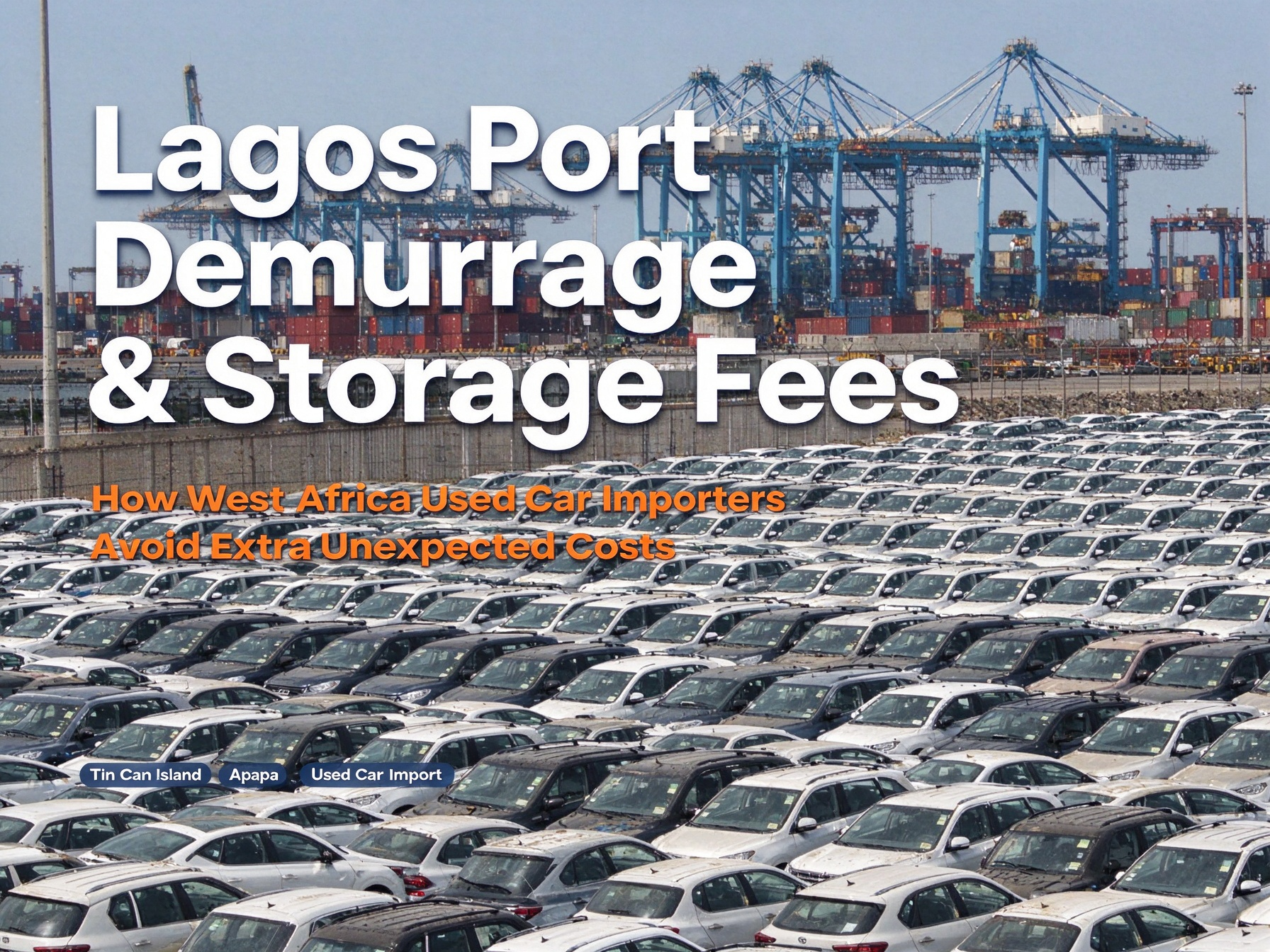
For used car importers and dealers in Nigeria, hidden port charges at Lagos ports (Tin Can Island and Apapa) can quickly erase profit margins. Congestion, incomplete paperwork, delayed duty payment and inefficient clearing arrangements often trigger high demurrage and daily storage fees after the free time window expires. This article explains the difference between demurrage, detention and storage fees at Lagos terminals, clarifies the free storage rules for used vehicles, breaks down the main causes of port delays, and shares actionable steps for importers to prepare documents, select reliable clearing agents, plan shipping schedules and reduce avoidable extra costs. This guide is tailored for buyers importing used Toyota and other second-hand vehicles from China, helping you control landing costs and improve cash flow.
When importing used cars to Nigeria, most dealers calculate freight, customs duty, VAT and SONCAP certification costs in advance. However, many underestimate the risk of demurrage and storage fees at Lagos ports, which are one of the biggest unexpected cost killers for West Africa used car importers. Tin Can Island Port and Apapa Port are the two main terminals for used vehicle imports into Lagos, and both suffer from regular congestion, long waiting queues and strict free-time policies. A delay of just a few extra days can add hundreds of dollars in extra charges for each vehicle.
First, it is important to understand three easily confused terms at Lagos ports: demurrage, detention and storage fees.
Demurrage is the land charge from the terminal operator, charged when your vehicles or containers stay inside the terminal yard after the free storage period.
Detention is the container rental fee charged by the shipping line, if you hold the carrier’s container beyond the agreed free days.
Storage fees refer to daily parking and custody charges for vehicles parked inside the port terminal, separate from demurrage and container detention.
For used cars shipped via RoRo or breakbulk, storage and demurrage are the main risks; for containerized car shipments, you need to watch both detention and terminal demurrage at the same timeMSC.

The free time window is critical for all importers. At Tin Can Island and Apapa terminals, the standard free storage period for imported cargo is 3 working days (72 hours) after the vessel finishes discharging, including weekends and public holidays in many cases. Some terminals offer 4–5 free days under special shipping contracts, but you should never rely on extended free time as a default. Once the free time expires, fees start accruing daily and increase progressively the longer the vehicles remain in port. During peak import seasons, port congestion can push clearance timelines to 14–30 days, and these daily charges accumulate rapidlyENL Consor....
What are the most common reasons for delayed clearance and extra port charges for used car shipments to Lagos?
- Incomplete or mismatched import documents. Form M, PAAR, SONCAP certificate, bill of lading, commercial invoice and packing list are the core documents. If the value, chassis number or vehicle year on the invoice does not match Form M, the customs system will reject PAAR approval, trigger document verification and hold your cargo. This is the top cause of avoidable delays for used car importers.
- Late payment of duty and VAT. Many dealers arrange duty payment only after the vessel arrives. Bank processing delays and currency exchange issues can hold up release approvals.
- Inexperienced clearing agents. Agents who lack experience with used car imports may not understand the Nigerian customs B'Odogwu declaration system, or fail to arrange priority inspection slots.
- Vessel berthing delays and port congestion. Vessels sometimes wait for anchorage for days before berthing and discharging. Even if your paperwork is ready, you cannot start formal clearance until discharge is completed.
- Random physical customs inspection. If your shipment is assigned to the red channel, customs officers will carry out physical inspection of vehicle condition, mileage and VIN. Inspection backlogs can extend waiting time.
Next, we share practical strategies for used car importers to avoid or reduce demurrage and storage fees at Lagos ports.
1. Complete all documents before vessel arrival
Do not wait until the ship docks to start preparing paperwork. Form M must be opened before shipment departs China. Your clearing agent should apply for PAAR and validate the SONCAP certificate while the vessel is still at sea, at least 7–14 days before ETA. Double-check all data consistency: chassis number, manufacturing year, CIF value and vehicle model must match across the invoice, packing list, BL and Form M. Any discrepancy will pause clearance and start the fee clock runningNigerian P....
2. Select an experienced clearing agent specializing in used vehicles
A general freight agent is not enough. Work with a clearing agent with long-term experience handling used cars at Tin Can or Apapa. Professional agents know the customs risk channel rules, can schedule inspections efficiently, communicate directly with terminal operators and customs officers, and help resolve document disputes quickly. Confirm your agent before the vessel departs, not after arrival.
3. Pre-fund duty and tax budgets in advance
Prepare your customs duty and VAT funds ahead of time. Once SGD (Single Goods Declaration) is generated, you can complete payment immediately instead of waiting for capital arrangement. Payment delays are one of the easiest ways to trigger unnecessary port charges.
4. Choose between Tin Can Island and Apapa based on your shipment type
Tin Can Island is the primary terminal for used car imports, with more mature workflows for vehicle release. Apapa mainly serves container cargo and usually has longer queues for vehicle shipments. If you ship cars in containers, compare the free-day policy of each shipping line before booking. Some carriers offer longer container detention free days for bulk used car orders. You can also consider Lecky Port as an alternative when Tin Can is heavily congested, though local logistics connections are different.
5. Optimize shipping schedule and build a time buffer
When negotiating freight with your supplier or shipping line, confirm the ETA and terminal discharge schedule. Build a reasonable buffer into your budget, but do not use the buffer as an excuse to delay document preparation. If you import multiple batches of used cars, stagger arrival dates to avoid overwhelming your clearing agent and cash flow at the same time.
6. Track cargo status daily once the vessel arrives
After discharge, keep real-time tracking with your agent: confirm whether PAAR is approved, whether duty is paid, whether inspection is scheduled, and the expected gate-out date. If you see signs of unexpected delay, intervene immediately instead of letting charges pile up day by day.
7. Know your rights for demurrage disputes
If the delay is caused by terminal operator congestion, customs system breakdown or terminal scheduling failure, you can apply for demurrage waivers or reduction with supporting evidence. Keep all communication records, terminal notices and customs rejection letters. You cannot claim waivers for delays caused by your own missing documents or late payment.

FAQ
Q1: How many free days do I get at Lagos ports for used cars?
A: Most terminals at Tin Can and Apapa offer 3 days (72 hours) free storage after discharge. Some contracts have 4–5 free days, confirm with your shipping line and agent before booking.
Q2: What is the approximate daily cost of storage and demurrage for a used car?
A: After free time expires, combined storage and demurrage can range from $15–25 per vehicle per day. For container shipments, container detention fees from shipping lines can reach $50–120 per day for a 20ft container. Delays over 20 days can add costs higher than your expected profit on that car.
Q3: Can I avoid red-channel physical inspection?
A: You cannot fully avoid random inspection, but accurate, consistent documents and correct valuation reduce the risk of being flagged for mandatory physical checks.
Q4: What happens if I leave vehicles uncleared for more than 90 days?
A: Nigerian customs have the authority to auction long-overdue cargo left in the terminal, and you will lose ownership of your vehicles after auction, plus all accumulated port chargesSupply Cha....
CTA
If you are a Nigerian used car dealer sourcing Toyota and other reliable used vehicles from China, Jiayi Used Car Export supports you with clear shipment documents, accurate pre-shipment valuation and stable logistics coordination. We help you prepare all required import paperwork before sailing, to minimize your risk of demurrage and storage fees at Lagos. Contact us for wholesale car lists and shipping consultation.