Toyota Yaris L for African car dealers: low price and low maintenance cost
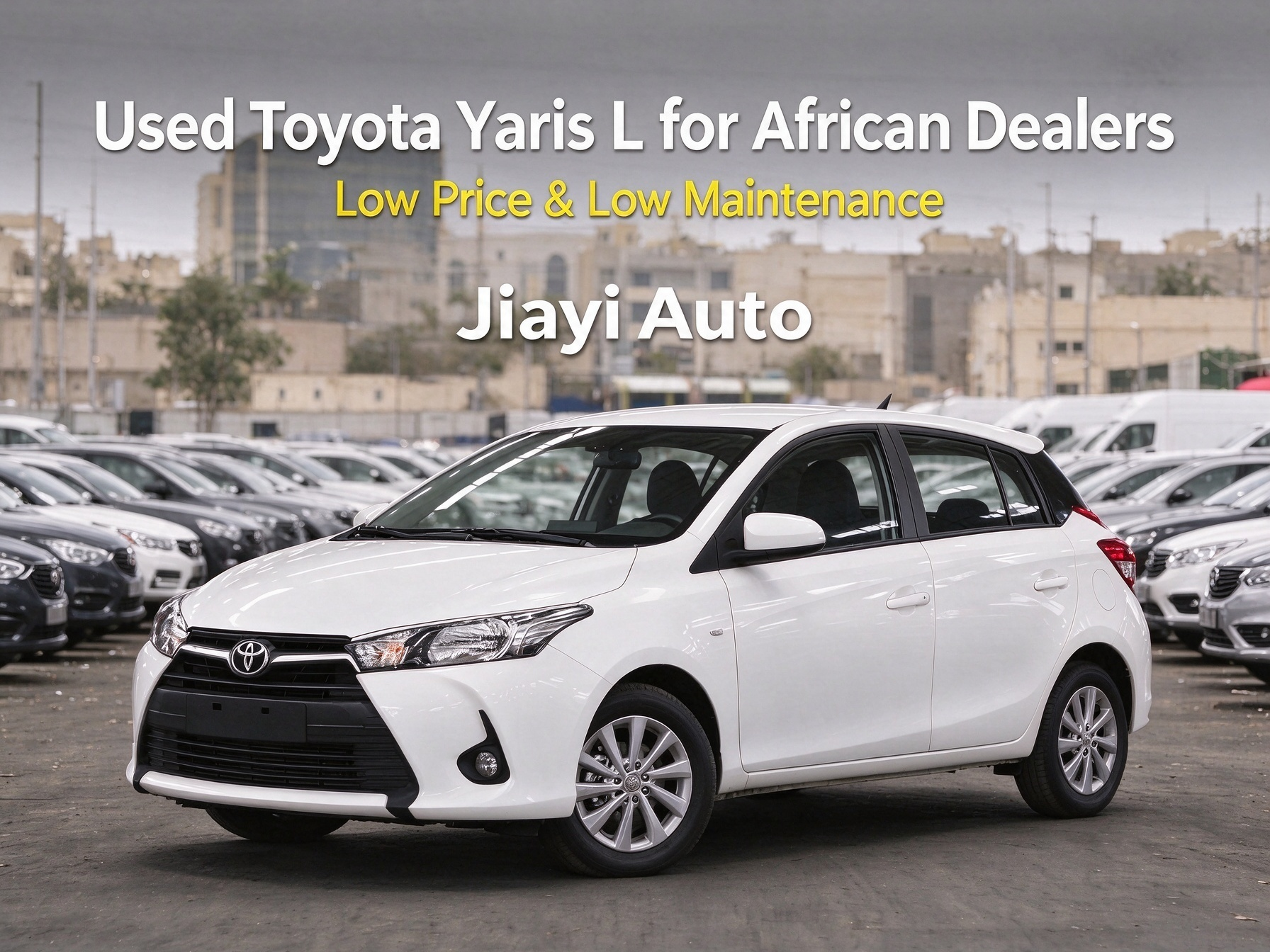
The Toyota Yaris L has become a staple entry-level sedan for African used car wholesalers, thanks to its stable domestic left-hand drive inventory, affordable wholesale pricing, low fuel consumption and mature parts supply network across Africa. For importers focused on fast-turnover, low-risk stock, the Yaris L presents a balanced business choice. This professional guide from Jiayi Auto covers market positioning, technical evaluation criteria, pre-shipment inspection standards, cost structure analysis and inventory planning advice for African dealers sourcing used Yaris L from China.
For African used car importers, portfolio planning relies heavily on high-volume, low-friction entry-level models. Many dealers build their core cash flow on compact sedans that require minimal capital outlay, hold steady resale value and do not trigger heavy after-sales disputes. The China-manufactured Toyota Yaris L fits this profile perfectly. It is widely available as left-hand drive stock for export, with a proven 1.5L naturally aspirated petrol powertrain, simple mechanical layout and broad aftermarket support throughout African markets.
Unlike Japan-sourced Yaris variants, the Yaris L is built for the Chinese domestic market, with extended wheelbase and reconfigured cabin space. This design advantage translates to better rear passenger comfort, a key selling point for family buyers, small private transport operators and urban taxi fleets in Africa. When properly inspected before shipment, these units deliver predictable reliability and consistent profit margins for wholesale buyers.
Core Commercial & Technical Advantages of Used Toyota Yaris L
1. Controlled wholesale cost and flexible capital allocation
One of the biggest pain points for African small and mid-sized importers is capital pressure. Large SUVs and mid-size sedans such as RAV4 and Camry tie up substantial funds per unit, limiting how many SKUs a dealer can test in one container. The Yaris L sits at a much lower price tier. It allows importers to diversify their container mix without overexposing themselves to a single high-value vehicle.
For mixed container strategies, Yaris L works as a volume anchor. Dealers can combine several Yaris L units with a small number of Corolla, RAV4 or Hilux, balancing fast-moving low-margin stock with slower, higher-margin vehicles. This inventory structure stabilises overall cash flow and reduces the risk of slow turnover on expensive stock.
2. Fuel system robustness adapted to African fuel quality
The 1.5L 2NR-FE naturally aspirated engine fitted to the Yaris L is engineered with tolerance for inconsistent fuel quality. Many urban and rural regions across Africa have petrol with variable octane rating, impurities and inconsistent refining standards. Complicated turbocharged or hybrid powertrains are far more vulnerable to injector clogging, carbon buildup and sensor failure under these conditions.
The simple port-injected layout of the Yaris L engine reduces these failure modes. Real-world feedback from Jiayi Auto’s clients shows that properly serviced Yaris L units maintain stable fuel consumption even when running on local petrol. Typical combined fuel consumption lands between 5.5 L/100km and 6.5 L/100km under urban load, which directly improves operating profitability for end users and strengthens resale appeal.
3. Low maintenance complexity and accessible spare parts network
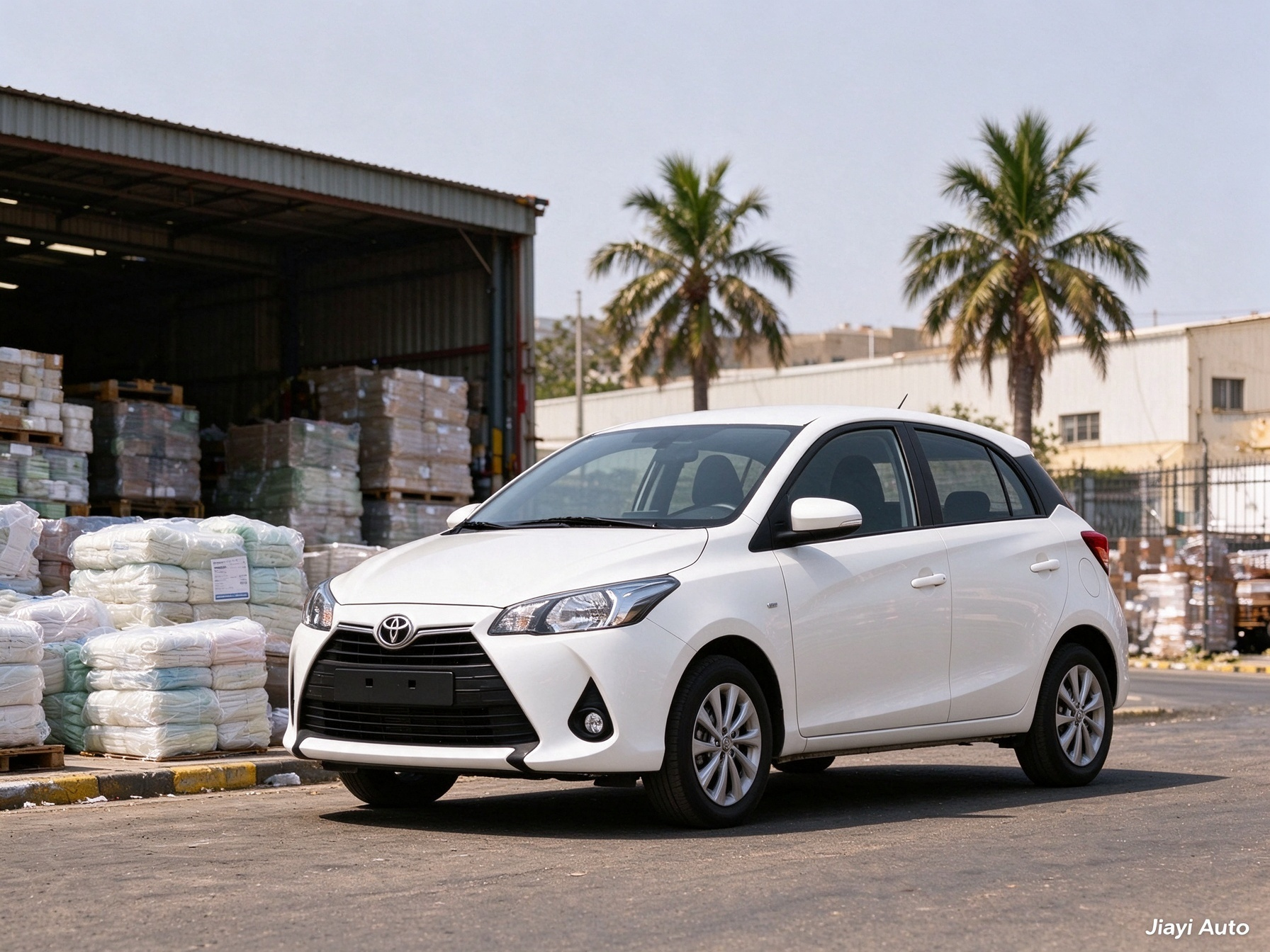
Service cost is a decisive factor for African retail buyers. Even a cheap car will develop poor market reputation if replacement parts are rare or expensive. The Yaris L shares core component architecture with the global Yaris family. Brake assemblies, suspension struts, air filters, oil filters, water pumps, ignition coils and clutch kits are widely stocked in auto spare parts markets across West, East and Southern Africa.
Local independent mechanics are familiar with the service workflow. Routine maintenance — oil changes, filter replacement, brake service and suspension overhaul — can be completed without specialised diagnostic tools. This drastically cuts downtime for end users. For wholesale dealers, this means fewer after-sales claims and less reputational risk after vehicles arrive at destination ports.
4. Compact footprint suited for congested urban operating environments
Many African cities feature narrow arterial roads, informal street markets and limited parking space. Oversized sedans and SUVs become difficult to manoeuvre. The Yaris L’s compact body makes it suitable for multi-use scenarios: private family transport, small commercial errand runs, ride-hailing and city taxi services. Its broad use case expands the pool of potential retail buyers, shortening the sales cycle for dealers.
Jiayi Auto Pre-Shipment Full Inspection Standard for Used Yaris L
Before container loading, every Yaris L in our export stock undergoes a multi-stage technical inspection, documented with photos, OBD reports and road test records. Our inspection protocol focuses on failure points that are most likely to surface under African road and climate conditions:
- Engine bay inspection: visual check for oil seepage from valve cover, crankshaft seal and timing components; cooling system pressure test to identify hidden radiator leaks, hose degradation and water pump weakness.
- Transmission road test: multiple acceleration, deceleration and stop-start cycles to detect slipping, delayed gear engagement, harsh shifting or abnormal whining noise. For CVT versions, we scan transmission control unit fault codes and check fluid condition.
- Chassis and suspension evaluation: inspect lower control arms, bushings, ball joints and shock absorbers. Worn suspension components accelerate tyre wear on potholed African roads and are one of the most frequent post-arrival service items.
- Brake system assessment: test brake balance, check brake disc thickness, pad remaining life and brake fluid boiling point.
- OBD diagnostic scan and mileage validation: cross-check ECU stored mileage, engine runtime data and interior wear patterns to eliminate odometer rollback risk.
- Body and structural integrity audit: frame measurement, structural seam inspection, flood residue check and collision damage verification. We reject any unit with structural deformation or flood history.
- Electrical function validation: air conditioning performance test under high load, window regulators, lighting system, dashboard warning lights and central locking. Reliable air conditioning is a high-priority selling feature in hot African climates.
- Tyre and wheel inspection: evaluate tread depth, sidewall cracks and uneven wear, and advise clients on tyre replacement before shipment if needed.
Wholesale Inventory & Pricing Strategy for African Importers
- Prioritise petrol-powered models. Hybrid Yaris L variants are limited in China’s used export pool and require specialised maintenance knowledge that is not universally available in African workshops. Petrol units deliver broader market acceptance and simpler after-sales support.
- Focus on 2017–2022 stock. This window keeps vehicles within the 10-year age bracket favoured by most African import regulations. Units from this range have modern safety features, lower accumulated mileage and stable market pricing. Older stock below this range carries higher failure risk; newer stock raises entry cost and slows turnover.
- Set clear retail positioning for downstream buyers. The Yaris L is optimised for urban commuting. It is not designed for heavy off-road travel, continuous overloading or long-distance highway commercial haulage. Clear communication on limits prevents misuse and warranty disputes.
- Track regional demand differences. In urban-heavy markets, automatic transmission versions sell faster; in rural areas with lower buyer budgets, manual variants remain popular and maintain strong turnover.
FAQ
Q: Is left-hand drive Toyota Yaris L acceptable for import into African markets?
A: Left-hand drive Yaris L exported from China complies with import rules for most African countries. Import requirements vary by territory, including age limits, certification and customs documentation. Jiayi Auto provides supporting documents and can guide you to confirm local regulatory requirements before purchase.
Q: What is the key difference between China-made Yaris L and Japanese-spec Yaris?
A: The Yaris L is a GAC Toyota model built for the Chinese market. It has a longer wheelbase and larger rear cabin compared to the Japanese domestic Yaris. The core engine architecture is similar, so most general wear parts are interchangeable. The main difference is body panel shape, which affects body shell replacement availability.
Q: How many Yaris L can fit in one 40ft container?
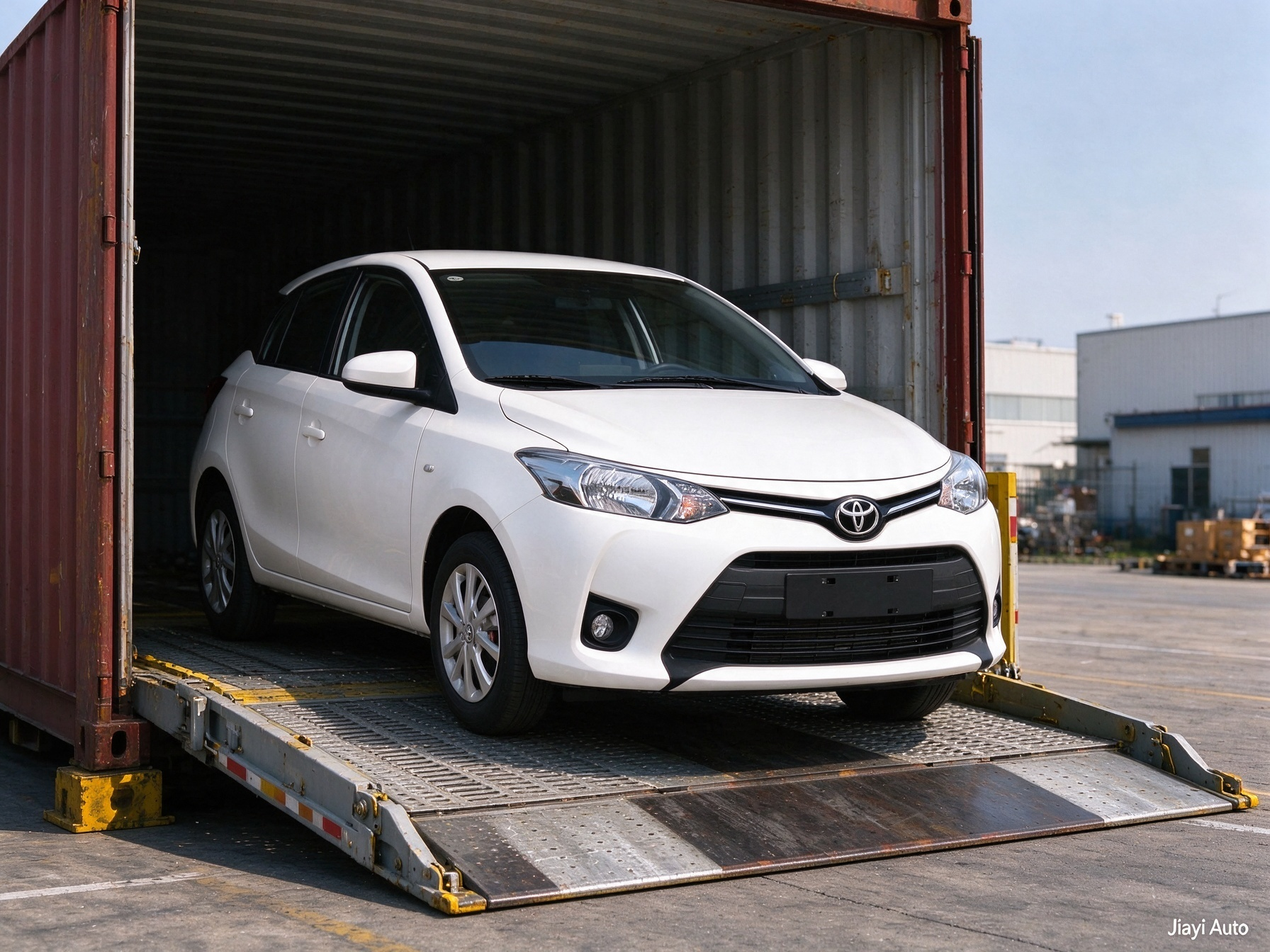
A: Yaris L enables high container density. Our loading team can arrange 4units per 40ft container depending on mix and loading layout. Higher unit counts reduce allocated sea freight per vehicle and improve overall profit margin. Jiayi Auto’s loading team uses professional lashing, padding and separation techniques to avoid body scratches and component damage during sea transit.
WhatsApp:+44 7434 584492
If you are building a balanced entry-level stock portfolio for African wholesale, the used Toyota Yaris L is a proven low-risk option. Contact Jiayi Auto to receive real-time stock lists, full inspection reports, detailed condition photos and FOB / CIF quotation for your target African destination. Our team can also advise on container mixing schemes tailored to your market demand.