How to Avoid Trade Risks in Used-Car Export: A Dealer's Practical Guide
How to avoid trade risks when buying used cars
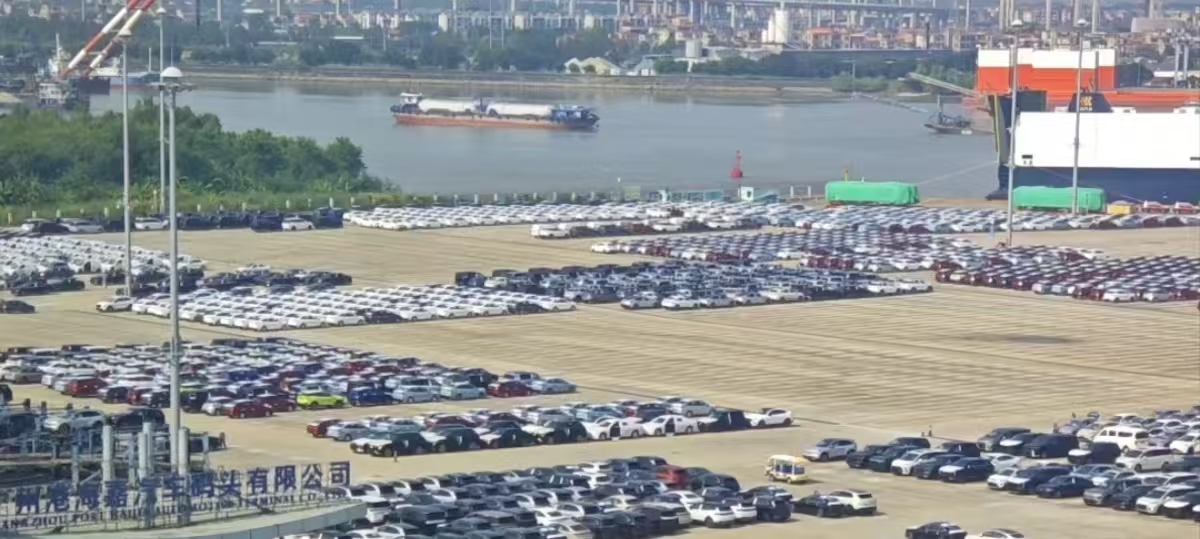
By Guangzhou Jiayi Automobile Sales Co., Ltd. | Channel: company blog | Keywords: used car export China, used car export to Africa, used car export process, used car export risks
Used-car export is governed by three rulebooks at the same time: China's licensing and inspection regime, the destination country's admission and conformity rules, and the international payment and shipping rules. Miss one of them and the cars sit at the port while the money sits in an account, and shipping them back is almost never an option.
1. The short answer: only three risks
Admission risk decides whether the vehicle can enter the country at all. It is set by the age ceiling, by left- or right-hand drive, by certification requirements, and by accident and flood history, and it moves every year or two. A single year missed on first registration is a rejection at the port, not an item to negotiate.
Funding risk decides whether you are paid in full. The question is never whether the buyer has money; it is who holds the documents when the vessel arrives, and what the release condition says in writing.
Timing risk decides whether the cargo clears customs before free storage runs out. That depends on five documents agreeing with one another, and on a destination agent who actually answers the phone.
The test for any contract is one question: if the buyer stops paying and the car cannot clear, what lever do I still hold? If the answer is “ship it back”, you hold nothing, because China's rules bar the return of used cars that have already cleared export customs. Only three levers exist: an original bill of lading that keeps control of the cargo, payment tied to the release of documents, and export credit insurance. Without them, all of the risk sits on the exporter's side of the table.
2. Five gates before the car leaves China
Gate one is the ten banned categories. Under Announcement No. 6 of 2024, issued by the Ministry of Commerce and four other departments and effective from 1 March 2024, a used vehicle may not be exported if it has reached the scrapping standard or is within one year of it; if it is under mortgage or pledge; if it has been seized or detained; if it was obtained through theft; if its documents do not match the vehicle; if it is smuggled or assembled from parts; if its papers are incomplete; if it fails inspection; or if traffic violations and accidents remain unsettled. The three that buyers of stock most often miss are mortgage or pledge, seizure, and unsettled violations, and none of them shows up in the vehicle's condition.
Gate two is third-party inspection. A licence application must be supported by a report from an approved inspection body plus a declaration of no violations or dishonesty. The governing standards are WM/T8-2022 for used passenger cars and WM/T9-2022 for used commercial vehicles and trailers. The exporter, not the inspection body, remains the party accountable for quality traceability.
Gate three is the one-licence-per-shipment rule. A single licence covers up to 20 vehicles under the same commodity code and must match the declared quantity exactly and clear in one operation. Declare fewer than you ship and you need a new licence, so the booking, the container count and the customs declaration have to be locked to the same number.
Gate four is cancellation of the vehicle registration within two months of customs clearance; overdue cancellation is a violation in itself. Gate five is the after-sales clause: the sales contract must include after-sales service, and a foreign-language contract must carry a Chinese translation, with the Chinese text prevailing. When a dispute arrives, the Chinese version is the version that decides what the contract means.
3. Africa: one card per market
Kenya applies an eight-year age limit together with mandatory right-hand drive, and the ceiling rolls forward every year: from 2025 only vehicles first registered in 2018 or later are admitted, and from 2026 the line moves to 2019. According to a January 2026 report in Kenya's The Star, the government also intends to tighten to five years in 2027, to three years in 2029, and to stop used-car imports altogether by 2030. One routing detail settles the plan: KEBS maintains inspection agencies in Japan, the UAE, the United Kingdom, Thailand, Singapore and South Africa, but not in China, so a Certificate of Roadworthiness route for China-origin units has to be designed before the sale, not discovered at the port.
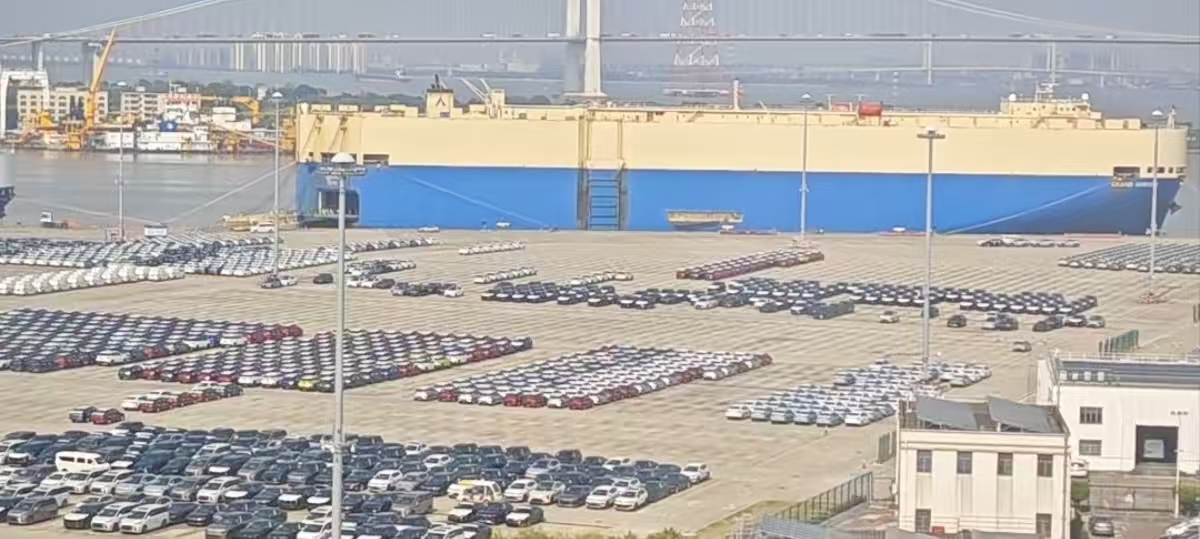
Nigeria caps imports at twelve years, which for 2026 means a build date of 2014 or later, measured by the VIN production date rather than the model year in the advert. Three requirements exist nowhere else in the region. Form M has to be opened by the buyer's bank before shipment, not after. Customs assesses duty on a VIN-based valuation database and does not accept your invoice, so a low invoice only converts into a supplementary assessment on arrival. And from 31 March 2026 the Vehicle Compliance Assessment Programme, VehCAP, requires pre-shipment inspection and a shipment certificate for vehicles, a separate regime from SONCAP, which governs spare parts. The trade still circulates two versions of the rules, twelve years against fifteen, and 20% against 35% duty; the only safe method is to verify each shipment against the latest customs notice.
Ghana requires pre-export verification of conformity, PVoC, and a certificate of conformity, CoC, travelling with the vehicle for every used car shipped on or after 1 October 2026, and the shipment date rather than the arrival date is what counts. Six categories are barred outright: flood-damaged vehicles, fire-damaged vehicles, vehicles with only scrap value or already designated for dismantling, vehicles with a damaged chassis or safety cage, vehicles assembled from parts, and vehicles whose odometer reads in units other than km/h. Anything older than fifteen years is also excluded. Inspection records enter the VEDIS platform and stay publicly searchable, so the cost of concealment is not a return shipment but a permanent record.
Tanzania does not ban the import; it taxes by age. The 2026 Finance Act sets excise at 18% for vehicles over eight and up to ten years old, 35% for over ten and up to twenty, and 40% beyond twenty years. Deals lose money here because the quotation never included the tax.
Table 1 Used-car admission rules in four African markets
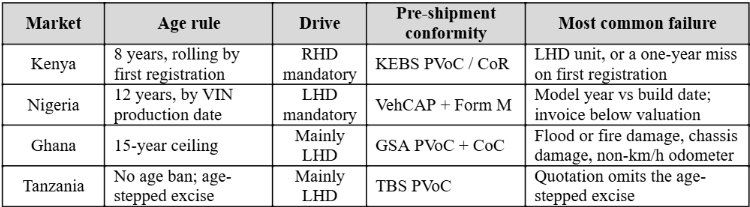
Note: status verified against official sources as of November 2026. Re-check every shipment against the destination authority's latest notice.
4. Contracts and payment: agree the structure before the price
Rank payment structures by the risk they leave with you, not by the price they unlock: full advance T/T for new or small orders; deposit plus balance before shipment for buyers with a track record, with the original bill of lading released only after the balance lands; a letter of credit for larger tickets, provided somebody reads it for soft clauses and for expiry dates that cannot be met; and D/P or D/A only for long-standing customers, with the collecting bank chosen by you and never nominated by the buyer. Price is negotiable. Structure is not.
Four contract terms carry most of the weight: VIN, production date, model year and mileage stated together with the VIN as the controlling reference; the document list and the date each document will be issued; who pays when documents do not match or conformity fails; and who absorbs demurrage and storage, plus which forum hears the dispute. The last two are the ones sales teams skip, and the ones that turn into real money the moment a buyer goes quiet and the free-storage clock starts.
Hard-currency markets need a second distinction: cannot pay versus cannot buy dollars. Currency swings and central-bank queues, rather than buyer intent, are what stretch receivables in markets such as Nigeria and Egypt. The answer is not a larger penalty deposit; it is invoicing in USD, shortening terms, and using export credit insurance where the exposure justifies the premium.
5. Title and documents: the bill of lading decides whether the money comes back
Control of the cargo lives almost entirely in the original bill of lading. A to-order B/L transferred by endorsement is the standard mechanism; a straight B/L consigned to the buyer transfers title as soon as it is issued, and afterwards the only remedy is litigation in a jurisdiction you do not know. For buyers you do not know yet, do not accept “change the consignee on arrival” or “release first, pay later”.
A case published in June 2025 by the trade service platform of the China Council for the Promotion of International Trade deserves ten minutes of every salesperson's time: a Cameroon buyer paid a 10% deposit, then used a copy of the bill of lading to file and pay tax with local customs on arrival. The cargo entered customs supervision, where it could be neither returned nor resold; the buyer went silent and the shipment drifted toward auction. The defence exists only before loading: deposit size, B/L consignee, and whether you accept payment on arrival at all. The December 2022 risk notice from the Chinese embassy's commercial office in Ghana describes the same pattern, repeated refusals of the balance, prolonged storage, and the threat of auction.
Four actions before the container closes: book space and apply for the licence only after the deposit clears; issue a to-order bill of lading with the notify party set to anyone but the buyer himself; tie the balance strictly to the release of the original documents; and confirm that the destination agent has no relationship with the buyer.
6. Logistics and batteries: get carrier acceptance first, then quote
RoRo suits driveable vehicles: lowest cost per unit, but open storage. Containers take non-runners, protect better and allow spare parts to travel legally, at the cost of professional lashing and a verified VGM declaration. In both cases the carrier's acceptance of the model is the gating item, and in peak season space simply disappears, which is lead time that belongs in the delivery promise rather than in the apology.
Battery rules changed at the start of 2026. Amendment 42-24 of the International Maritime Dangerous Goods Code became mandatory on 1 January 2026: lithium-ion battery vehicles ship as UN3556, lithium-metal as UN3557 and sodium-ion as UN3558, while hybrids generally remain under UN3166, and the old UN3171 entry no longer applies to these units. Expect to produce UN38.3 test reports, an MSDS, and per-shipment confirmation of battery condition from the carrier; there is no single state-of-charge figure that satisfies every line.
[Figure 2 placeholder: container lashing or third-party inspection]
7. Clearance and after-sales: where the margin actually disappears
Clearance rests on five documents agreeing: VIN, HS code, invoice, conformity certificate and bill of lading. Model year, specification and quantity must match across all five. A mismatch means inspection delay at best, duty reassessment or rejection at worst, and Nigeria's valuation system turns a small discrepancy straight into a tax base difference. Choose a broker on licence, comparable case history and itemised fees rather than the headline rate; the cheapest quotation is usually the one that bills you again at the port.
After-sales decides whether the buyer comes back. The export rules require mileage and repair history to be disclosed truthfully, and require technical and spare-parts support. What African dealers fear is a car that does not match its description and a breakdown with no parts behind it. The first is solved by an inspection report and a condition file travelling with the unit; the second by spares in the container and local service capacity. For EVs, add two items: a battery health report, and a note on charging and software compatibility.
8. Pre-shipment checklist: eight boxes to tick
Run this list for every shipment, sign it and file it. “It passed last time” is not a verification.
Table 2 Pre-shipment self-check for used-car export
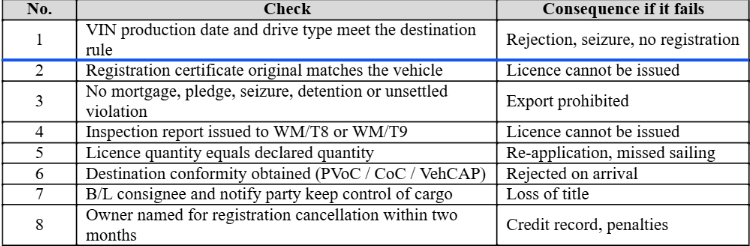
Note: compiled from China-side export requirements and the admission rules of major African markets. Apply per shipment; never substitute “last time it worked” for verification.
[Figure 3 placeholder: vehicles waiting at the port]
9. Three questions dealers ask most
What licence do I need to export used cars from China? Apply to the provincial commerce authority; once approved you may operate for one year and re-apply the following year. Trading companies also need fixed business and display premises, vehicle appraisal capability, and at least three qualified appraisers on staff.
How many cars fit on one licence, and how is age calculated? One licence per shipment, up to 20 units under the same commodity code, matching the declared quantity and cleared in one operation. Age is read from the VIN production date, not the model year in the advert and not the registration date, and in markets that test a cut-off by calendar year a single year is a rejection.
Can a low invoice reduce duty? Not in Nigeria. Customs assesses on VIN-based valuation and disregards the invoice amount, so under-invoicing converts into a supplementary bill plus inspection delay.
About Guangzhou Jiayi Automobile Sales Co., Ltd.
Guangzhou Jiayi Automobile Sales Co., Ltd. is part of the Jiayi Automotive Group and operates from the China (Guangzhou · Huadu) Auto Export Base. In August 2025 the group completed the first “one-port-through” used-car export shipment from Huadu Port. We have exported to more than one hundred countries and territories, including the models that sell best in Africa. Shipments can be arranged from the major Chinese ports, and every unit is inspected by a third party before dispatch, with a report issued.
References
[1] Ministry of Commerce and four other departments, Announcement No. 6 of 2024 on used-car export, https://www.mofcom.gov.cn/zcfb/zgdwjjmywg/art/2024/art_7caad56ec107446a9ecf0e75fc76d026.html
[2] Kenya Bureau of Standards, notice to used-vehicle importers (eight-year age limit and RHD), https://gdtbt.org.cn/html/note-393274.html
[3] Commercial Office of the Chinese Embassy in Kenya, Kenyan dealers oppose the age-limit plan (January 2026), https://ke.mofcom.gov.cn/jmxw/art/2026/art_1be8b3bf52ae42679e0da4a954652ce4.html
[4] Ghana Standards Authority, vehicle compliance programme FAQs (effective 1 October 2026), https://gsa.gov.gh/wp-content/uploads/2026/08/GHANA-VEHICLE-IMPORT-FAQs-BROCHURE_2026-08-13B-2.pdf
[5] Tanzania, Finance Act 2026, https://www.tra.go.tz/images/uploads/acts/THE_FINANCE_ACT,_2026.pdf
[6] JETRO, used-car import rules and points to note in Nigeria, https://www.jetro.go.jp/world/qa/04A-041101.html
[7] CCPIT trade service platform, African buyer traps a Chinese seller with a 10% deposit (June 2025), https://www.eccpit.com/trendings/Y21zcG86MTI3MDk
[8] Commercial Office of the Chinese Embassy in Ghana, trade risk notice (December 2022), https://gh.mofcom.gov.cn/jstx/art/2022/art_85fb26ee4cd4456d8fda5d1984e26de2.html
[9] IMDG Code Amendment 42-24, mandatory from 1 January 2026, https://chinawto.mofcom.gov.cn/article/jsbl/dtxx/202511/20251103609317.shtml
[10] Nanfang Plus, first “one-port-through” used-car export from Huadu (August 2025), https://www.nfnews.com/content/mobWLq7nyk.html
Appendix A Publishing configuration and keyword plan (delete before publishing)
Suggested URL: /blog/used-car-export-risk-guide/
Page title (≤60 characters): How to Avoid Trade Risks in Used-Car Export: A Dealer's Practical Guide | Jiayi Auto
Meta description (≤155 characters): Licence, inspection and African market admission, plus payment, title and shipping controls, explained step by step for used-car exporters.
Primary keywords: used car export China, used car export to Africa, used car export process, used car export risks. Long tail: used car export licence China, used car export inspection report, export used cars to Kenya / Nigeria / Ghana, used car export payment risk.
Table A.1 Buyer search terms by intent and the page that should answer them
Table A.1 Buyer search terms by intent and the page that should answer them
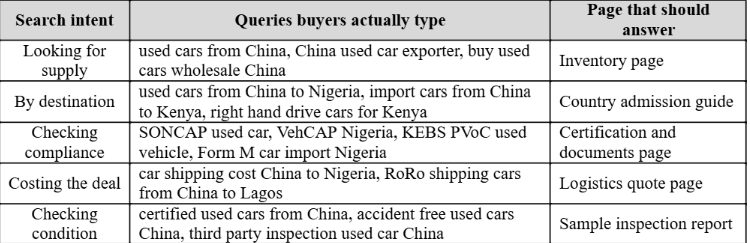
Image plan: cover as a 16:9 wide shot of the Huadu export base or a batch of staged vehicles, alt text “used cars staged for export at Jiayi Auto's Huadu export base”; Figure 1 alt “preparation and inspection of vehicles for African markets”; Figure 2 alt “container lashing and third-party inspection for used-car export”; Figure 3 alt “vehicles waiting for loading at the port of departure”. Three internal links: inventory page, country admission guide, contact page. Add FAQPage structured data for the three questions above.