Flood Damaged Used Cars to Nigeria: How to Spot Flood Cars Before Shipment
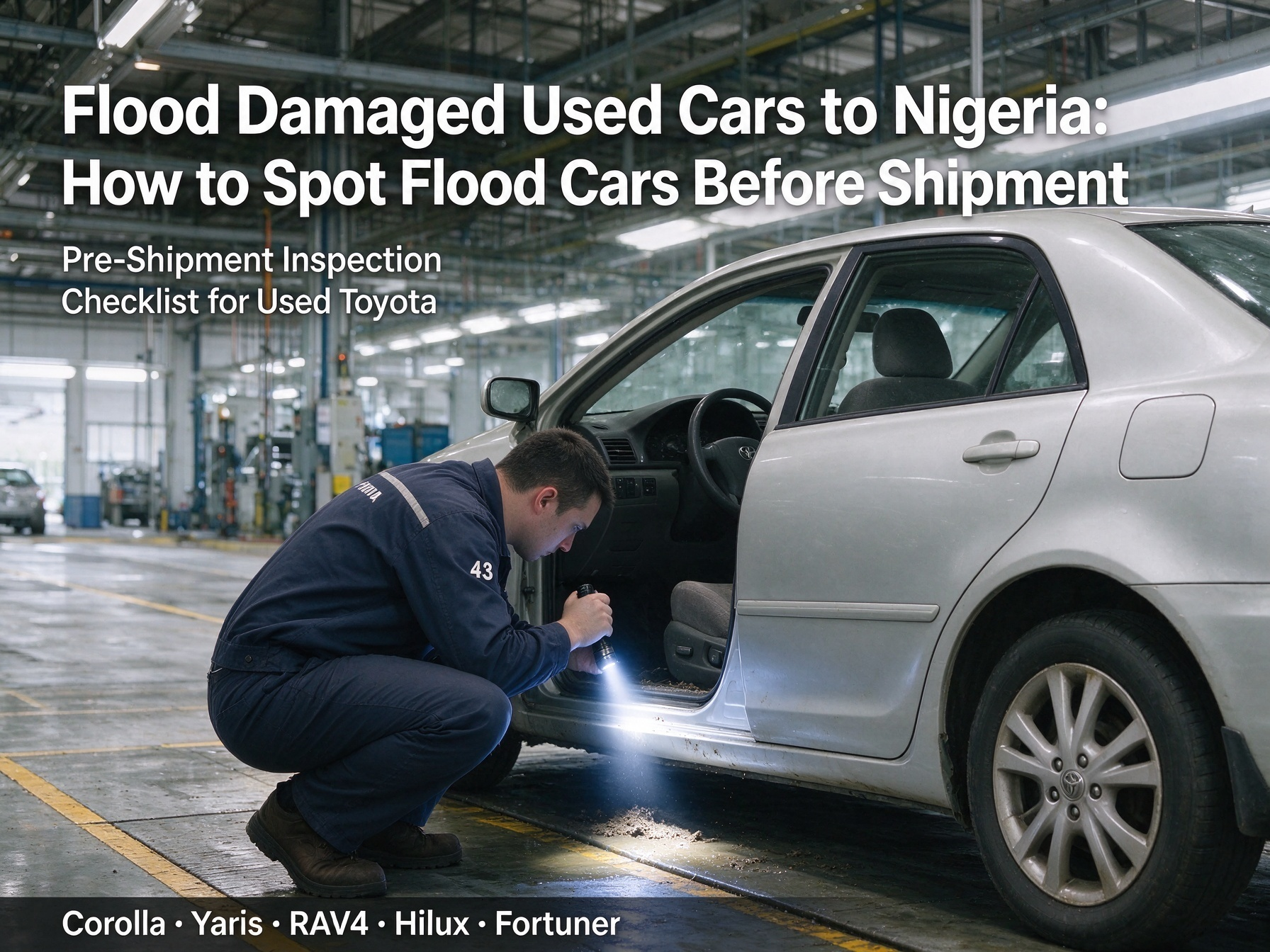
Flood-damaged used cars are one of the most dangerous hidden risks for Nigerian tokunbo importers. A flooded Toyota may look clean after cosmetic cleaning, but hidden water damage causes electrical failure, corrosion, airbag malfunction, engine damage and very high repair costs in Nigeria. This guide from jiayi Auto explains how to identify flood-damaged used cars before shipment, including interior water marks, hidden corrosion, electrical faults, airbag system issues, VIN history checks and mechanical inspection. We also share our pre-shipment inspection workflow for used Toyota vehicles exported to Lagos, Ibadan, Port Harcourt and Abuja.
Nigerian importers buy used Toyota vehicles from China, UAE, Japan and South Korea because they expect reliable stock for local resale and commercial use. But flood-damaged units are often cleaned, dried and resold without full disclosure. By the time electrical problems and corrosion appear after arrival in Lagos, it is usually too late to return the vehicle.
Flood damage is particularly harmful in Nigeria’s hot and humid coastal climate. Even small amounts of saltwater or muddy water can start corrosion inside wiring harnesses, control modules and metal frames. After several months, connectors fail, sensors stop working, and the car begins to develop recurring faults that are expensive to repair.
This guide focuses on practical inspection methods that help Nigerian dealers identify flood-damaged used cars before shipment. Add One Auto uses a multi-point inspection process for every Toyota unit, including Corolla, Yaris, RAV4, Hilux and Fortuner, to reduce the risk of shipping hidden flood damage to Nigeria.
1. Why Flood-Damaged Used Cars Are a Serious Risk for Nigerian Importers
Many Nigerian dealers underestimate flood damage because they only check the outside of the vehicle. A professional detail can make a flood car look like normal used stock. However, water can enter many hidden areas:
- Dashboard and instrument cluster
- Engine control module and wiring harnesses
- Airbag and restraint system
- Seats, seat belts and under-carpet structure
- Fuel system, exhaust system and suspension components
Once the vehicle arrives in Nigeria, corrosion can appear slowly. Some faults start after weeks or months of use, when the car is already in the dealer’s inventory or sold to an end user. This creates warranty costs, lost reputation and slow resale.
For commercial models such as Hilux and Fortuner, flood damage is especially dangerous because these vehicles are often used for long-distance transport, construction work or business trips. A sudden electrical failure or brake system fault can create serious safety problems.
2. First-Level Check: Interior and Exterior Flood Signs
The first step is to look for clear physical evidence of water intrusion. Nigerian importers and clearing agents should ask suppliers for detailed photos of the following areas:
Interior Signs
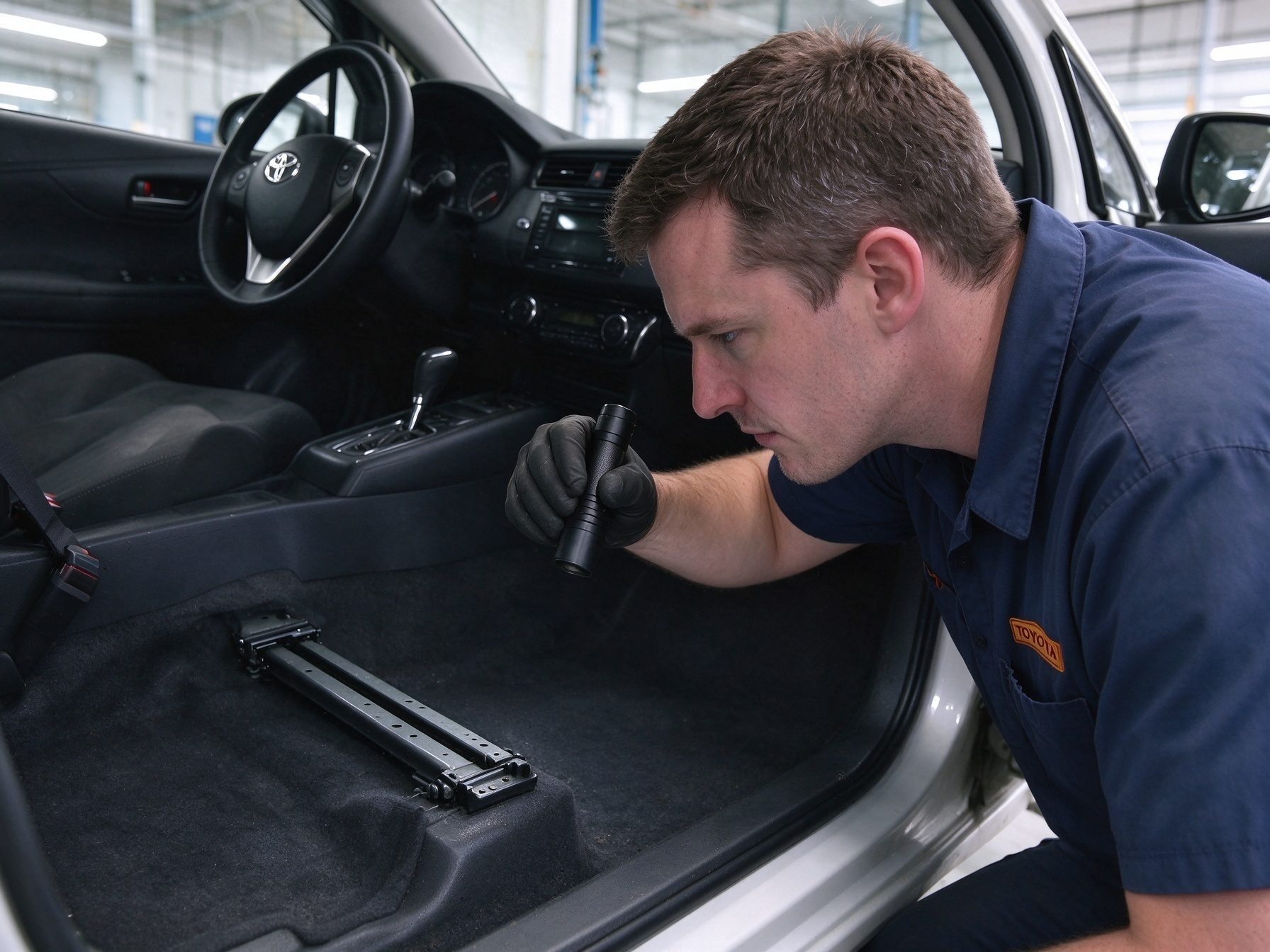
- Water marks or stains on the dashboard, steering column and centre console
- Mud, sand or silt inside seat rails, seat belts and door pockets
- Unusual or strong odour, especially after the car has been closed for several hours
- Damp carpets, rust under the floor mats, or mismatched carpet colour
- Signs that many interior parts have been replaced at the same time
Exterior Signs
- Rust in unusual places: door edges, wheel arches, headlight interiors and body seams
- Mud or silt in the engine bay, chassis rails and undercarriage
- Foggy headlights or taillights that do not clear after drying
- Corrosion on electrical connectors, ground wires and sensor plugs
- Sudden differences in paint condition around the engine bay or frame
If a supplier says the car was “only in shallow water” or “just washed”, but the inspection photos show repeated corrosion and mud traces, the unit should be treated as high risk.
3. Second-Level Check: Electrical and Airbag System Inspection
Water damage rarely stays only in the interior. It usually affects the vehicle’s electrical system, which is why OBD scanning and function testing are critical.
Add One Auto recommends checking:
- All fault codes in ECU, TCM, ABS, airbag and other control modules
- Mileage data and module health to detect inconsistent history
- Operation of all windows, mirrors, locks, lights, wipers and infotainment functions
- Airbag warning light behaviour and restraint system records
- Condition of wiring harnesses, connectors and fuse boxes
A flood car may have temporary electrical faults that disappear after drying. This does not mean the vehicle is safe. Corrosion can remain inside connectors and cause intermittent failures later.
4. Third-Level Check: Engine Bay, Undercarriage and Mechanical Condition
Nigerian dealers should also ask for clear photos and videos of the engine bay and undercarriage. Flood damage often leaves evidence in these areas.
Key areas to inspect:
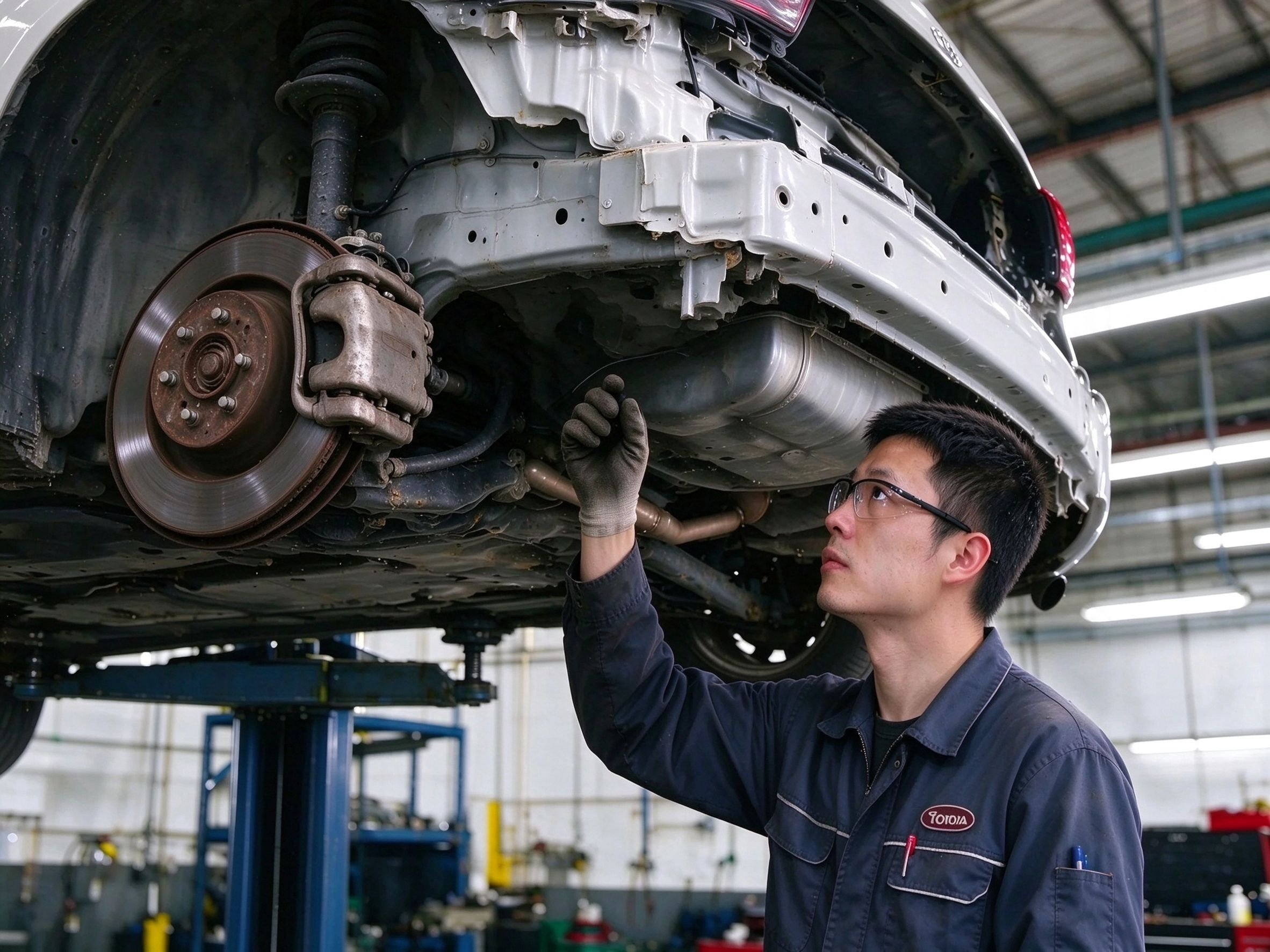
- Mud, silt or rust inside the engine bay and around the intake system
- Water marks on the engine cover, transmission casing and suspension parts
- Corrosion on starter motor, alternator, sensors and ground cables
- Rust on chassis rails, floor pans and suspension mounting points
- Condition of the exhaust system, fuel system and brake lines
For diesel Hilux and Fortuner units, extra attention should be paid to the turbocharger, injectors, gearbox and electrical sensors. Water intrusion into diesel components can cause very expensive failures.
5. VIN History and Document Check
Physical inspection should always be combined with a vehicle history check. Nigerian importers should ask suppliers for:
- Full VIN history report
- Any previous salvage, flood or insurance total-loss records
- Service records and maintenance history
- Photos of the vehicle before cleaning and repair
- Clear statement of title status
A clean appearance does not override a bad VIN history. If the vehicle history shows a flood record or salvage title, the dealer must reject it or accept it only after extremely careful technical review.
6. Add One Auto Pre-Shipment Inspection Workflow for Nigeria
At Add One Auto, we apply a strict flood-damage inspection process for every used Toyota unit before loading it into a container for Nigeria:
Step 1: Document Review
We confirm the VIN and check available vehicle history records for flood, salvage or total-loss branding. Any suspicious history is rejected immediately.
Step 2: Interior Inspection
Our inspectors check the dashboard, seats, seat belts, carpets, door pockets and wiring areas for water marks, mud, silt and unusual odour.
Step 3: Electrical and OBD Scan
We perform a full system scan using professional diagnostic tools. We check ECU, TCM, ABS, airbag, body control modules and all visible wiring connectors.
Step 4: Engine Bay and Undercarriage Inspection
We inspect the engine bay, chassis, suspension, exhaust and brake lines for hidden corrosion and mud traces.
Step 5: Test Drive and Final Report
The vehicle receives a road test to confirm normal engine, transmission, brake and electrical behaviour. If it passes all checks, we issue a full pre-shipment inspection report before loading.
7. Practical Checklist for Nigerian Importers
Use this checklist when evaluating any used Toyota from a foreign supplier:
- Ask for detailed interior photos, including under carpets and seat belts
- Request engine bay and undercarriage photos
- Ask for a full OBD scan report, including airbag and module health
- Check VIN history for flood or salvage records
- Reject vehicles with strong unusual odour or repeated corrosion
- Do not accept “only shallow water” claims without full inspection evidence
- For Hilux and Fortuner, add extra checks on diesel system and electrical sensors
- Confirm the supplier provides a written pre-shipment inspection report
FAQ
Q1: Can a flood-damaged Toyota be cleaned and become safe?
A1: It depends on the level of water intrusion. Minor surface water may leave little damage, but deep or muddy flood water often causes hidden corrosion and electrical faults. In Nigeria’s coastal climate, these problems can reappear months after shipment.
Q2: Are Hilux and Fortuner more sensitive to flood damage?
A2: Yes. Both models have complex diesel systems, turbochargers, gearboxes and multiple electrical control modules. Water intrusion into these parts can lead to very expensive repairs.
Q3: Can basic OBD tools detect flood damage?
A3: Basic OBD tools may show some fault codes, but they cannot replace a full physical inspection. Flood damage often leaves hidden corrosion and intermittent electrical problems that do not always appear as permanent codes.
Q4: How can I trust that the supplier’s photos are real?
A4: Ask for timestamped photos, open-door interior shots, undercarriage videos and OBD scan screenshots. A professional exporter should provide all of these before loading.
Q5: What should I do if I already received a flood-damaged car in Nigeria?
A5: Document all faults, corrosion and electrical issues immediately. Contact your supplier and clearing agent. However, once the vehicle is cleared and used, claims become much more difficult. Prevention before shipment is always better.
WhatsApp:+44 7434 584492
If you are sourcing used Toyota vehicles for resale in Lagos, Ibadan, Port Harcourt or Abuja, do not allow flood-damaged units into your inventory. jiayi Auto provides a complete pre-shipment inspection service for Corolla, Yaris, RAV4, Hilux and Fortuner units, including interior flood-mark checks, electrical scanning, undercarriage inspection and VIN history verification. Contact us today to request wholesale stock and inspection reports.