Hilux Alternatives for the African Market: Pickups for All Budgets and Requirements
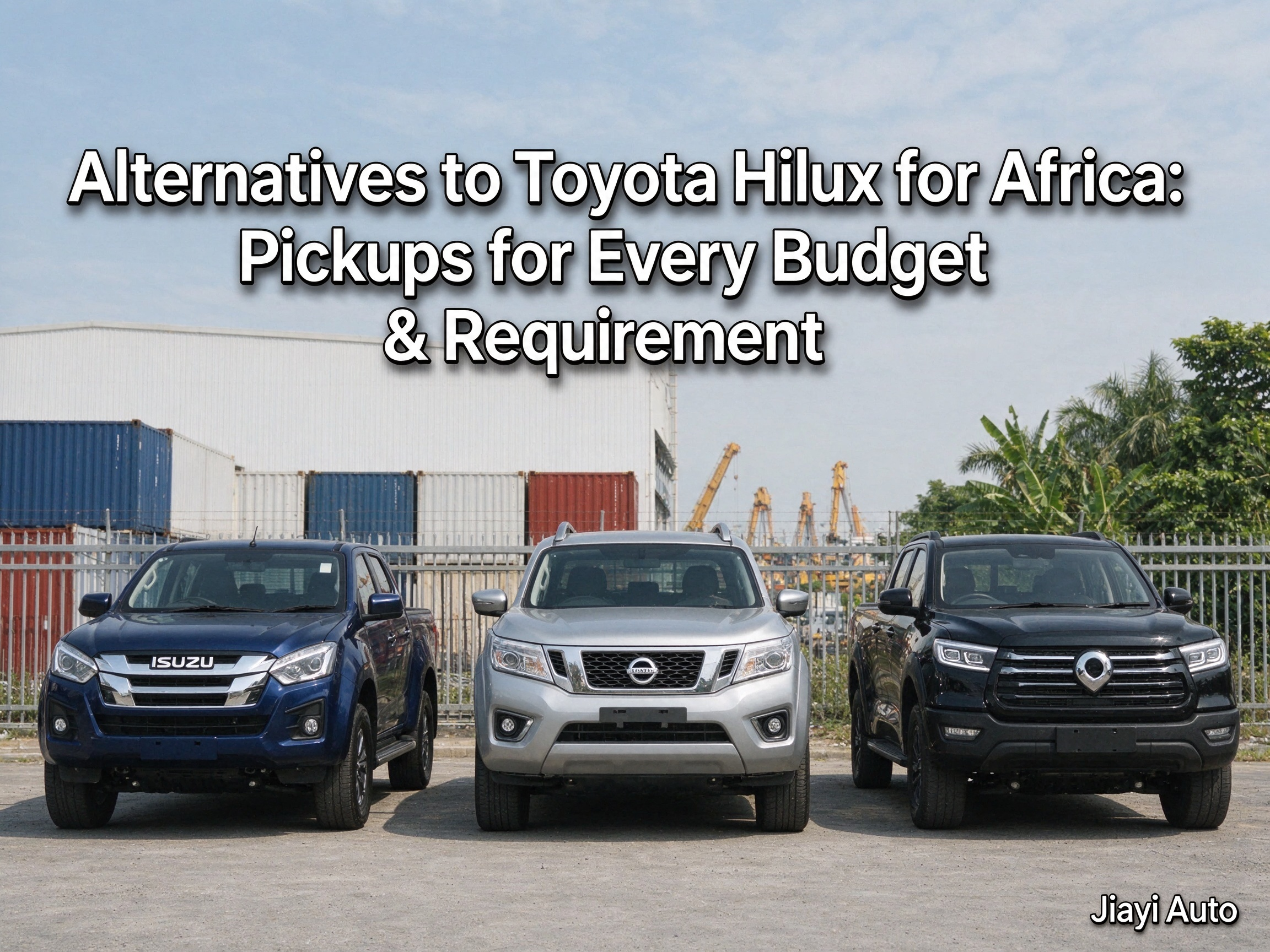
Toyota Hilux has long been the gold-standard pickup truck for African dealers, but high purchase prices and tight stock often limit importers’ choices. This guide introduces three reliable alternatives: Isuzu D-Max, Nissan Navara and Great Wall Poer. We compare their diesel fuel consumption, spare parts availability, load capacity, off-road performance, wholesale price range and risk points, covering low-budget, mid-range and high-performance demands. This article helps West African importers from Nigeria, Ghana and Togo select suitable pickup trucks according to their customer budget and usage scenarios, reduce reliance on Hilux and expand profitable inventory.
For decades, the Toyota Hilux is the undisputed king of African pickup markets. Farmers, construction contractors, mining operators and small cargo traders all trust Hilux for its tough body-on-frame chassis, simple diesel engine and easy-to-find spare parts across villages and remote towns. However, good-condition used Hilux stock is scarce, and the wholesale price keeps rising sharply. Many African dealers are looking for stable, durable alternatives with different budget levels.
Jiayi Auto selects three mature left-hand drive diesel pickup models available in China stock: Isuzu D-Max, Nissan Navara and Great Wall Poer. Each targets different customer groups. We break down specs, advantages, weaknesses, parts supply and wholesale tips for West African importers.
Here's the English version, ready to copy:
---
1. Isuzu D-Max (1.9L / 3.0L diesel, 4x2 / 4x4)
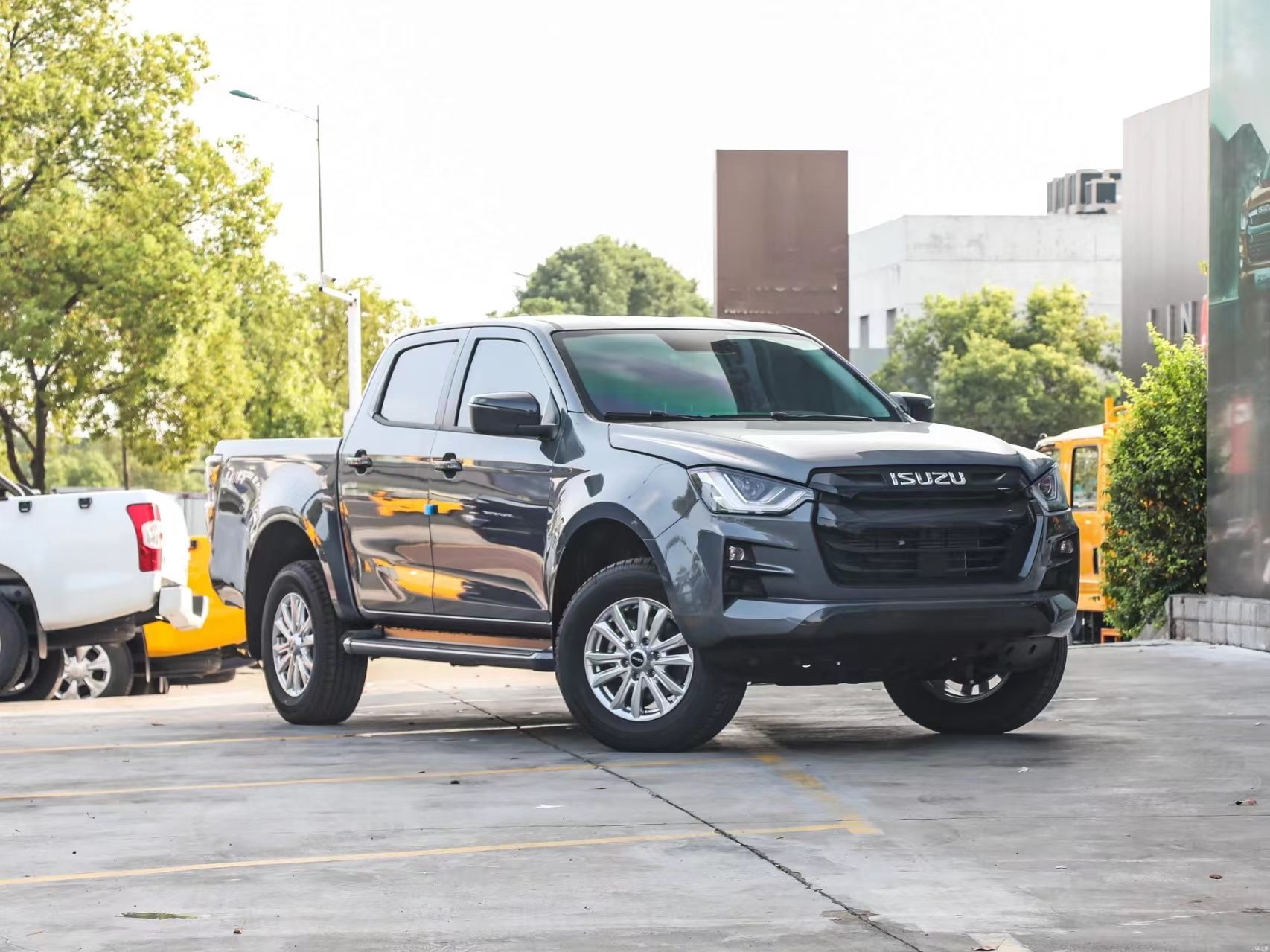
The Isuzu D-Max is the closest rival to the Hilux in the African market, renowned for its rugged diesel engines. It is the first choice for dealers who want Hilux-level reliability without the Hilux price tag.
• Engines: 1.9L turbo diesel (RZ4E) / 3.0L turbo diesel (4JJ3), both with high-pressure common-rail direct injection and a variable-geometry turbocharger (VGT)
• Real-world fuel consumption: 1.9L approx. 7.0–8.0 L/100 km; 3.0L approx. 7.5–9.5 L/100 km (higher under heavy load or on poor roads)
• Transmission: 6-speed manual / 6-speed automatic
• Maximum payload: approx. 1.0–1.2 tonnes, depending on version
• Export specification: double cab, ladder-frame chassis. Current models come with an ECM, DPF, EGR and an electronically controlled turbo actuator — not a purely mechanical injection pump. Mechanical-pump engines belong to the previous-generation 2.5L / 4JB1 models
• Parts availability in West Africa: excellent. Isuzu has a long-standing service network in Nigeria, Ghana and Cameroon. Filters, injectors, clutch kits, water pumps and chassis parts are commonly stocked in major auto-parts markets and can be serviced at rural workshops. Parts for the older 2.5L/4JB1 are especially plentiful; common-rail parts for newer models are also available in major cities
✅ Strengths
1. Strong low-end torque and a proven reputation for durability; long service life and low failure rates with regular maintenance.
2. Light body weight and excellent fuel economy from the 1.9L engine, with stable resale value.
3. Strong 4x4 capability on muddy farm tracks and gravel roads, with a wading depth of around 800 mm — the highest of the three.
4. Deep localisation: the South African plant supplies more than 30 African markets, and the dealer and service network in West Africa is mature.
❌ Weaknesses
5. The 3.0L consumes noticeably more fuel than the 1.9L.
6. The current common-rail system means injectors are sensitive to poor-quality fuel — use clean diesel and stick to the service schedule. Short city trips can also clog the DPF.
7. Model-specific electronic interior parts are sparsely stocked locally, and cabin specification is relatively plain.
💡 Wholesale recommendation
Stock the 1.9L manual 4x2 as your main volume model for farms and general freight, with a small allocation of 3.0L 4x4 for mining sites and remote construction customers. This is the safest mid-range substitute for the Hilux. Note that the JIM-ISUZU pickup assembled locally in Nigeria is a 2.4T — a different product from the 1.9L/3.0L — so distinguish them clearly when ordering.
---
2. Nissan Navara (NP300 / D23, 2.5L YD25 diesel)
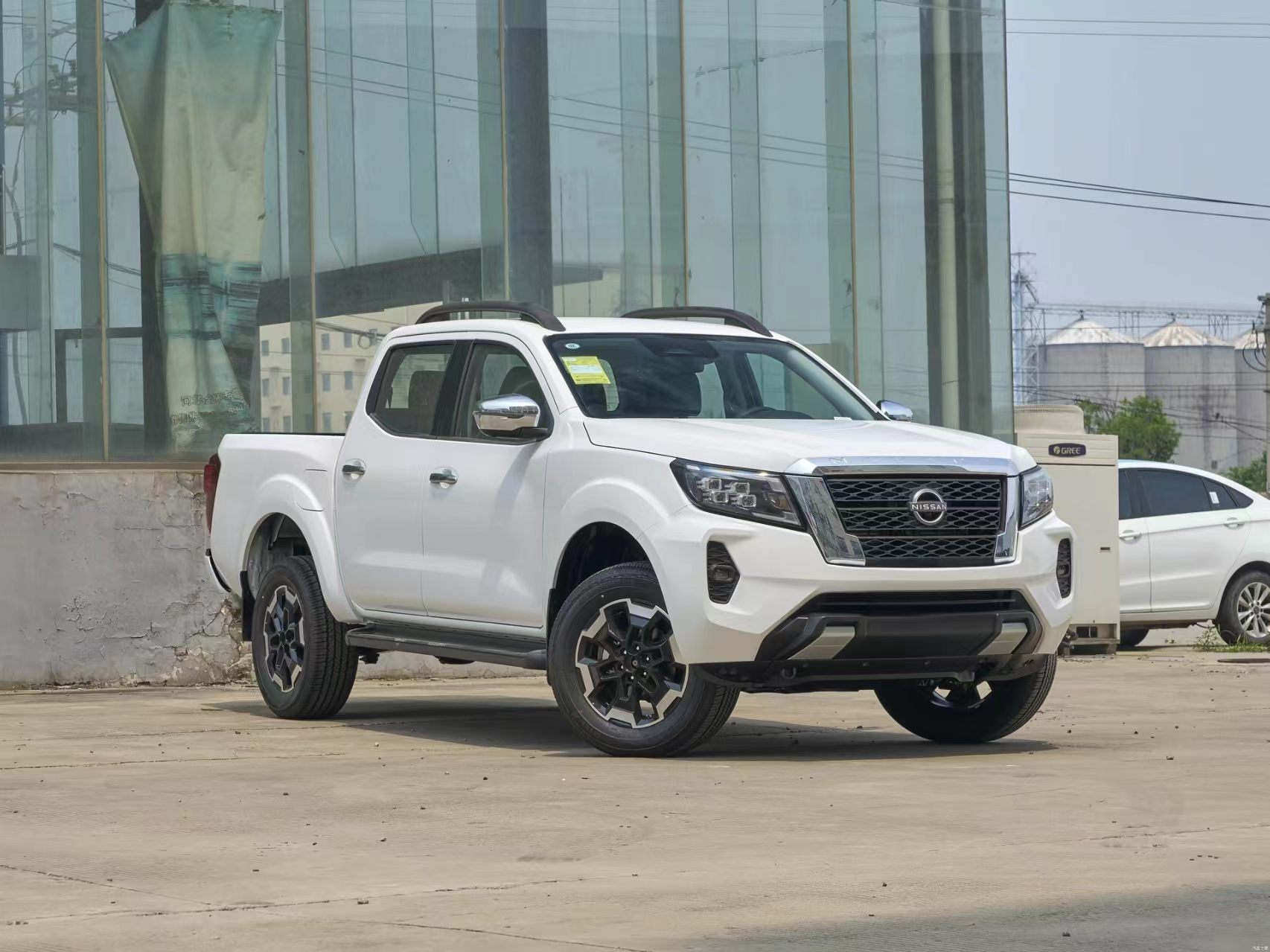
The Nissan Navara sits in the mid-range segment, balancing comfort, payload and off-road ability. It suits customers who need a work vehicle that also serves as a family car.
• Engine: 2.5L turbo diesel YD25 (2.5 DDTi in South Africa and other African markets: 120 kW / 403 Nm with manual, 140 kW / 450 Nm with automatic; some other markets use a 2.3L diesel)
• Real-world fuel consumption: 7.8–9.0 L/100 km
• Transmission: 6-speed manual / 7-speed automatic
• Maximum payload: approx. 0.9–1.1 tonnes (around 1.0 tonne for the double-cab 4x4)
• Export specification: double cab, five-link coil-spring rear suspension (best ride comfort in its class), wheelbase of 3,150 mm (longer than the D-Max, shorter than the Poer), better interior trim and softer suspension tuning
• Parts availability in West Africa: medium-to-good. Engine wear parts are well stocked in Lagos and Accra; some body panels and electronic sensors can take a long time to source in remote towns. Nissan's sales and aftersales network remains in place, but see the supply-chain note under Weaknesses
✅ Strengths
1. Better ride quality than the D-Max and Hilux; the five-link rear axle suits long-distance hauling.
2. Strong low-end torque, good for towing and heavy loads, with braked towing capacity of around 3,500 kg.
3. The YD25 is a mature engine that many local mechanics know well.
4. In Ghana, locally assembled SKD Navaras once overtook the Hilux as the best-selling pickup, so customer recognition is high.
❌ Weaknesses
4. The turbocharger and EGR system must be inspected before shipment — poor fuel quality easily damages them.
5. The suspension is soft and not suited to prolonged overloading.
6. The model is at the end of its lifecycle: Nissan has sold its Rosslyn plant in South Africa to Chery (handover in mid-2026), Ghana's SKD kit supply from South Africa has been interrupted and switched to Thailand, and South Africa will only receive a facelift in Q4 2026. Landed prices and lead times are therefore uncertain.
💡 Wholesale recommendation
Target business-plus-family users and warn customers in advance against long-term overloading. It can still be kept as a backup when D-Max supply is tight, but confirm actual stock and lead times after the 2026 supply-chain shift before placing orders.
---
3. Great Wall Poer (2.0T diesel, 4x2 / 4x4)

The Great Wall Poer is the high-value budget option, with the biggest price advantage of the three. It suits small traders and newly established fleet customers.
• Engine: 2.0L turbo diesel GW4D20M (120 kW / 400 Nm); some newer stock carries the 2.4T diesel — confirm the engine model in writing when ordering
• Real-world fuel consumption: 8.5–10 L/100 km
• Transmission: 6-speed manual / ZF 8-speed automatic
• Maximum payload: approx. 1.05–1.2 tonnes (official rated payload 1,050 kg; 1,200 kg in some markets — broadly on par with the D-Max. The "1.5-tonne" claim has no official basis)
• Export specification: double cab, rich equipment, spacious cabin, ladder-frame chassis. Minimum ground clearance is around 227 mm — on par with the D-Max and below the Hilux (approx. 279 mm)
• Parts availability in West Africa: limited local stock. Model-specific parts mostly need to be ordered from China; basic wear items such as filters and brake pads are available locally. Ghana now has GWM's exclusive assembly and distribution partner (Zonda Tec, with the third phase of its Tema plant commissioned in September 2026), so the official channel there is better than in other West African countries
✅ Strengths
1. Clear wholesale price advantage: 25–35% cheaper than the Hilux and D-Max for the same model year. In Ghana the on-the-road price is about 65% of a Hilux and roughly US$8,700 below a comparable Navara.
2. Tough chassis and payload on par with the D-Max, using a widened and thickened ladder frame with leaf springs — suited to high-frequency heavy loads at construction sites and farms.
3. High equipment levels: large screens, L2 driver assistance, a 360-degree camera and more, far ahead of Japanese rivals at this price point — modern features at a low budget.
❌ Weaknesses
4. Local mechanics have limited experience repairing Chinese 2.0T diesel engines.
5. Electronic modules and turbo parts are hard to find in rural areas; used-car residual value is weaker than Japanese brands, which matters in West Africa's used-vehicle-dominated market.
6. Wading depth is only 500 mm, clearly below the D-Max (approx. 800 mm) and the Navara (600 mm), and ground clearance offers no advantage either. It is weaker than the Japanese rivals in rainy-season deep water and harsh mining conditions.
💡 Wholesale recommendation
Position it as a low-price alternative and ship with a small spare-parts kit (filters, gaskets, sensors). Ghana can take moderate volume thanks to local assembly and distribution; for other West African markets, start with small mixed-container trial orders. If your customers have no reliable parts channel back to China, do not make it core stock. Quote the actual 1.05–1.2 tonne payload and 500 mm wading depth — do not promise 1.5 tonnes or high off-road capability, to avoid customer expectation gaps and aftersales claims. Note: West Africa is a left-hand-drive market, so confirm LHD configuration when ordering.
Full Comparison Table
表格
| Model | Engine | Fuel Consumption L/100km | Max Load | West Africa Parts Supply | Target Buyer | Price Tier | Risk Level |
|---|---|---|---|---|---|---|---|
| Isuzu D-Max | 1.9L / 3.0L Diesel | 7.0–8.0 / 7.5–9.5 | ~1 ton | Excellent | Farm, contractor, replacement for Hilux | Mid | Low |
| Nissan Navara NP300 | 2.5L YD25 Diesel | 7.8–9.0 | ~1 ton | Good | Family + business, long-distance haul | Mid | Medium |
| Great Wall Poer | 2.0T Diesel | 8.5–10 | 1.05–1.2 tons | Limited | Small traders, budget fleet buyers | Budget | Medium-High |
Buying Strategy for African Pickup Dealers
- Core replacement stock (50% of your Hilux substitute order): Isuzu D-Max. It is the safest choice, closest to Hilux reliability and parts network.
- Supplementary stock (30%): Nissan Navara. For customers who value comfort and long-distance driving.
- Budget trial stock (20%): Great Wall Poer. For price-sensitive clients, small batch trial only.
- Universal pre-shipment inspection focus for all three pickups: Diesel injector condition, turbo leak test, chassis rust check, cooling system, clutch wear, fuel tank sealing. Bad fuel and hot weather in West Africa easily damage diesel injection systems.
FAQ
Q: Which one is the best direct replacement for Hilux?
A: Isuzu D-Max 1.9L diesel. Maintenance logic, durability and parts coverage are the most similar to Hilux. It is the lowest-risk substitute.
Q: Can Great Wall Poer compete with Japanese pickups in rural markets?
A: It has strong price appeal, but you must inform buyers about spare parts limitations. It works better for urban and peri-urban clients.
Q: Does Jiayi Auto supply these three pickup models?
A: Yes. Jiayi Auto has stable LHD diesel D-Max, Navara and Great Wall Poer stock in China. We complete road test, diesel system inspection and chassis anti-rust treatment before loading to Lagos and Tema ports. Mixed loading with sedans and SUVs is available.
WhatsApp:+44 7434 584492
If you are looking for reliable Hilux alternative diesel pickups for your wholesale business in West Africa, contact Jiayi Auto. We help you match models to your customer budget, arrange mixed container shipment and provide full pre-shipment inspection reports.