Used Car Container Loading Best Practices for Shipment to Lagos
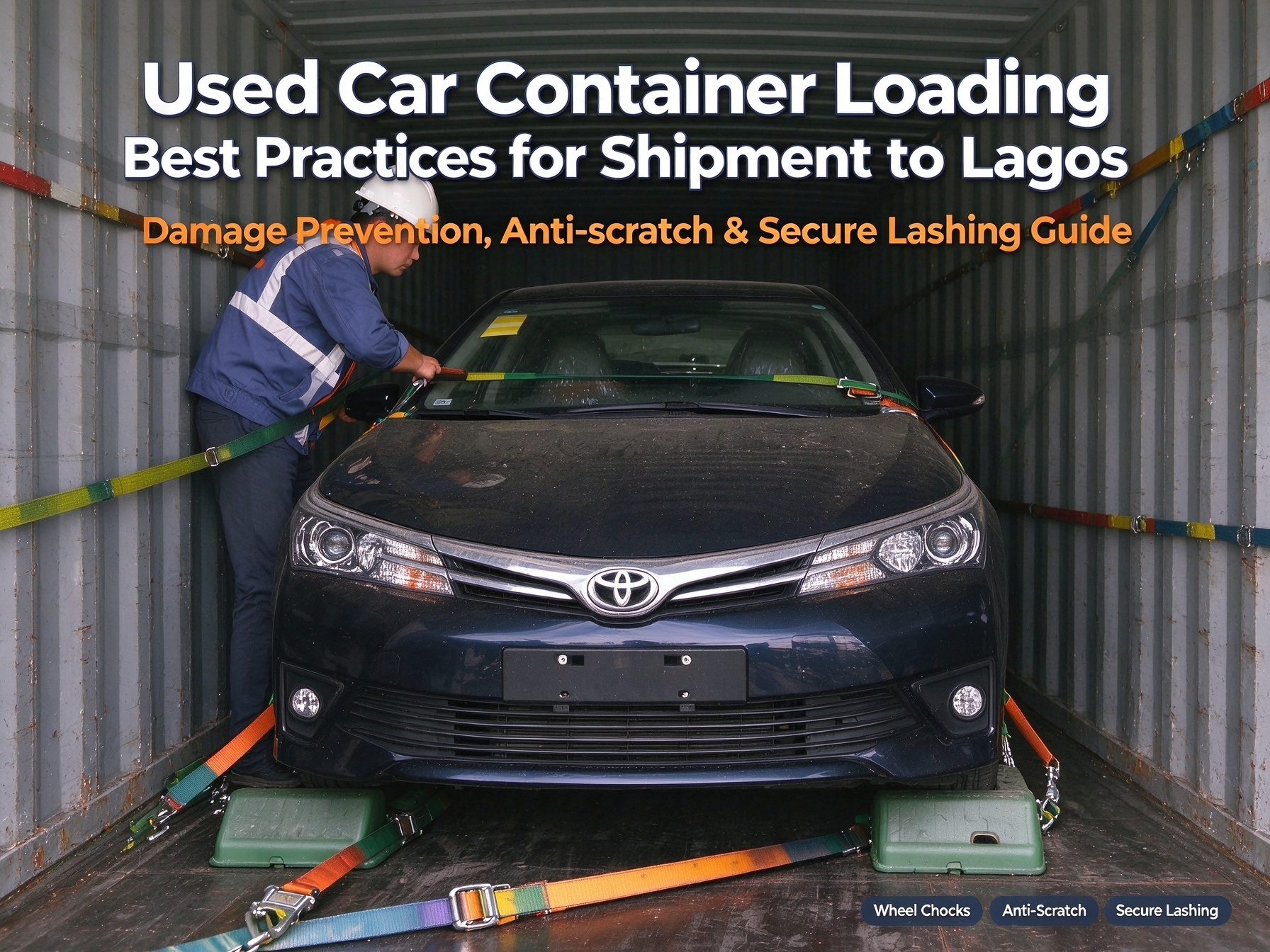
For used car dealers importing vehicles from China to Lagos (Apapa and Tin Can Island ports), container loading mistakes are one of the top causes of costly paint scratches, suspension damage, dents and broken parts. The long ocean voyage to Nigeria brings heavy rolling, humidity and vibration. Poor lashing, bad container layout or missing protective steps can turn a clean used Toyota into a damaged stock when opened at destination. This article shares professional loading best practices, anti-scratch protection rules, wheel securing methods, preloading checks and documentation standards that Add One Auto follows for every consignment bound for Lagos. Whether you import sedans, SUVs or Hilux pickup trucks, these steps reduce transit damage, simplify insurance claims and help you receive vehicles matching the pre-loading photos.
Nigeria is one of China’s most important export markets for used Toyota vehicles. Most independent car dealers and fleet procurement clients prefer container shipping over roll-on/roll-off (Ro-Ro) vessels, as it offers better privacy, a lower risk of theft, and allows mixed loading of multiple vehicle models. However, many Lagos importers have suffered losses: low-cost container loading services often carry substantial hidden costs.
Containers travel across the Atlantic Ocean to Lagos amid constant hull movement. Insufficient gaps between vehicles, loose securing straps, and unprotected side mirrors can lead to scuffs and scratches, cracked bumpers, and deformed suspension components. Much cargo damage is not caused by rough sea conditions, but by rushed loading operations, untrained workers, and incorrect securing points.
Jiayi Auto ships hundreds of used Toyota vehicles to Nigeria every year. We strictly follow CTU cargo regulations and marine cargo lashing standards, and implement standardized anti-scuff procedures for all containers. This guide is written for Nigerian used car importers to help you understand proper container loading workflows, clarify which items to verify with exporters, and avoid expensive repair bills once vehicles arrive at Apapa Port or Tin Can Island Port.
1. Pre-loading: Container and vehicle inspection (before vehicles enter the container)
Before vehicles are driven or winched into the container, the empty container must undergo a full inspection. Many low-cost loading teams skip this step, yet it is critical for shipments bound for Lagos.
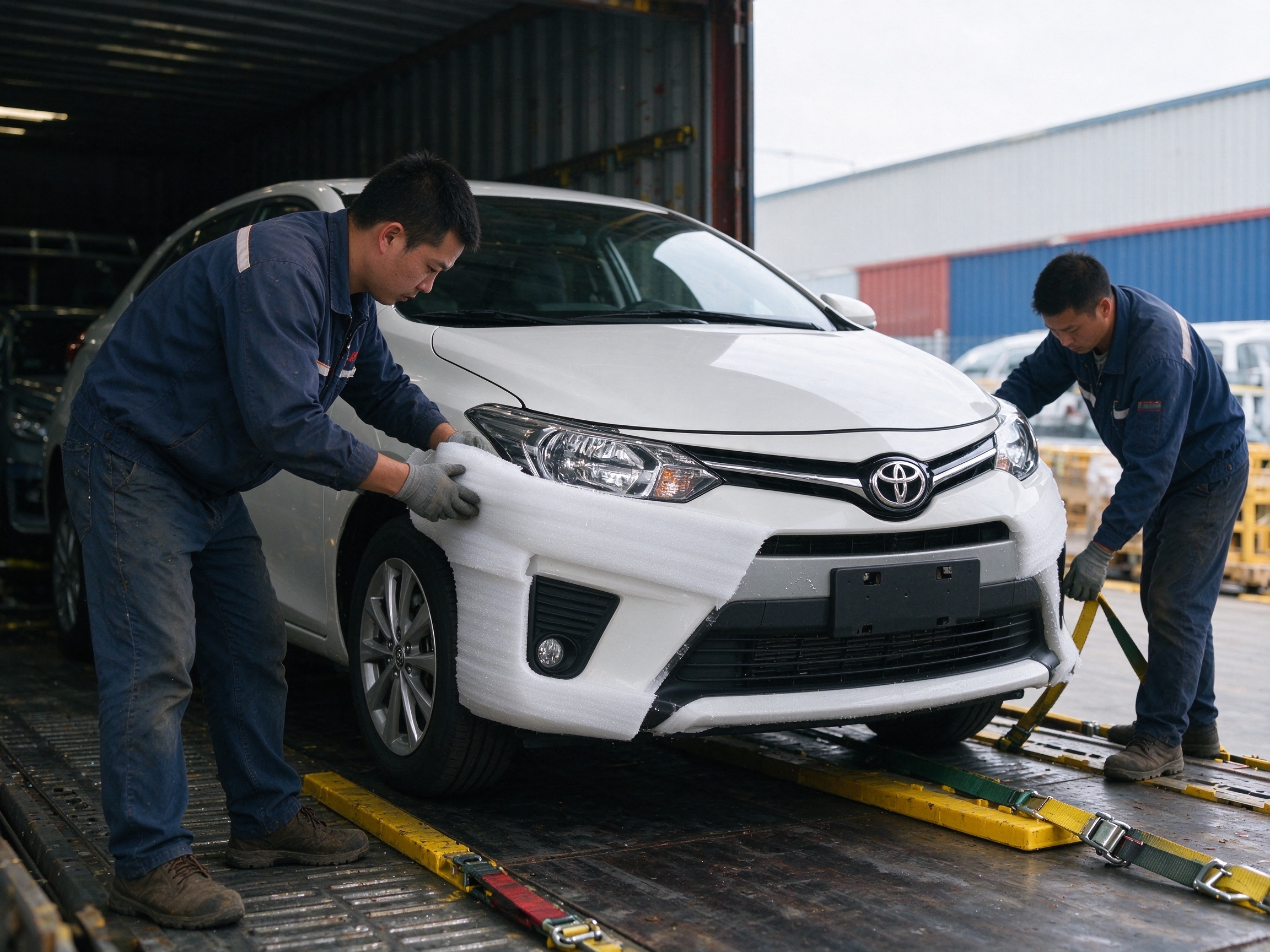
First, inspect the container floor, side panels, door frames and D-ring lashing points. Check for protruding sharp nails, broken metal edges, rusted flooring, raised bolts, and leftover debris. Any sharp metal inside the container can easily scratch paint, side skirts and bumpers if vehicles shift slightly during transit. If a container’s D-rings are damaged, it must not be used to load vehicles; failed securing points create serious safety hazards and will result in insurance claim rejections.
Next, inspect container seals, door gaskets and drainage holes. The shipping route to Lagos crosses the hot, humid equatorial zone. Rainwater ingress and condensation inside the container can cause mould growth on vehicles, rusted brake discs and corroded wiring harnesses. Containers with damaged rubber gaskets must be replaced. All our containers shipped to Nigeria are fitted with high-capacity desiccants placed at multiple positions inside.
Then carry out pre-loading vehicle protection. This protection checklist applies to every used Toyota:
• Fold side mirrors and wrap them with thick bubble wrap or anti-scuff foam
• Retract antennas
• Apply protective tape to door handles, front and rear bumpers and fog lamp housings
• Remove all loose items from the cabin: spare tyres, tools, floor mats and water bottles
• Keep the fuel tank below one-quarter full to comply with marine fire safety regulations
• Disconnect the negative battery terminal and wrap it with insulating tape to prevent short circuits and battery drain during long ocean transit
• Check tyre pressure; do not overinflate, as high temperatures inside sealed containers can cause blowouts
• Fully close all windows and the sunroof, then lock the vehicle
• Take photos for filing: front view, rear view, both sides, close-ups of existing scratches, the VIN and odometer readings. These serve as insurance evidence if new damage is found when the container is opened in Lagos.
A common mistake by other exporters: dirty, sharp-edged wheel rims and vehicles packed tightly together. Friction from vessel movement at sea leaves permanent paint scratches. When space is limited, we install foam separators between vehicles.
2. Container layout and weight distribution for shipments to Lagos
Most Nigerian car dealers use 40-foot high cubes for mixed loads including Vios, Yaris, Corolla, RAV4, Fortuner and Hilux. A small number of clients use 20-foot containers for small batches of 2–3 vehicles. Layout planning is not only about fitting more cars; an unbalanced centre of gravity creates container hazards and raises the chance of cargo damage.
Heavy vehicles such as Hilux and Land Cruiser should be positioned near the middle of the container, rather than stacked all at the front or rear. Heavy SUVs and pickups cannot be stacked directly above passenger cars unless certified heavy-duty double-deck loading racks are used. We strongly advise Nigerian buyers to avoid low-quality stacking racks, many of which deform at sea and crush vehicle bodies.
Safe clearance gaps must be maintained between vehicles and container walls, and between vehicles themselves, with a minimum of 8–10 centimetres on all sides. Overcrowded vehicles will rub against each other and sustain scratches from minor shifting. When mixing sedans and taller SUVs, align vehicle heights to prevent impacts on bonnets and roofs.
Mark parking positions for each vehicle in advance, and the loading supervisor plans the loading sequence before moving vehicles. Vehicles are driven in at low speed under dedicated supervision; non-starting vehicles are pulled by winches. Manually pushing vehicles inside the container is forbidden, as loss of control will cause direct body impacts.
3. Correct lashing and wheel securing: the key step to prevent shifting
The handbrake and P (Park) gear alone are insufficient to hold vehicles in place during the long ocean voyage to Lagos. Vibration and rolling waves compress suspension systems and cause vehicles to slide forward or sideways. Our standard solution: wheel chocks plus certified polyester ratchet straps fastened to the D-rings on the container floor.
Solid wood or rubber chocks are fitted against the front and rear of each tyre, held firmly against the tread with no slack. Heavy vehicles including Hilux and Fortuner receive additional timber bracing as secondary restraints.
Straps must be secured around tyres or wheel rims. Attaching hooks to suspension arms, control arms, exhaust pipes or body panels is strictly prohibited. This is the most frequent error made by inexperienced loading crews. Metal hooks fixed to suspension components often result in bent control arms, cracked oil pans and irreparable wheel alignment damage by the time the container reaches Tin Can Island Port.
We use high-tensile polyester straps marked with rated load capacity. Each wheel is lashed at a 30–45 degree diagonal angle to resist forward and sideways movement, with even tension across all four wheels. Over-tightening a single strap will twist the vehicle body and damage suspension parts.
High-centre-of-gravity vehicles such as Hilux pickups and Fortuner SUVs shift more easily in rough seas and require extra lashing points for improved stability.
4. Practical anti-scuff measures to reduce post-unloading complaints in Lagos
Scratches are the most frequent type of damage encountered by Lagos car dealers receiving shipments, and many can be avoided with simple protection.
Protect every surface that may contact other vehicles or container walls: bumpers, side skirts, mirror housings and front grilles. Thick foam wrapping is preferred over thin plastic film, which tears easily after weeks of transit vibration.
Where straps cross painted surfaces, place soft protective pads between the strap and paintwork. Without pads, ratchet straps rubbing back and forth will leave long scratches on doors and fenders.
If accessories are shipped with the vehicle, they must be packed separately in rigid boxes secured to the container floor. Loose boxes bouncing inside can shatter vehicle glass, and spare tyres must not be placed directly against body panels.
Workers are banned from standing or stepping on roofs, bonnets and side steps during loading, as foot traffic causes dents and cracked glass.
5. Final loading procedures and photographic documentation (for Lagos importers)
Once all vehicles are positioned, chocks fitted and lashing completed, take a full set of photos before closing the container doors:
• Empty container inspection photos
• Pre-loading condition photos of every vehicle
• Close-ups of chocks and strap lashing for each vehicle
• Full panoramic shot of the fully loaded container
• Close-ups of closed doors, container number and seal
Send the complete photo set to the Nigerian buyer before vessel departure. This serves two core purposes: first, you can verify loading quality before shipment; second, photos act as primary evidence for marine insurance claims if damage is discovered on opening in Lagos.
Mark the manifest clearly on the outside of the container door, listing VINs, models and quantities, to help Apapa Port clearing agents speed up customs inspection checks.
6. Common container loading errors for Nigerian importers to watch for
We have seen many mistakes by competitors, and recommend checking these points before the exporter seals the container:
1. Using iron chains instead of soft polyester straps to secure wheel assemblies
2. Failing to fit wheel chocks and relying solely on straps
3. Overpacking the container with no clearance gaps
4. Attaching strap hooks to suspension, steering or exhaust components
5. Leaving batteries connected, risking fluid leaks that corrode wiring
6. Omitting desiccants, leading to rust from condensation in high heat
7. No pre-loading photos to prove original vehicle condition
8. Mixing heavy pickups and light sedans without centre-of-gravity planning
Any one of these faults can turn a profitable wholesale order into a loss. Even with a lower loading quotation, local repair costs in Lagos usually far exceed the price difference.
7. Jiayi Auto: Container loading guarantees for used Toyota shipments to Lagos
Jiayi Auto specialises in exporting quality used Toyota vehicles to Nigerian car dealers. All containers bound for Lagos follow a standardised loading SOP. Our loading teams are familiar with Africa shipping routes and strictly enforce anti-scuff and lashing rules, with no cut corners on protective materials, chocks or photographic records.
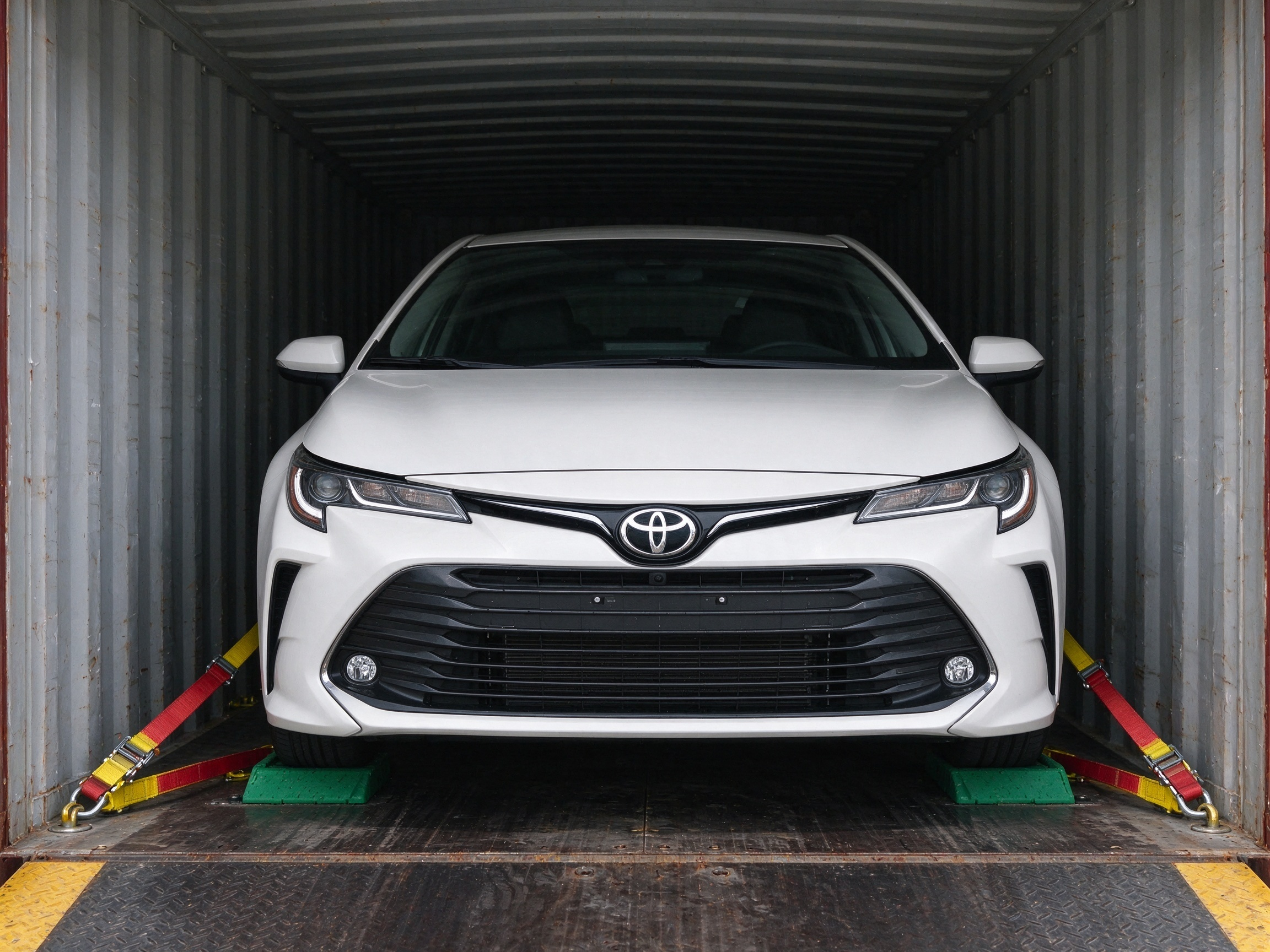
Mixed loading of Vios, Corolla, Yaris, RAV4, Fortuner and Hilux is available. Full vehicle inspection and loading photos are supplied before vessel loading. Our goal is simple: when you open the container in Lagos, the vehicles are in exactly the same condition as they were before loading in China.
If you require a formal quotation for wholesale used Toyota vehicles plus container loading for Apapa Port and Tin Can Island Port, send us your target models and purchase quantities. We will provide a detailed proposal including layout, estimated sailing schedule and supporting SONCAP clearance documentation.
Frequently Asked Questions
Q1: Can 4 vehicles be safely loaded into a 40HQ container to Lagos?
A1: This is feasible for compact sedans such as Vios and Corolla, but centre of gravity and side clearances must be strictly controlled. The safe quantity is reduced for heavy SUVs including Hilux and Fortuner. We provide a layout plan prior to loading.
Q2: What should I do if scratches are found on opening the container in Lagos?
A2: Compare against pre-loading photos. If scratches are new damage from ocean transit, file a marine insurance claim. Complete photo records for every container are mandatory for this reason.
Q3: Must batteries be disconnected on all vehicles shipped to Nigeria?
A3: Yes. High heat and humidity inside containers create a risk of battery leakage, corrosion and even fire. We disconnect and insulate the negative terminal on every vehicle.
Q4: How long is the ocean transit from China to Lagos?
A4: Transit time is approximately 35–50 days, depending on the shipping line and congestion levels at Apapa and Tin Can Island Ports.
WhatsApp:+44 7434 584492
If you are a used car dealer in Lagos sourcing reliable used Toyota vehicles from China, welcome to partner with Jiayi Auto. We offer professional vehicle inspection, secure container loading and full transparent documentation. Send us your list of target vehicle models to receive a wholesale quotation and loading plan for your next container.