Full Introduction to the 2018 Toyota Prado|Specifications, Advantages and Purchasing Guide for African Importers
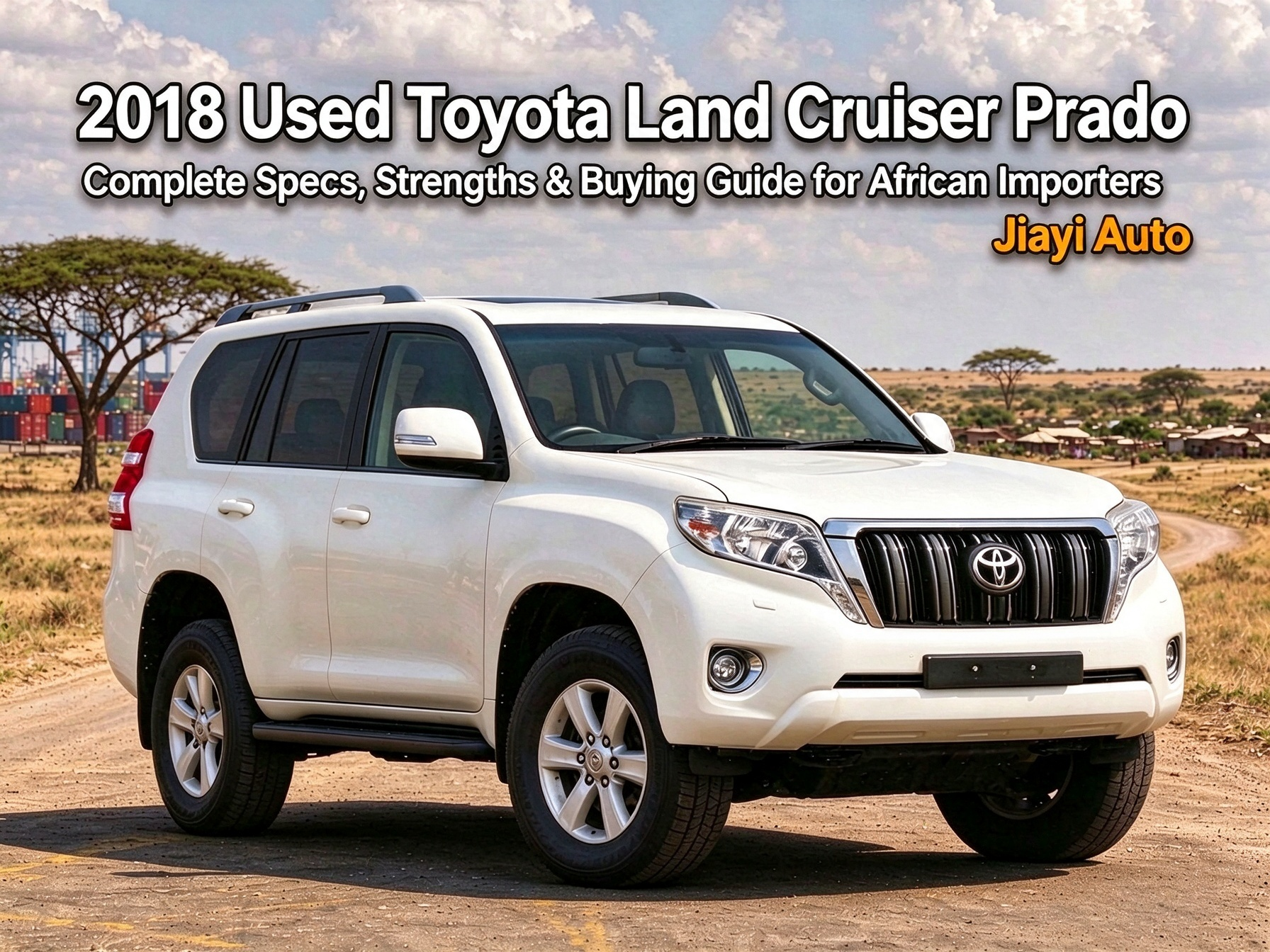
The 2018 Toyota Prado (J150 series) is a rugged used SUV renowned for its strong resale value and durability in the African market. This article introduces its basic specifications, the differences between the 2.7L and 3.5L variants, and its four-wheel-drive and suspension structure. It elaborates on its core advantages suited to Africa’s high temperatures, poor-quality fuel and rough road conditions, while objectively stating the model’s drawbacks. It also includes the **Jiayi** exclusive pre-shipment inspection standards to help African used car wholesalers distinguish between variants, control inventory risks, and understand the real-world performance of Prados sourced from China.
2018 Toyota Land Cruiser Prado (LC150): A Complete Sourcing Guide for African Importers
In Africa's used-car market, few SUVs carry the reputation of the Toyota Land Cruiser Prado 150 Series (2018 model). Across West Africa, East Africa and Southern Africa, this is far more than a family SUV — farm operators, mining contractors, safari tour operators, long-haul traders and affluent households all put it at the top of their list.
Its enduring popularity comes from simple, proven mechanicals, tolerance of inconsistent fuel quality, serious off-road capability, and a spare-parts network that reaches virtually every major African city and remote town.
One fact to settle before you source: the 2018 model-year Prado built by FAW Toyota in China came only with the 3.5L V6 — the 2.7L was discontinued in October 2017. Any 2018-model 2.7L on the market is a Middle East specification parallel import. The two versions differ in drivetrain, fuel requirements and body dimensions, so this guide treats them separately to help you avoid ordering the wrong stock.
1. Overview
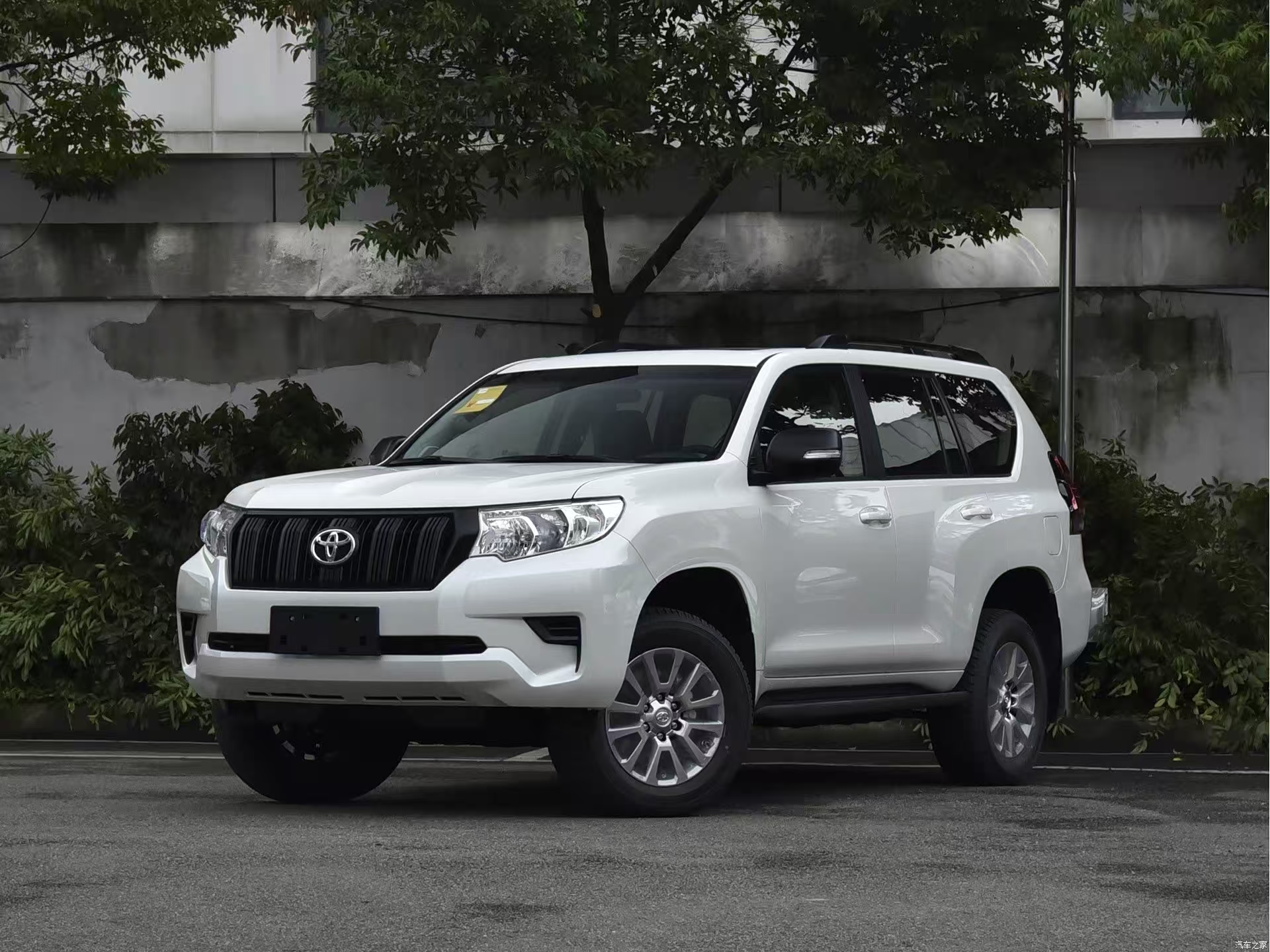
- Construction: Body-on-frame with a separate ladder chassis — far more durable on rough roads than a city-oriented unibody SUV.
- Dimensions: 4,840 mm long (5,010 mm with the rear-mounted spare wheel) × 1,885 mm wide × 1,890 mm high; 2,790 mm wheelbase; 215 mm minimum ground clearance (fully laden). Enough height to clear muddy farm tracks, rain-eroded rural roads and mining gravel.
- Seating: Seven seats (2+3+2) across the range; third row folds sideways to free up cargo space.
- Trim levels: SX, TX, TX-L, TX-L NAVI, VX and VX-NAVI. TX-L and VX dominate the domestic Chinese market.
- Steering: All units supplied by Jiayi are left-hand drive (LHD), compliant with the regulations of the vast majority of African countries.
2. Two Powertrains: Differences and Best-Fit Markets
2.1 3.5L 7GR-FKS V6 — the only engine in the 2018 domestic model
- 280 hp (206 kW) and 365 N·m, paired with a 6-speed automatic transmission.
- D-4S dual injection (direct + port injection), 11.8:1 compression ratio.
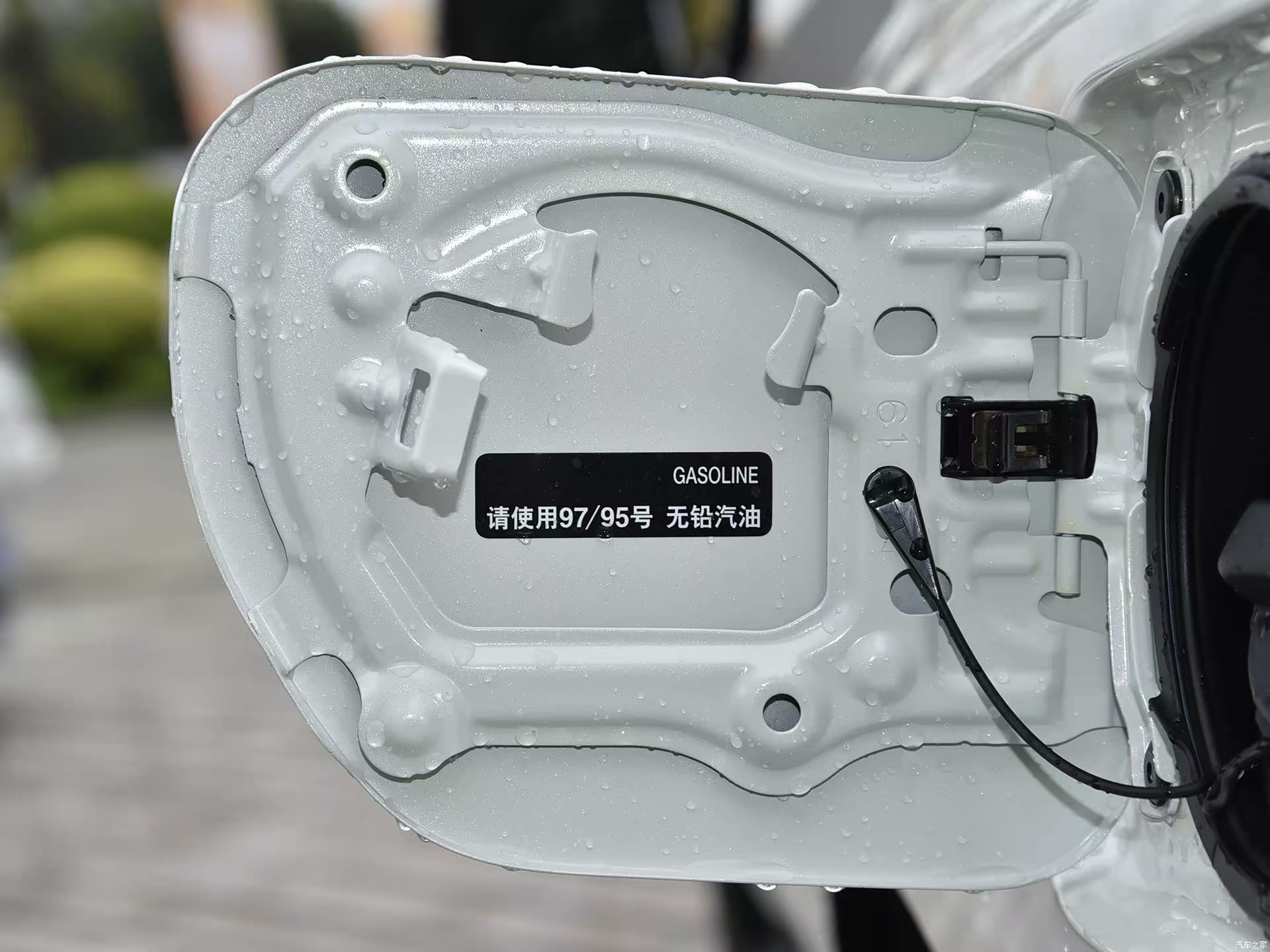
- Fuel requirement: 95 RON, as specified by Toyota. Make this crystal clear to your customers. Running 92 RON or lower over the long term causes knocking, retarded ignition timing, power loss, roughly 3–8% higher fuel consumption, and in severe cases damage to pistons and cylinder walls. Unstable fuel grades in parts of Africa are the single biggest ownership barrier for this V6.
- Real-world combined consumption: approximately 13–15 L/100 km.
- Best for: mining sites, heavy construction and safari operators who regularly carry loads or climb long gradients.
2.2 2.7L 2TR-FE inline-four — Middle East parallel import
- 163 hp (120 kW) and 246 N·m, paired with a 6-speed automatic transmission.
- Multi-point fuel injection, roughly 10:1 compression ratio, simpler mechanics and fewer electronic modules.
- Minimum fuel requirement: 92 RON. Highly tolerant of the low-grade, inconsistent petrol commonly found at rural filling stations; resistant to knocking and carbon buildup.
- Real-world combined consumption: approximately 12–15 L/100 km, depending on terrain and load.
- Cheap to maintain, repairable by any mechanic familiar with Toyota, and rarely troublesome — the safest bet for high-turnover, low-after-sales-risk stock.
3. Drivetrain and Suspension: Version-Specific Information
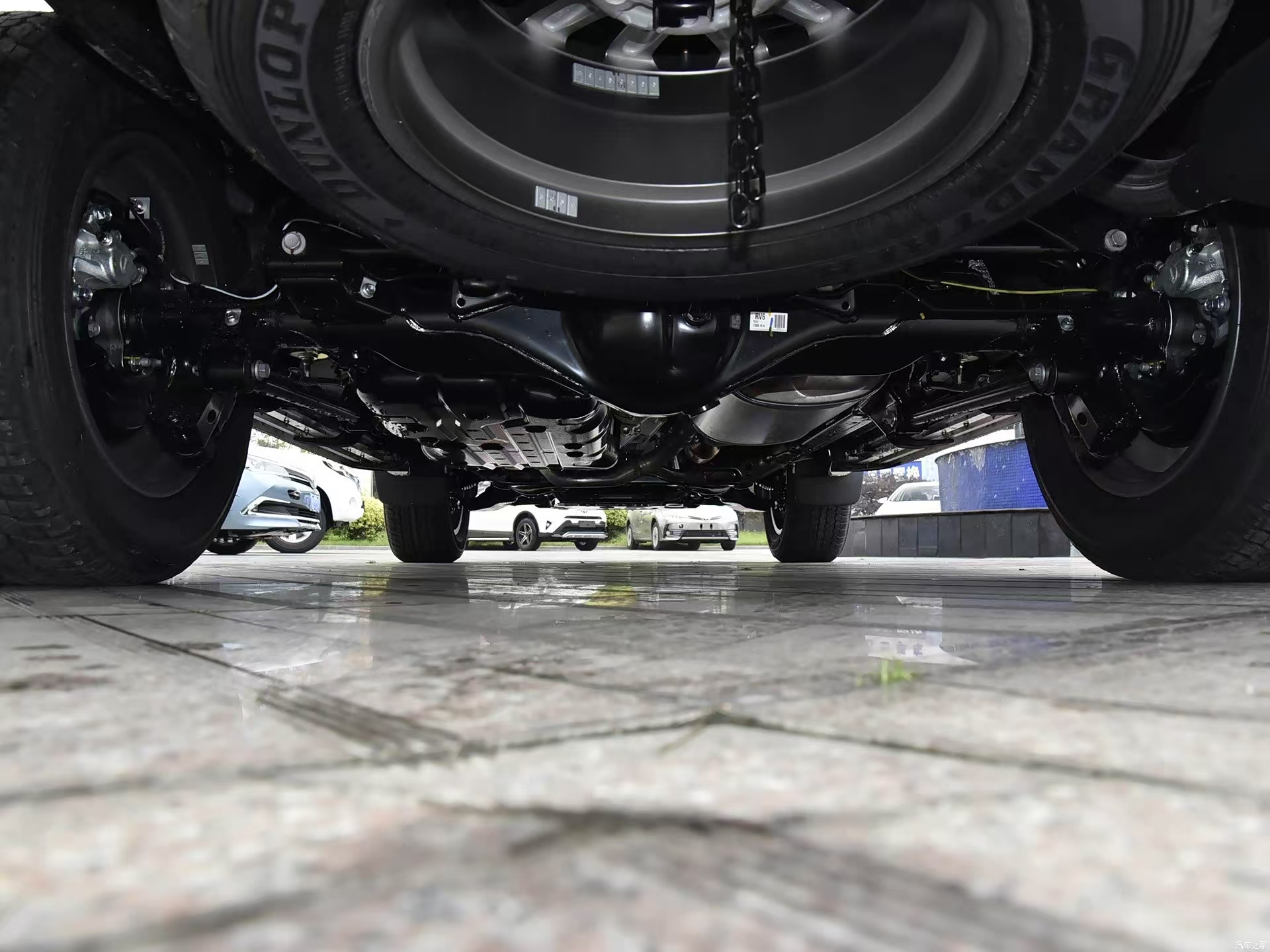
3.1 2018 domestic 3.5L — Torsen part-time 4WD (VFF4AM)
The most important change in the 2018 mid-cycle refresh: full-time 4WD was replaced by part-time 4WD, and both the center differential lock and rear axle lock were deleted.
- 2H — rear-wheel drive, for paved roads.
- 4H — high-range four-wheel drive, unpaved roads only. On wet paved surfaces use 2H, not 4H; engaging 4H on pavement causes binding in the steering and drivetrain stress.
- 4L — low range, torque multiplied approximately 2.566×, for deep mud, sand and rock crawling.
- There is no separate center-lock button. The Torsen center differential automatically splits torque between the axles (roughly 30:70) in 4H, working with electronic traction control to free a stuck vehicle.
3.2 Middle East 2700 — full-time 4WD
- Full-time four-wheel drive with a Torsen center differential lock (some trims also add a rear axle lock), allowing 4H use on paved roads.
- This is a key reason the Middle East version commands a stronger off-road reputation.
3.3 Suspension
Double-wishbone independent front suspension, four-link solid rear axle with coil springs. The live rear axle is inherently load-biased and impact-resistant, resisting fatigue on continuously corrugated surfaces. VX and above are fitted with KDSS (Kinetic Dynamic Suspension System), improving on-road stability while allowing greater wheel articulation off-road.
4. Why It Works in Africa
- Fuel and heat tolerance
The 2.7L runs happily on 92 RON and has few electronic modules, keeping repair thresholds low. A large radiator and dual cooling fans give healthy thermal margins, while Middle East specification adds hot-climate cooling and a 150-litre fuel tank. That said, in 38–45°C conditions any engine depends on a well-maintained cooling system — which is why it is a priority in our pre-shipment inspection. - Spare parts available across the continent
Filters, brake pads, shocks, bushings, water pumps and seals are stocked in Lagos, Accra, Nairobi, Dar es Salaam, Lusaka and countless secondary towns. Local mechanics have decades of Prado experience, sharply reducing warranty complaints and the risk of slow-moving inventory. - One vehicle, many customer types
Family highway travel, farm transport of produce and tools, national-park safari work, contractor staff and equipment movement — one vehicle covers several buyer segments, which speeds up turnover. - Strong residual values
In Africa the Prado depreciates far more slowly than comparable Chinese, Korean or European large SUVs. Customers commonly recover a high share of their purchase price after two to three years — a persuasive line in your retail pitch. - Stable LHD domestic supply, flexible container consolidation
Jiayi selects well-maintained LHD units from the domestic market and can load Prados together with sedans, compact SUVs and pickups in the same container, maximizing cube utilization and lowering per-unit freight cost.
5. Honest Limitations (Including What to Tell Your Customers)
- The body-on-frame design adds weight; fuel consumption is higher than a city compact SUV such as the RAV4.
- On rear-mounted-spare versions, the tailgate hinges tend to sag over high mileage and need periodic adjustment.
- The plastic radiator end tanks can develop minor leaks in hot climates if the cooling system is neglected — a fixed item on our inspection sheet.
- The 3.5L V6 demands higher-grade fuel and costs more to run, appealing to a narrower, higher-budget buyer. It is not the ideal volume model for rural African markets.
6. Jiayi Pre-Shipment Inspection Checklist
Every 2018 Prado bound for Africa goes through the following before container loading:
- Chassis and frame inspection — check for collision damage, corrosion and deformation; clean the underbody and apply anti-rust coating against marine humidity.
- Drivetrain function test — verify 2H/4H/4L engagement and transfer-case operation by version; confirm no abnormal noise or fault codes; test center-lock engagement on Middle East units.
- Cooling system pressure test — radiator, water pump, hoses and fans; replace coolant to eliminate overheating risk in African heat.
- Engine and gearbox road test — check for oil seepage, unusual noise, shift slip and power loss under load.
- Suspension rubber components — shocks, control-arm bushings and ball joints; replace anything heavily worn.
- Mileage and ECU verification — cross-check instrument cluster, ECU records and service history to eliminate clocked vehicles.
- Tailgate hinge check — adjust and repair sagging rear-spare tailgates before shipping.
7. Which One Should You Buy?
- For volume and low after-sales risk → Middle East 2.7L
Customers are families and small traders, fuel quality is inconsistent. The 2.7L tolerates lower octane and is cheaper to fix — the safer choice for bulk stock. - For heavy-duty, high-budget buyers → domestic 3.5L V6
Customers are mine owners, tour companies and contractors who want strong power reserves — but you must disclose the 95 RON requirement and higher running costs upfront.
8. FAQ
Q: Why is the 2018 Prado more popular in Africa than newer models?
A: Newer Prados add numerous electronic modules, terrain computers and sensors that are expensive and hard to source locally. The 2018 150 Series retains straightforward mechanicals — cheap to repair, easy to find parts for.
Q: Are all Jiayi Prados left-hand drive?
A: Yes. Every export unit is LHD, suitable for most African countries.
Q: Can Prados be consolidated with other models?
A: Yes. We mix them with Corolla, RAV4, Camry and pickup trucks for flexible cargo planning.
Q: Was the 2018 Prado available in 2.7L?
A: The 2018 domestic Chinese model came only in 3.5L; the 2.7L is a Middle East parallel import. We label the exact source and specification of every vehicle — no misrepresentation.
Q: Does the 2018 domestic Prado have a center differential lock?
A: No. It was deleted in the 2018 refresh, replaced by a Torsen part-time 4WD system with electronic traction control. If you need a center lock, specify a Middle East unit or a 2017-or-earlier model.
WhatsApp:+44 7434 584492
If you are an African used-car wholesaler looking for a 2018 Toyota Prado with a full inspection report and transparent condition, contact Jiayi. We provide real photos, road-test videos, complete inspection documentation and a competitive FOB quotation.