2026 China Used Car Export Outlook: Best Markets and Top Models
/china-used-car-export-2026-markets-models
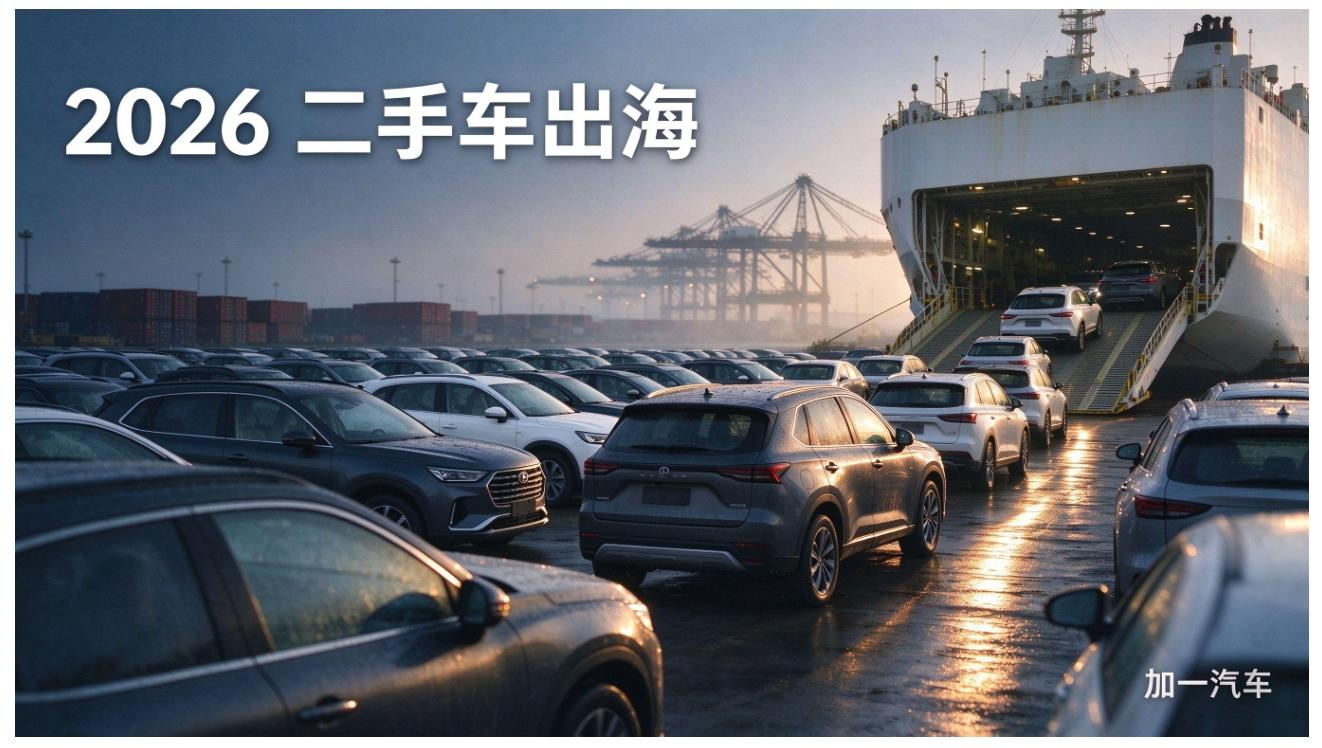
China exported 436,000 used cars in 2024. Here is which countries can import Chinese used cars in 2026, the age and certification limits that matter, and the models buyers ask for.
2026 China Used Car Export Outlook: Which Countries Should Import Chinese Used Cars, and Which Models Are Selling
- The 2026 baseline: after 600,000 units, the rules changed
- According to the China Automobile Dealers Association, China exported 436,000 used cars in 2024, up 46.5% year on year, reaching more than 160 countries and regions. Industry estimates put 2025 above 600,000 units.
- In November 2025, the Ministry of Commerce and three other departments issued new rules effective 1 January 2026. Vehicles registered for less than 180 days before export must be supported by an after-sales service confirmation letter issued by the manufacturer, covering destination country, vehicle details and overseas service points. Export declarations must match the vehicle registration certificate exactly, and companies face dynamic review and possible exit from the export register.
- The arbitrage of shipping brand-new cars as "used" is effectively closed. What separates exporters in 2026 is narrower: whether the age is calculated correctly, whether the paperwork matches, and whether anyone answers the phone after the container arrives.
- Which countries should import Chinese used cars
- Before quoting, check four gates: left- or right-hand drive, the age limit and how it is counted, emissions and certification, and duty plus document complexity. A market worth entering passes all four.
2.1 Russia and Central Asia: biggest demand, hardest gates
Russia is the largest destination, taking roughly 25% of China's 1.0-1.5L used car exports in 2024. Chinese brands reached 22.7% of Russian used car imports in April 2026, double the level of a year earlier.
The gates are rising: Euro-5 emissions, vehicles no older than five years, ERA-GLONASS equipment, and an SBKTS structural safety certificate for cars older than three years. The recycling fee was raised sharply in October 2024 and is scheduled to rise in stages. Only younger, fully certified stock works here.
The Central Asian states are both transit hubs and end markets. Kazakhstan has restricted individual imports of vehicles younger than three years since December 2024, so declare under a company entity.
2.2 Middle East: highest ticket, clearest rules
Dubai is the distribution hub: used cars are allowed, valuation is depreciation-based, duty is 5%, and re-export is straightforward. From Jebel Ali, stock moves on to Saudi Arabia, West Africa and East Africa within days, which is why many wholesalers treat Dubai as a staging market rather than an end market. Saudi Arabia requires vehicles no older than five years (2021 or later for 2026 arrivals), left-hand drive, no accident, flood or total-loss history, plus an energy efficiency certificate and an inspection report from an accredited body.
In this region you are paid for transparency: identical age with verified mileage and a complete report fetches a visibly higher price.
2.3 Africa: volume, thin margins, age is the lifeline
Nigeria accepts left-hand drive only, generally caps age at 12 years (2014 or later in 2026), and adds a 5% NAC levy plus 7.5% VAT. Ghana will ban imports of vehicles older than 15 years from 1 October 2026, with pre-shipment registration, origin inspection and a Certificate of Conformity required before shipping.
Kenya enforces an eight-year limit: from January 2026 only vehicles first registered in 2019 or later are accepted, with plans to tighten to five years in 2027, three years in 2029 and a full import ban in 2030. The same container that clears in Lagos can be rejected in Mombasa.
2.4 Latin America: a clear window, watch the origin rule
Mexico took close to 10% of China's 1.0-1.5L used car exports in 2024. Its used car import decree runs to 30 November 2026, a certificate of origin is required, and vehicles are generally capped at ten years. Bolivia limits passenger cars to two years, and applies a 30% specific consumption tax above one year.
Two markets to exclude: Chile bans used car imports in principle, and right-hand drive markets such as Tanzania cannot absorb Chinese left-hand drive stock.
2.5 Shipping: container or roll-on/roll-off
Freight is where inexperienced buyers lose the margin. A 40HQ container typically carries two to three cars depending on size, and it suits multi-unit orders, mixed models and vehicles that cannot be driven. RoRo is cheaper per unit for running cars but follows fixed sailing schedules and exposes you to port congestion. Always compare on a CIF basis, including terminal handling, and check who pays demurrage if clearance slips.
Because the age clock often runs to the arrival date, the shipping choice is a compliance decision as well as a cost decision. A cheaper routing that arrives two weeks later can push a car over the age limit in Kenya, Ghana or Saudi Arabia.
- Model picks by market
- The question is not which car is cheapest, but which car can be serviced, resold and certified locally.
| Market | Core models | Why they work |
| Russia | Haval Jolion, F7x, Tiggo 7 Pro, Geely Boyue | SUV drivetrain suited to local roads; Euro-5 supply available |
| Middle East | BYD Song Plus, Zeekr 001, large ICE SUVs | High acceptance of electrified cars; SUVs remain core |
| Africa | Camry, Accord, Lavida/Sagitar, Sylphy, Tiggo 5x, MG ZS | Sedans and small SUVs sell fast; easy to service |
| Central Asia | Haval H6, GWM Poer pickup | Dual household and worksite use; pickups hold value |
| Latin America | Tiggo range, MG, Changan CS range | Tight price bands; strong value proposition Table 1. Model picks and the logic behind them. One trend matters for pricing: overseas residual values for Chinese brands are firming. Russia is above 20% of imports, parts networks in Latin America and Africa are filling in, and discounts are narrowing, so bids can be more competitive. |
- Three mistakes that cost money in 2026
- Age counted from the arrival date. Kenya, Ghana and Saudi Arabia all test against arrival or registration year. One missed sailing can disqualify an entire container.
- Documents that do not match. The export licence declaration must match the registration certificate on brand, model and VIN, character for character.
- No after-sales backstop. The new rules put service responsibility on the exporter, and buyers now ask about parts and repair points. One-off deals kill repeat orders.
- A buyer's checklist before you wire the deposit
- When sourcing from China, verify each item in writing:
- Destination age limit, how it is counted, and required steering side.
- VIN and a full inspection report, not a verbal condition claim.
- Emissions standard accepted by the destination country.
- Whether CoC, SASO, SBKTS or another certificate is required.
- FOB or CIF terms, load port, and roll-on/roll-off versus container cost.
- Invoice, packing list, bill of lading and export licence all consistent.
- Warranty scope and parts supply after arrival.
- A small first order to prove customs clearance, then scale.
- Frequently asked questions
- Which countries can import Chinese used cars? More than 160 countries and regions, mainly Russia, the Middle East, Africa, Central Asia and Latin America. Right-hand drive markets and countries that ban used car imports are out of scope.
- What changed in 2026? Vehicles registered less than 180 days before export need an after-sales service confirmation letter, which ends the zero-mileage export model.
- Is Africa still worth doing? Yes, but spec by country: 12 years for Nigeria, 15 for Ghana, 8 for Kenya, and Kenya tightens every few years.
- How much does it cost to import a car from China? Add four blocks: FOB price, freight to your port, duty and VAT or levies at destination, and certification plus port charges. Ask for an itemised quote rather than a single landed figure, and confirm which side pays demurrage.
- About Jiayi Autos
- Jiayi Autos is a used car export wholesaler. We select stock against each destination's admission rules, supply a verifiable condition report and complete documents with every unit, and match roll-on/roll-off or container shipping to the load port and sailing schedule. There is no minimum order quantity: one car is enough to start.
- We do not promise the lowest price. We do promise that the car clears customs, that the condition matches the report, and that someone answers after arrival.
- Contact us: Website https://jiayi-autos.com/index (leave a message on the Contact page) | WhatsApp / phone +44 7942 731 663 | Email 435277867@qq.com | Address: Auto Export Base, 36 Furong Avenue, Huacheng Street, Huadu District, Guangzhou, China.
- Sources: China Automobile Dealers Association and customs data; Ministry of Commerce and three other departments, Notice on Further Strengthening Used Car Export Management (November 2025); Saudi SASO; Dubai Customs; Nigeria Customs Service; Ghana Standards Authority; Kenya vehicle age policy; Mexico used car import decree; Bolivia Supreme Decree 4373; Eurasian Economic Union technical regulations. Always confirm against the latest official notice of the destination country.