Common Scams When Importing Used Cars to Africa & How to Avoid Them
Fake VIN, Odometer Tampering, Misleading Photos, Fake Documents and Red Flags for African Car Importers
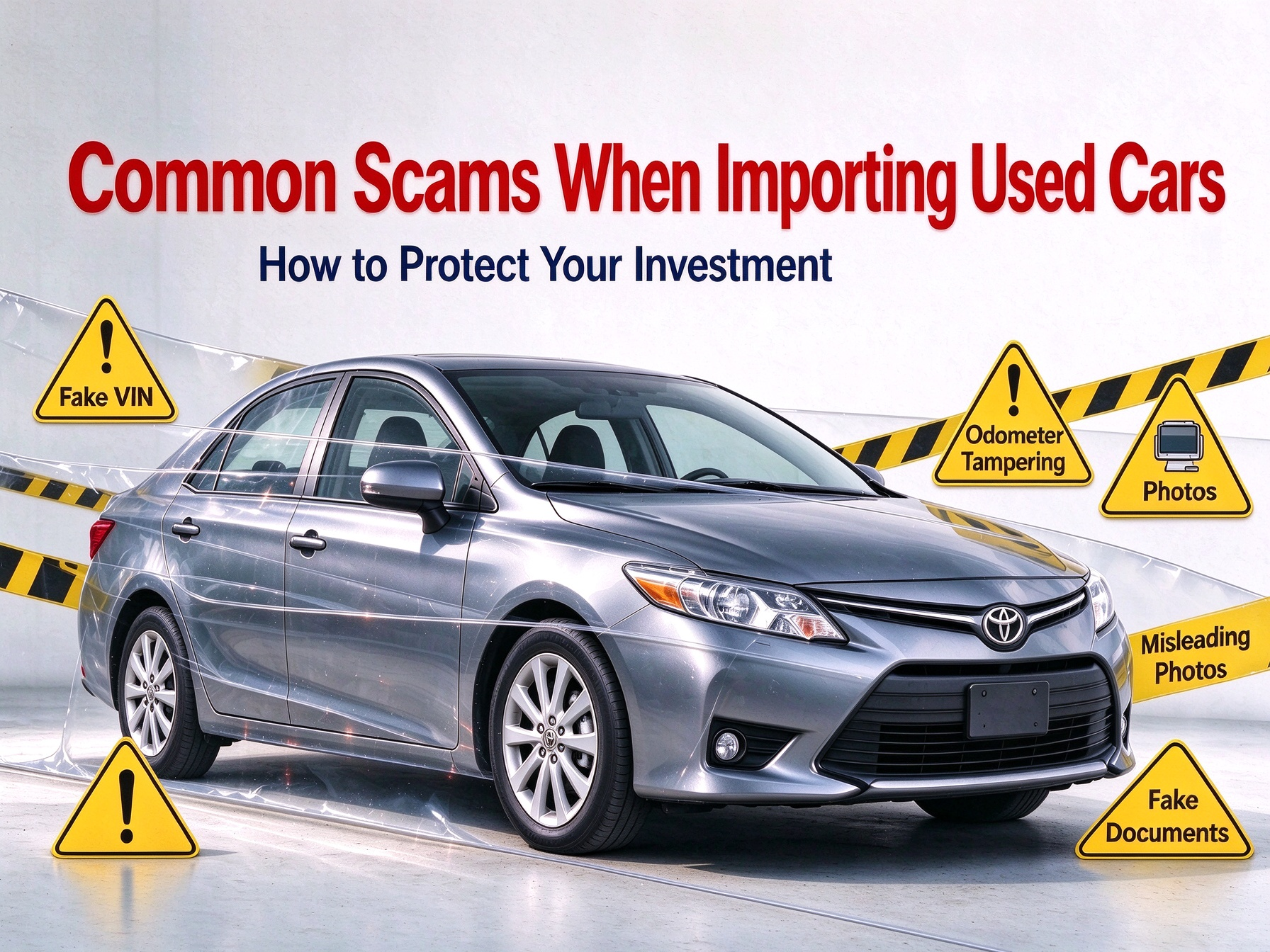
Importing used cars from China can be profitable, yet the cross-border market also has unscrupulous suppliers. African importers often suffer losses due to fake VINs, odometer rollbacks, misleading photos, concealed accident histories, false export documents, deposit scams and fraudulent delivery promises. This article introduces the most common scams in the used car export industry and provides actionable rules for avoidance. As a professional Chinese used car exporter, Jiayi Auto believes that transparent vehicle conditions, inspection reports and document verification are the best ways to protect African importers.
Importing used cars from China can be profitable, but the cross-border market also attracts dishonest suppliers. African importers often lose money through fake VINs, odometer tampering, misleading photos, hidden accident history, fake export documents, deposit scams and broken delivery promises. This guide explains the most common scams in the used car export business and gives practical rules to help you avoid them. As a professional Chinese used car exporter, Jiayi Auto believes that transparency, inspection reports and document verification are the best protection for African importers.
The used car export business is full of opportunities, but it is also full of risks. Many African importers focus only on low price and fast delivery, while ignoring basic verification. Once the money is paid or the container is shipped, it can be very difficult to solve problems. Some scammers use extremely low prices to attract buyers, then disappear after receiving the deposit. Others send photos of clean cars but deliver damaged, old, wrong or non-compliant vehicles. Understanding these common scams is the first step to protecting your investment.
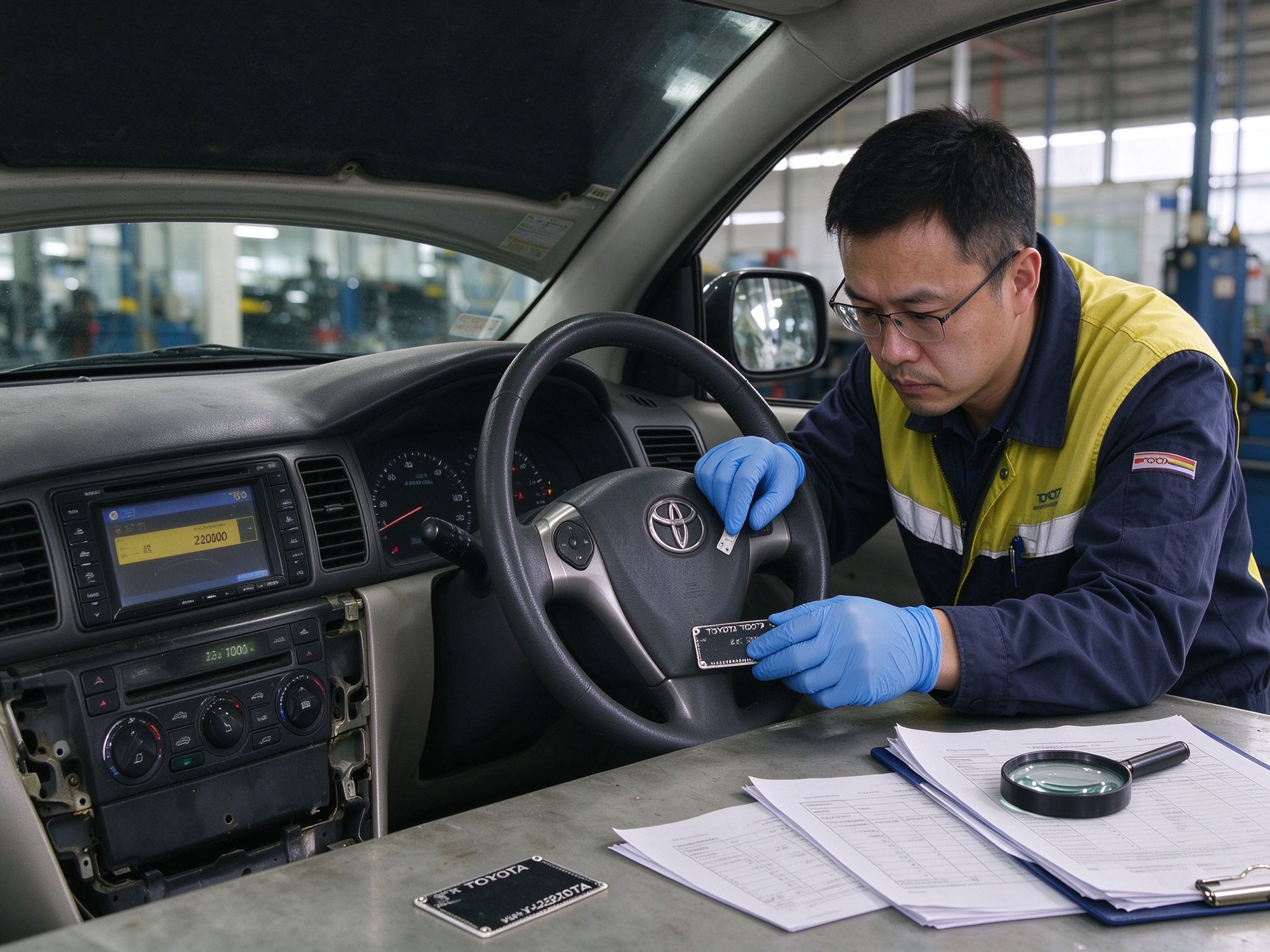
One of the most dangerous scams is fake or mismatched VIN. The VIN is the identity of the vehicle. Some dishonest suppliers use cloned VINs, falsified labels or mismatched documents to make a bad car look like a clean unit. When the vehicle arrives in Nigeria, Ghana or Côte d’Ivoire, it may fail technical inspection or customs clearance. You should always check the VIN in multiple places: on the dashboard, door jamb, engine bay and export documents. If any of them do not match, do not proceed.
Odometer tampering is also very common. A lower mileage makes the car look more valuable, so some suppliers adjust the odometer before taking photos. This is why you should never judge a vehicle only by the dashboard number. Ask for detailed photos of the interior wear, steering wheel, pedals, tires and maintenance records. Compare these with the stated mileage. If the interior looks heavily used but the mileage is low, ask for a full explanation before paying.
Another scam is misleading photos. Some suppliers take photos only from the best angles, hide damage with lighting, or even use photos of other vehicles. Scammers may show you a clean white Toyota Corolla but ship a damaged, older or different model. You should ask for complete photos: front, back, both sides, interior, engine bay, trunk, undercarriage and VIN area. If the supplier refuses or sends only a few edited photos, treat it as a red flag.
Hidden accident or flood damage is also a major risk. A car may look fine in one advertisement photo, but have structural damage, welded repairs, rust or flood marks underneath. You must ask for close-up photos of the engine bay, chassis, pillars, doors and trunk. Professional inspection reports are important because they force the supplier to disclose condition problems. If the price is much lower than the market average, do not assume it is a lucky bargain—it may be a damaged unit.
Fake documents are another serious problem. Export documents must match the actual vehicle. Some scammers provide fake invoices, fake title papers, fake inspection reports or fake bills of lading. If the VIN, model, color, engine number or chassis number is different between the documents and the car, you could face customs rejection, fines or seizure. Always verify the documents with your local customs broker before final payment.
Deposit scams are also common. Some suppliers ask for a large deposit upfront, then delay the shipment, increase the price suddenly, or stop communicating. You should be careful with suppliers who pressure you to pay quickly, refuse inspection reports, or make promises that sound too good to be true. A professional exporter will give you time to check the information and will not force you to pay immediately.
How can you avoid these scams? Follow these basic rules:
First, verify the supplier’s business background. Check how long they have been in the used car export business, whether they have a real yard, whether they can show multiple client references and whether they provide clear contact information.
Second, insist on independent or standardized pre-shipment inspection. A professional supplier will not refuse inspection. The inspection report should cover VIN, mileage, accident history, flood damage, mechanical condition, electrical condition, chassis condition and document matching.
Third, ask for complete photos and real-time videos. If possible, request a live video call to see the vehicle. Do not rely on one or two beautiful photos.
Fourth, check every document before payment. Confirm the VIN, model, color, engine number, chassis number and mileage in all documents.
Fifth, control your payment risk. Avoid paying the full amount before inspection. Use safe payment terms whenever possible, and do not trust suppliers who only accept cash or untraceable payments.
Sixth, be careful with prices that are too low. In the used car business, an extremely low price usually has a reason. It may be an old car, a damaged car, a wrong model, a fake unit or a scam.
At Jiayi Auto, we work to reduce the risk for African importers. We provide clear vehicle information, real photos, standardized inspection reports, document verification and honest communication. We do not hide damage, change mileage or use fake documents. If you want a transparent supplier for LHD Toyota cars, contact us today.
FAQ
- Q: What is the most common scam when importing used cars from China?
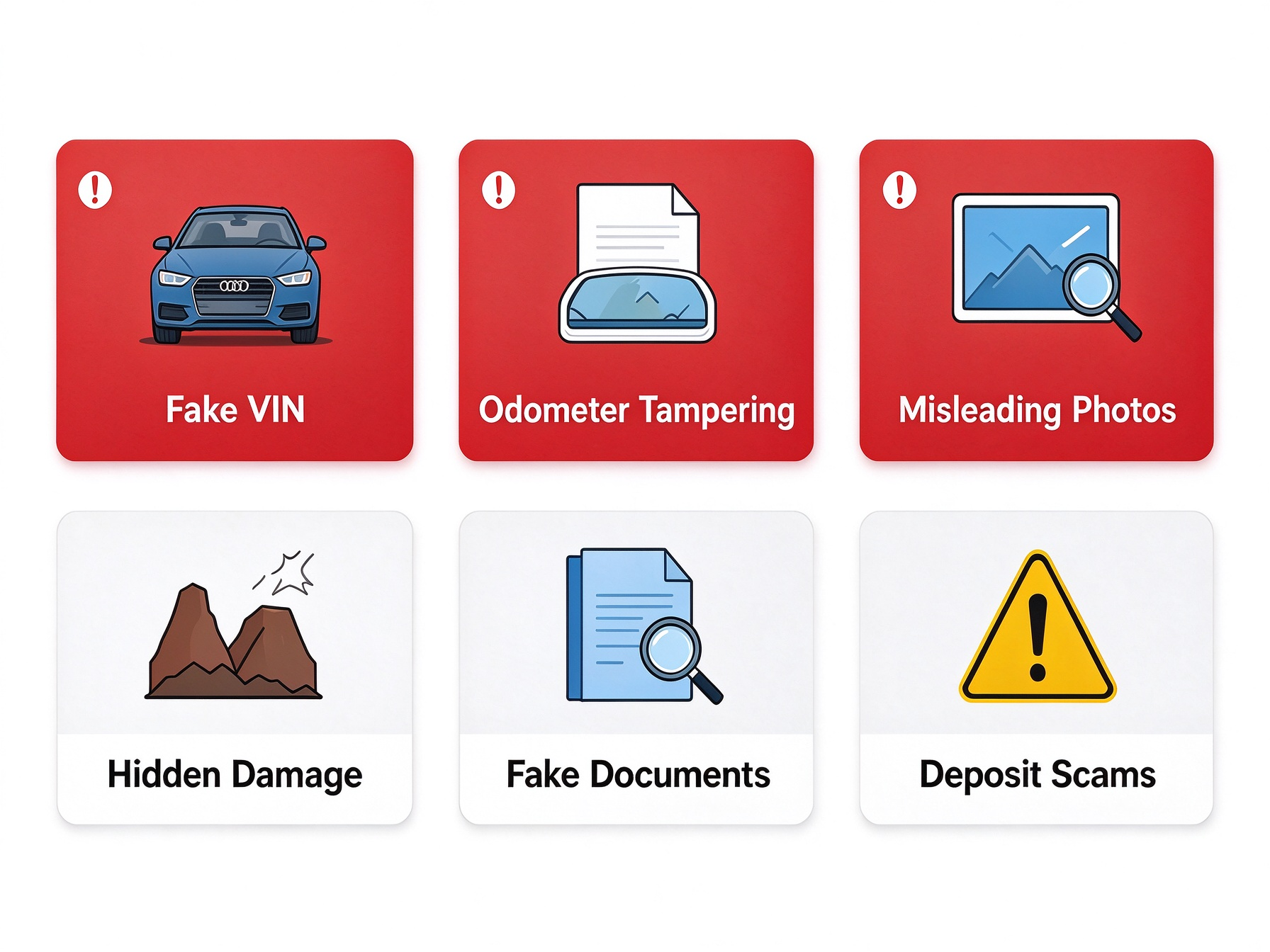
A: Common scams include fake VIN, odometer tampering, misleading photos, hidden accident damage, fake documents and deposit scams. - Q: How can I check if the VIN is real?
A: Compare the VIN on the dashboard, door jamb, engine bay and export documents. If they do not match, stop the transaction. - Q: Can I trust the mileage shown in photos?
A: No. Always compare mileage with interior wear, pedal wear, tire condition and maintenance records. - Q: What documents should I check before payment?
A: Check the commercial invoice, title or transfer certificate, inspection report, bill of lading details, and any destination-related certificates. - Q: How can I find a reliable Chinese used car exporter?
A: Look for a real yard, clear company information, inspection reports, complete photos, client references and transparent payment terms.
CTA
Contact Jiayi Auto today for transparent LHD Toyota supply and professional pre-shipment inspection reports. We help African importers avoid common scams and import used cars with confidence.