How to Negotiate Wholesale Prices for Used Toyota with Chinese Exporters
Practical B2B Negotiation Guide for West African Importers, Get Better Terms Without Killing the Deal
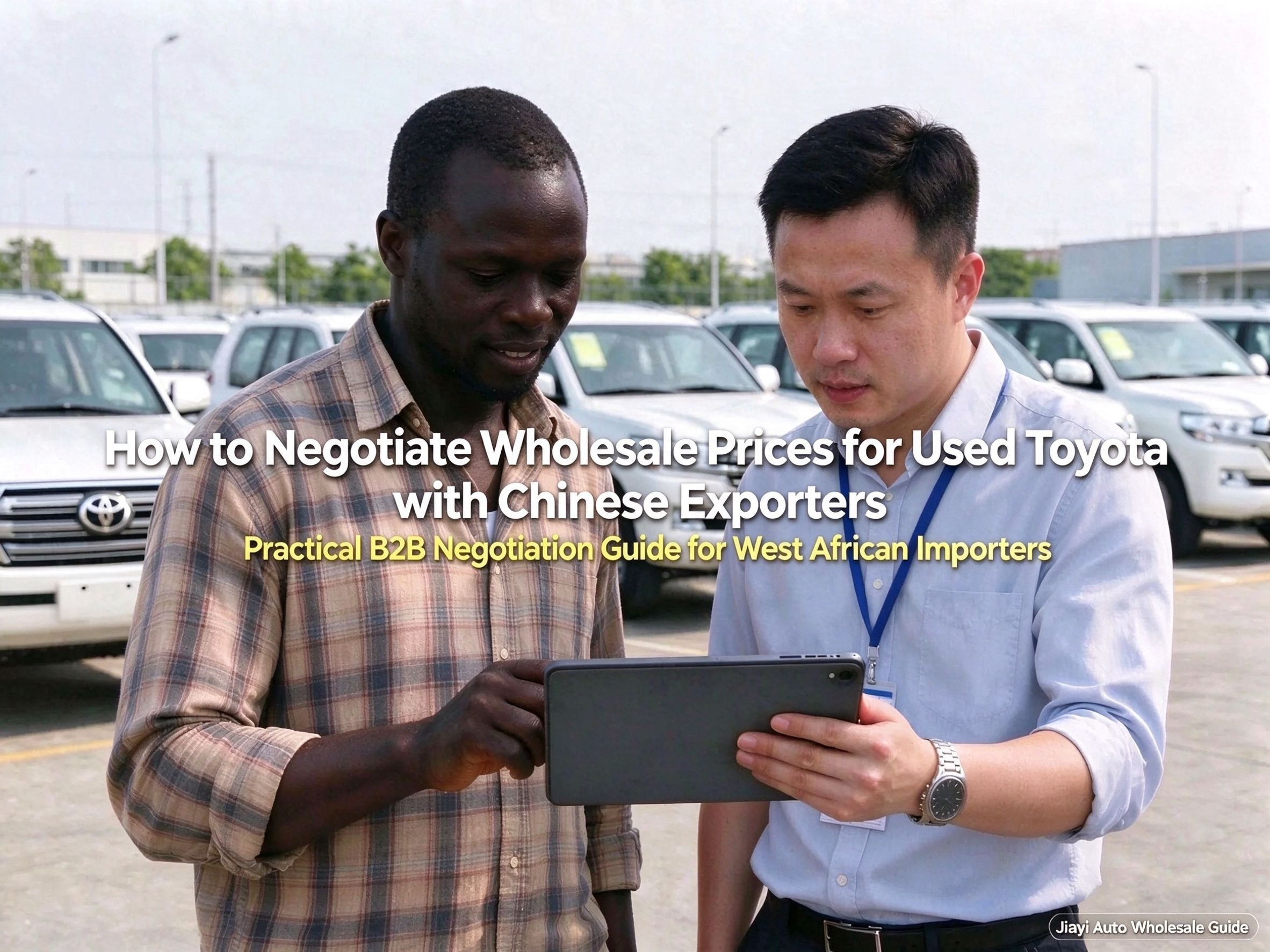
Negotiating wholesale prices for used Toyotas with Chinese exporters involves more than simply asking for the "lowest price". Many West African importers focus solely on the per-unit vehicle price, which costs them supplier trust or traps them under hidden trade terms. Compiled by Jiayi Auto, this article explains the real negotiation logic behind wholesale used Toyota prices, breaks down the cost structure, and clarifies which terms are flexible and which leave little room for adjustment. Whether you are a first-time buyer or an experienced importer, this guide can help you secure better vehicle pricing, mixed-container discounts, inspection support and favorable payment terms while maintaining stable supplier relationships.
Price is always the most sensitive topic in used car wholesale. Some West African importers directly ask for the "lowest price" without understanding the cost structure of Chinese exporters; others push prices excessively low, only to receive poorer after-sales support, slower inspection reports or less flexible loading arrangements.
The reality is: Chinese exporters do have profit margins, but many costs are real and hard to cut, including vehicle acquisition costs, auction fees, logistics, cleaning, inspection, documentation and port charges. Successful negotiation is about finding win-win terms instead of squeezing the supplier’s profit down to zero.
Jiayi Auto has helped hundreds of West African car dealers build stable sourcing channels. This article shares negotiation points that truly work for used Toyota wholesale business.
1. Understand the cost structure before negotiation
Before asking for discounts, you should know what components make up the final quotation.
1.1 Vehicle acquisition cost
This accounts for the largest share of the price. Costs vary significantly depending on Toyota model, year, trim level, mileage and accident history. Prices for mainstream models such as Vios, Corolla, Hilux and RAV4 are usually transparent, while niche models may carry larger profit margins.
1.2 Export preparation cost
It covers vehicle cleaning, detailed valeting, basic maintenance, battery inspection, fluid checks, photography and report preparation. All these are necessary for export.
1.3 Inspection cost
Professional pre-shipment inspection takes time and money. If you require a full inspection including ECU scanning, engine compression testing, air conditioning testing and photographic reports, this is a value-added service rather than an extra expense.
1.4 Logistics and port cost
This includes yard movement, terminal handling, container loading, documentation and freight forwarding fees. These costs normally have little room for adjustment, especially when ocean freight rates are high.
2. Negotiation Point 1: Purchase volume and mixed-container discounts
Purchase volume is the strongest bargaining chip in used car wholesale.
2.1 Full container vs small orders
A full 40ft container usually brings a better unit price than buying just one or two cars. If you can plan a full container mixed with Vios, Corolla, Yaris and Hilux, the exporter may offer a bundled discount for the whole container.
2.2 Mixed-container strategy
You may say: “I want to load 1 Vios, 1 Corolla, 1 Yaris and 1 petrol Hilux in one container. Can you give me a bundled price for the whole consignment?” This sounds more professional than negotiating for each car individually.
2.3 Repeat order agreement
Tell the exporter if you plan to place orders monthly or quarterly. Long-term consistent orders are more valuable than a one-off discount. You may request:
• A more favourable base price
• Priority supply of popular models
• Faster issuance of inspection reports
• A more flexible replacement policy for poor-condition vehicles
3. Negotiation Point 2: Vehicle condition and price adjustment
Price should always be tied to vehicle condition. A cheap car with hidden faults is never a good deal.
3.1 Ask for pricing based on condition
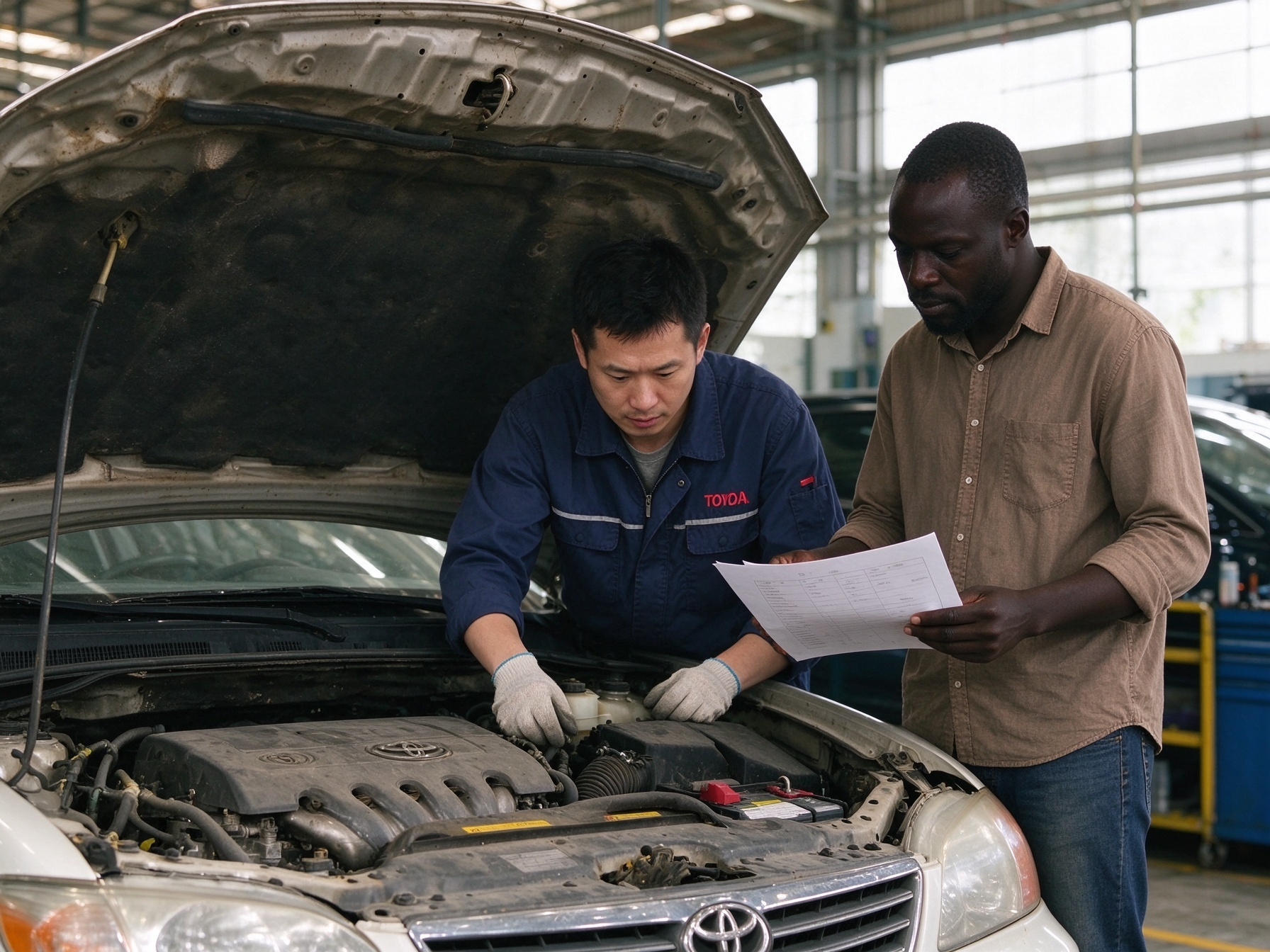
Sample negotiation lines:
• “I can accept this price if this Vios has no accident or flood history.”
• “If the engine burns oil, I need a discount deducting repair costs.”
• “If the air conditioning system is faulty, please repair it before loading.”
3.2 Link price to inspection results
Professional exporters should accept price adjustments based on vehicle condition. You can propose: “After you complete the full inspection, I will confirm the price if the vehicle matches the described condition; if there are major faults not disclosed earlier, we will adjust the price or replace the vehicle.”
3.3 Do not over-negotiate on well-conditioned cars
Do not expect steep discounts for a Toyota with good condition, low mileage, complete maintenance records and no accident history. Well-kept units resell more easily in Ghana and Nigeria, and paying a slight premium is worthwhile.
4. Negotiation Point 3: Logistics, documentation and service terms
Some terms carry more value than price itself.
4.1 Pre-shipment inspection support
Ask the exporter to provide:
• A full vehicle condition report
• Clear photos of the interior, exterior, engine and undercarriage
These documents reduce risks after the cars arrive at the destination port.
4.2 Container loading plan
Obtain the loading plan before shipment. Proper loading arrangements protect vehicles and prevent damage and overweight issues.
4.3 Documentation support
Confirm whether the quotation covers export documents, certificates of origin, commercial invoices, packing lists and required declarations. Missing documentation can cause serious trouble with customs in Nigeria or Ghana.
5. Negotiation Point 4: Payment terms
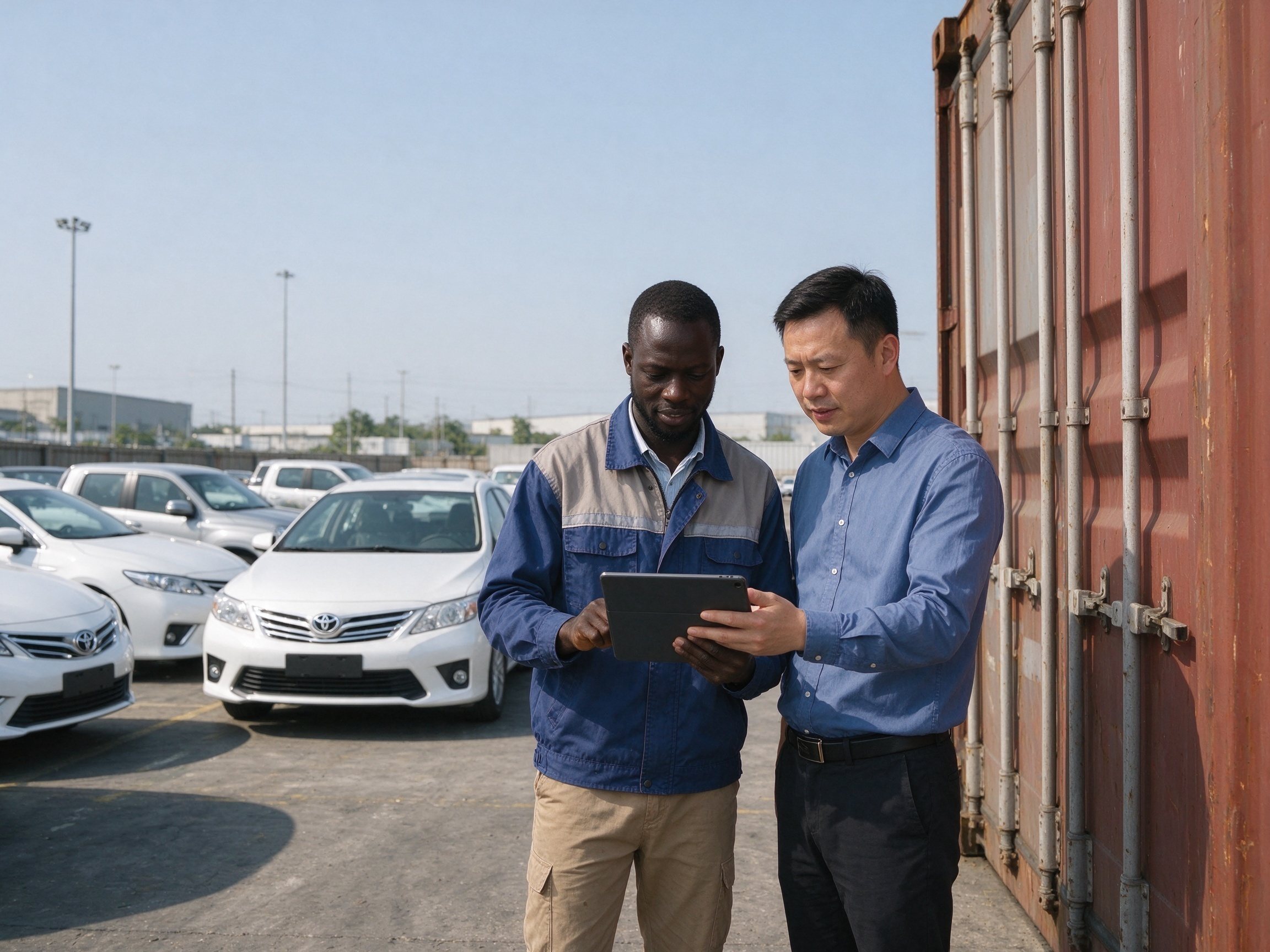
Payment terms also hold negotiating value.
5.1 Standard deposit and balance payment
Many Chinese exporters operate on a deposit-to-reserve-cars basis, with the balance due upon contract signing.
5.2 Replacement policy
For repeat orders, you may ask: “If major hidden defects not disclosed before shipment are found after arrival, can we replace the vehicle or adjust the price in the next order?”
5.3 Long-term payment reliability
If you can demonstrate a consistent payment track record, the exporter may offer better commercial terms in future cooperation.
6. Ineffective negotiation practices
6.1 Only comparing against the lowest price
If you keep saying “your price is higher than others”, the exporter may switch to cheaper vehicles with poorer condition.
6.2 Demanding large discounts for small orders
It is normally difficult to secure large wholesale discounts when purchasing only one or two cars.
6.3 Pressuring excessively on every minor charge
Exporters need to run their business. If profit is squeezed too tightly, service quality may decline.
6.4 Disrespecting the supplier’s time
Professional exporters spend time on sourcing, inspection, photography and documentation. Respect their workflow, and they will prioritise serious buyers.
7. Ready-to-use negotiation scripts for West African importers
Script 1: Mixed-container bundled price
“I plan to load one 40ft container this month: 1 Vios, 1 Corolla, 1 Yaris and 1 petrol Hilux. Can you offer your best bundled price for the full container, including standard export documentation?”
Script 2: Price tied to vehicle condition
“I am interested in this car, but I need to confirm its condition first. If your full inspection confirms no accidents, flood damage or major engine faults, I will confirm the order.”
Script 3: Long-term cooperation
“I plan to place consistent orders over the long run. I will keep working with you if your pricing and service remain stable. Can repeat customers get a better base price?”
Script 4: Service terms
Apart from the unit price, I also need a full photo report, loading plan and export documents. Are these included in the quotation?
8. Recommended negotiation sequence for the first order
Follow this sequence for your first deal:
1. Confirm target models and quantities
2. Request a quotation with clear condition standards
3. Confirm inspection services and documentation
4. Negotiate the bundled price for the full container
5. Discuss payment terms
6. Confirm the replacement policy for hidden defects
Do not start with the lowest price; negotiate based on total value.
Frequently Asked Questions
Q1: Can I get a big discount if I buy only one Toyota?
A1: Usually not. Large discounts generally require full-container orders or repeat purchases.
Q2: What if the exporter refuses to cut the price?
A2: First check whether the quotation includes inspection, documentation and loading services. Sometimes a slightly higher price is more cost-effective than a low quotation with no supporting services.
Q3: Is it better to negotiate the price one car at a time?
A3: No. When sourcing mixed containers, bundled pricing is usually more efficient and offers a better chance of an overall discount.
Q4: How do I tell if a price is reasonable?
A4: Evaluate vehicle condition, mileage, inspection services, documentation and logistics terms together instead of looking at the unit price alone.
WhatsApp:+44 7434 584492
If you want to discuss your next used Toyota sourcing plan, contact the sales team at Jiayi Auto. We provide transparent quotations, detailed pre-shipment inspection reports, mixed-container loading support and reliable export documentation. Send us your target models, quantities and delivery timeline, and we will reply with practical quotations and cooperation terms that facilitate your negotiations.